


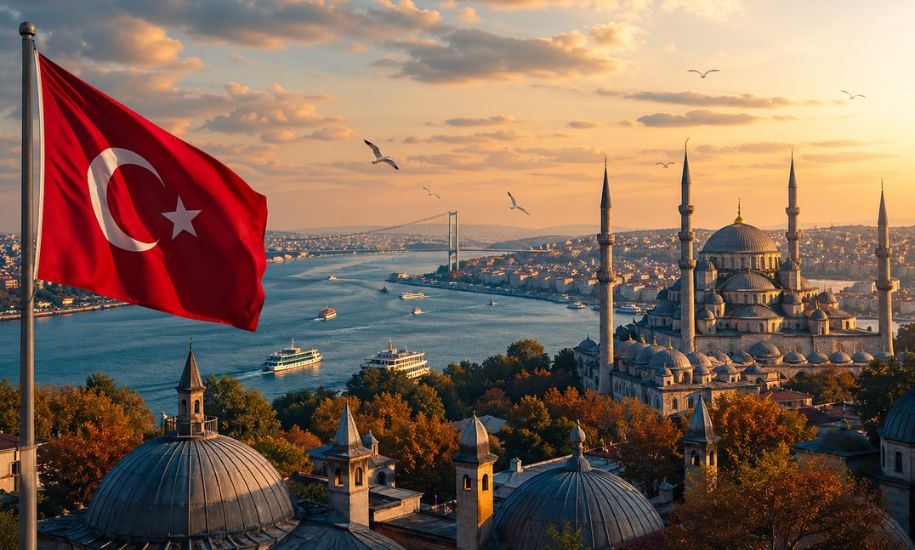
The word “Turaska” can be confusing because it appears in more than one linguistic and historical context. It may be encountered as a modern spelling related to Turkey, or as a simplified rendering of the older Sanskrit term turuṣka or Turushka, which was historically associated with Turks and other groups connected with Central Asia.
The key to understanding the word is context. “Turaska” should not automatically be treated as the standard English name for Turkey, nor should every historical occurrence be interpreted as referring specifically to the modern Republic of Türkiye.
In modern South Slavic languages, for example, Turska is the name for Turkey in Bosnian, Croatian, and Serbian. Meanwhile, Sanskrit dictionary sources record turuṣka with meanings including “a Turk,” “the Turks,” “a Turkish prince,” and “Turkestan.”
This guide explains the different meanings of Turaska, its linguistic background, its relationship with Turkey, historical usage, and why spelling and context matter when researching the term.
What Does Turaska Mean?
Turaska is not a standard modern English word. Its meaning depends on the language, spelling, and historical context in which it appears.
There are two particularly important connections:
- Turska — the modern South Slavic name for Turkey.
- Turuṣka/Turushka — an older Sanskrit form associated with Turks or Turkic peoples and, in some lexicographical sources, Turkestan or Turkish rulers.
Geographical-name databases list Turska as the Bosnian, Croatian, and Serbo-Croatian name for Turkey, while Serbian uses the Cyrillic form Турска.
Therefore, if someone writes “Turaska” when discussing Turkey, the spelling may be a transliteration, variant, or simplified representation rather than the standard spelling used in the relevant language.
Is Turaska Another Name for Turkey?
Sometimes it can be used in connection with Turkey, but the statement needs qualification.
The modern South Slavic form is Turska, not “Turaska.” In Croatian, Serbian, and Bosnian, Turska directly means Turkey.
The older Sanskrit word turuṣka, on the other hand, had a broader historical meaning. Sanskrit dictionary evidence records it as referring to a Turk or the Turks and also gives meanings such as a Turkish prince and Turkestan.
That means it is inaccurate to say that every historical occurrence of turuṣka referred to the modern country of Turkey.
Turaska vs. Turska
The spelling difference is important.
| Term | Context | Meaning |
|---|---|---|
| Turaska | Modern informal/transliterated spelling | Can refer to forms associated with Turkey or historical Turkic peoples |
| Turska | Bosnian, Croatian, Serbian | Turkey |
| Turuṣka | Sanskrit/historical | Turk, Turks, Turkish ruler, or related Central Asian reference depending on context |
| Turushka | Historical transliteration | Variant spelling of Turuṣka |
| Türkiye | Modern Turkish | Official Turkish name of the country |
The most useful approach is therefore to identify the original language and spelling before deciding what Turaska means.
The Sanskrit Connection: Turuṣka
One of the most important historical forms related to Turaska is the Sanskrit turuṣka.
Sanskrit dictionary sources list turuṣka as a noun meaning “a Turk” or “the Turks.” The same entry also records meanings connected with a Turkish prince and Turkestan.
This demonstrates why the term cannot always be translated simply as “Turkey.”
Historical terminology often described peoples, rulers, regions, or political groups, rather than modern nation-states with clearly defined borders.
The political geography of Central and South Asia changed considerably over the centuries, so a historical writer using a term connected with Turks was not necessarily referring to Anatolia or the modern Republic of Türkiye.
Who Were the Turuṣkas?
In historical South Asian contexts, terms derived from turuṣka were associated with Turkic peoples and political powers.
The word therefore belongs to a much broader history of interaction between the Indian subcontinent and Central Asia.
These interactions involved:
- Migration
- Trade
- Warfare
- Political expansion
- Religious exchange
- Cultural contact
- Movement of languages and artistic traditions
The exact meaning of the term could change according to the period and author.
This is why historians and linguists generally need to examine a word in its original textual context instead of assigning it one permanent definition.
Does Turaska Come From Sanskrit?
The historical form turuṣka is documented in Sanskrit lexicographical sources.
However, it would be too simplistic to claim that the modern spelling “Turaska” is itself a standard Sanskrit word with one universally accepted definition.
Different transliteration systems can represent Sanskrit sounds differently. For example, the Sanskrit letter ṣ may disappear or be simplified when a word is written for readers who do not use scholarly transliteration.
As a result, forms such as:
- Turuṣka
- Turushka
- Turuska
- Turaska
may appear in secondary writing.
These spellings should not automatically be treated as completely separate words.
Turaska and the Modern Name of Turkey
The modern country is officially known internationally as Türkiye, while English commonly uses Turkey.
Other languages have their own established forms.
For example:
- English: Turkey / Türkiye
- French: Turquie
- Spanish: Turquía
- Italian: Turchia
- German: Türkei
- Croatian: Turska
- Serbian: Turska / Турска
- Bosnian: Turska
Geographical-name references document these multilingual variations, including Turska in Bosnian, Croatian, and Serbo-Croatian.
This is a good example of how the name of one country can develop different forms across languages.
Why Does “Turska” Mean Turkey?
In Bosnian, Croatian, and Serbian, Turska is the established country name for Turkey. Behind the Name identifies it specifically as the Croatian, Serbian, and Bosnian form of Turcia.
The word is related to the broader South Slavic adjective and noun system associated with Turk and Turkish.
Therefore, if you encountered Turska, the most likely modern geographical meaning is simply Turkey.
This should not be confused with the historical Sanskrit turuṣka, even though the words are clearly related through their association with Turkic peoples and the wider history of the word “Turk.”
Historical Meaning vs. Modern Meaning
One of the biggest mistakes when researching Turaska is assuming that an old geographical term has exactly the same meaning today.
Historical terminology often works differently.
A term may initially describe:
- An ethnic group
- A linguistic community
- A political dynasty
- A military group
- A region
- A foreign population
Only later might similar terminology become associated with a specific country.
For this reason, a historical text using turuṣka should be interpreted according to its date, author, language, and political setting.
Turaska and Central Asia
The Central Asian connection is particularly important.
Sanskrit dictionary evidence explicitly includes Turkestan among the meanings associated with turuṣka.
This reinforces the idea that the historical term was broader than the modern concept of Turkey.
Central Asia has historically been home to numerous Turkic-speaking communities and states. These regions maintained extensive political and commercial connections with South Asia.
Consequently, words referring to Turkic peoples could enter historical South Asian texts without necessarily referring to Anatolia.
Why Is Turaska Sometimes Linked Directly to Turkey?
The connection exists because the modern name Turkey and related words ultimately belong to the broader family of names associated with Turk/Turkic peoples.
Modern languages developed their own forms through centuries of linguistic change.
In South Slavic languages, Turska became the established name for the country.
In older Sanskrit contexts, turuṣka could refer to Turks or Turkic-associated groups.
The similar-looking forms can therefore be historically connected without having identical meanings in every context.
Turaska in Linguistic Research
From a linguistic perspective, Turaska is interesting because it demonstrates how names change when they move between languages.
Several processes can contribute to these changes:
Transliteration
A word written in one script may be represented differently in another alphabet.
Pronunciation
Languages do not always contain the same sounds. Speakers may therefore adapt foreign words to the sounds available in their own language.
Historical Change
A word’s meaning can shift as political borders and cultural relationships change.
Regional Usage
Two communities may use related words differently even when they refer to the same historical root.
This is why dictionary evidence and original-language sources are particularly important when explaining unusual terms.
Is Turaska a Bengali Word for Turkey?
This claim should be treated carefully.
Modern Bengali does have a word for Turkey, written তুরস্ক, and transliteration practices can produce forms that resemble Turaska. However, spelling the Bengali country name as “Turaska” in English is a transliteration choice rather than a universal English spelling.
Therefore, when writing about Bengali, it is better to show the original script and explain the transliteration rather than present “Turaska” as though it were an ordinary English word.
Turaska and Turkey: The Main Difference
The simplest way to understand the relationship is:
Turska = Turkey in several modern South Slavic languages.
Turuṣka/Turushka = historical Sanskrit term associated with Turks/Turkic peoples and, depending on context, related rulers or regions.
Turaska = a spelling that may be used in secondary writing or transliteration, but it is not a single universally standardized modern term.
This distinction makes the subject much clearer.
Why Does the Word Appear Online?
People may encounter “Turaska” while researching:
- Sanskrit
- Indian history
- Turkic peoples
- Turkey
- Bengali
- South Slavic languages
- Historical geography
- Ancient texts
- Transliteration
Because search engines combine results from different languages and contexts, users may see explanations that appear contradictory.
Usually, the contradiction comes from different words or historical contexts being grouped under a similar spelling.
Common Misunderstandings About Turaska
Misunderstanding 1: Turaska Always Means Turkey
Not necessarily.
The modern South Slavic word Turska means Turkey, but historical turuṣka had broader meanings connected with Turks and Central Asian regions.
Misunderstanding 2: Every Historical Turuṣka Reference Means Modern Türkiye
This is also incorrect.
Historical political geography was different from today’s national borders.
Misunderstanding 3: Turaska Is a Common English Word
It is not.
English normally uses Turkey or Türkiye, depending on context.
Misunderstanding 4: Turska and Turuṣka Are Identical
They are related in their historical associations, but they belong to different linguistic contexts and should not simply be treated as interchangeable.
Why the Term Matters Historically
Words such as Turuṣka reveal how societies described people beyond their own political and cultural boundaries.
Studying the term can help researchers understand:
- How ancient writers categorized foreign peoples
- Connections between South Asia and Central Asia
- The historical spread of Turkic political power
- How geographical names change
- How languages borrow and adapt terminology
In this sense, Turaska is interesting not because it has one mysterious definition, but because it illustrates the relationship between language, geography, and history.
Turkey and Its Historical Importance
Understanding the modern country also helps explain why words associated with Turks have such a broad cultural footprint.
Türkiye occupies a strategically important position between southeastern Europe and western Asia. Its territory has been shaped by numerous civilizations and political powers, including the Byzantine and Ottoman empires.
Its location helped make Anatolia and the surrounding regions important crossroads for:
- Trade
- Migration
- Military campaigns
- Religion
- Art
- Language
- Cultural exchange
These long-term interactions contributed to the international spread of words associated with Turks and Turkish lands.
Turaska: Quick Meaning
If you need a short answer, the safest explanation is:
Turaska is a non-standard spelling or transliteration associated with terms such as Turuṣka/Turushka and, in some modern contexts, Turkey. Its exact meaning depends on the language and historical context.
If you actually encountered Turska, however, the answer is much simpler: in Bosnian, Croatian, and Serbian, it means Turkey.
FAQ
What does Turaska mean?
Turaska is not a standard modern English word. It may be used as a transliteration or variant connected with Turkey or the historical Sanskrit term turuṣka, depending on context.
Does Turaska mean Turkey?
It can be associated with Turkey, but it is not the standard English name for the country. The South Slavic form Turska directly means Turkey.
What is Turuṣka?
Turuṣka is a Sanskrit term documented in dictionaries with meanings including “a Turk,” “the Turks,” “a Turkish prince,” and “Turkestan.”
What does Turska mean?
Turska is the name for Turkey in Bosnian, Croatian, and Serbian.
Is Turaska a Sanskrit word?
The historically documented Sanskrit form is turuṣka. “Turaska” is better treated as a simplified or secondary spelling unless a particular source explicitly uses it as its preferred form.
Is Turaska the same as Turska?
Not exactly. Turska is a modern South Slavic country name for Turkey, while Turuṣka is a historical Sanskrit term with broader references to Turks and related regions or rulers.
Why are there different spellings?
Differences arise from transliteration, pronunciation, writing systems, and historical changes in language.
Final Thoughts
The word Turaska becomes much easier to understand once its different linguistic contexts are separated.
It should not be treated as a single universally accepted synonym for Turkey. The modern form Turska is the established name for Turkey in Bosnian, Croatian, and Serbian, while the historical Sanskrit turuṣka referred to Turks and, depending on the source, related rulers or Central Asian regions.
This distinction is important because historical words do not always correspond neatly to today’s countries and borders. A term used centuries ago to describe a people or political group may later become associated with a different geographical concept.
Ultimately, Turaska is best understood through language and context. If you encountered the word in a historical Sanskrit text, it likely requires a different interpretation than if you saw Turska in a modern Balkan-language context.
That makes the term a useful example of how language preserves traces of migration, cultural contact, political history, and the changing ways societies name the world around them.
