


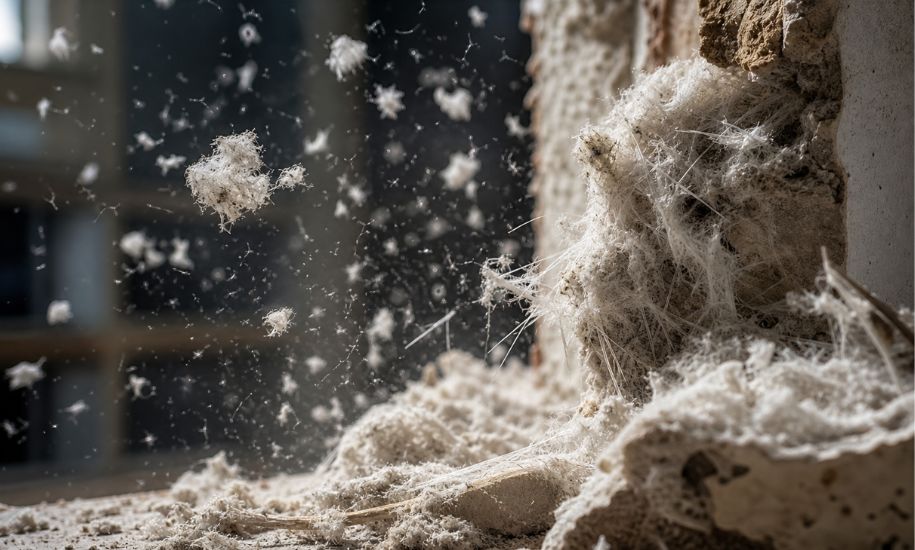
The term “asbestlint” can sound like the name of a specific asbestos product or material. In reality, it is better understood as a descriptive or informal term associated with fine, lint-like asbestos-containing dust or fibers, rather than a formally recognized type of asbestos.
That distinction matters because asbestos itself is a well-established group of naturally occurring mineral fibers with serious health consequences when people inhale airborne fibers. According to the World Health Organization (WHO), all forms of asbestos are carcinogenic to humans, and exposure can cause diseases including asbestosis, lung cancer, and mesothelioma.
Asbestos can still be encountered in older buildings, industrial facilities, insulation, flooring, roofing products, pipe coverings, and other materials. The greatest concern generally arises when asbestos-containing materials are damaged, deteriorating, cut, drilled, sanded, demolished, or otherwise disturbed, allowing fibers to enter the air.
Understanding what “asbestlint” actually refers to—and what it does not—can help homeowners, workers, building managers, and renovators make safer decisions.
What Is Asbestlint?
Asbestlint is not a standard mineral classification or a separate type of asbestos.
The term can be used descriptively for very fine, lint-like material associated with asbestos contamination or released asbestos fibers. In practical discussions, however, the important issue is not the word “asbestlint” itself but whether airborne asbestos fibers are present.
Asbestos fibers are extremely small and cannot be reliably identified simply by looking at dust. The U.S. Environmental Protection Agency (EPA) states that you generally cannot determine whether a building material contains asbestos just by looking at it. Laboratory analysis of an appropriate sample is needed when identification is necessary.
This means ordinary-looking dust should not automatically be labeled as asbestos, and asbestos should not be ruled out simply because fibers or dust are not visible.
Asbestlint vs. Asbestos
The difference is straightforward:
| Term | What it means |
|---|---|
| Asbestos | A group of naturally occurring fibrous minerals |
| Asbestos-containing material (ACM) | A product or building material that contains asbestos |
| Asbestlint | An informal/descriptive term that may refer to fine, lint-like asbestos-associated dust or fibers |
| Airborne asbestos fibers | Microscopic asbestos fibers suspended in air and capable of being inhaled |
The established scientific and regulatory terminology is asbestos, asbestos-containing material, and airborne asbestos fibers.
Therefore, if you are researching a suspected contamination problem, these terms are generally more useful than treating “asbestlint” as a separate hazardous substance.
How Can Airborne Asbestos Fibers Be Released?
Asbestos is most concerning when fibers become airborne.
The Agency for Toxic Substances and Disease Registry (ATSDR) explains that asbestos fibers can enter the air when old asbestos-containing materials or natural asbestos deposits are disturbed. Activities such as renovation, demolition, cutting, crushing, and other forms of physical disturbance can increase airborne fiber release.
Common situations include:
1. Renovation and Remodeling
Removing old flooring, walls, ceilings, insulation, pipe coverings, or other building materials can disturb asbestos that was previously contained within the material.
2. Demolition
Demolition can generate substantial dust and may release asbestos fibers when asbestos-containing materials are broken or destroyed.
3. Cutting, Drilling, or Sanding
Mechanical activities can damage materials and create airborne dust. EPA specifically warns against sawing, sanding, scraping, or drilling suspected asbestos-containing materials.
4. Deterioration
Damaged, crumbling, fraying, or water-damaged asbestos-containing materials may have a greater potential to release fibers.
5. Improper Removal
Removing asbestos without appropriate controls can increase exposure rather than eliminate it.
The exact amount of airborne asbestos depends on factors such as the material involved, its condition, the type of activity, environmental conditions, and how intensely the material is disturbed.
Where Might Asbestos Be Found?
Asbestos was widely used during the 20th century because of properties such as heat resistance and durability. Older buildings may therefore contain asbestos-containing materials.
Potential examples include:
- Vinyl floor tiles and flooring backing
- Roofing and siding products
- Textured paints and patching compounds
- Pipe insulation and coverings
- Ceiling materials
- Insulation
- Cement products
- Fire-resistant materials
- Furnace and heating components
- Some automotive friction products
The exact materials and their likelihood of containing asbestos vary by country, building age, construction practices, and product history. EPA lists several of these materials among products that may contain asbestos.
Important Point About Building Age
It is tempting to use a simple rule such as “every building built before 1980 contains asbestos.”
That is not reliable.
Building age can indicate that asbestos-containing materials are possible, but age alone cannot confirm asbestos. Likewise, a newer building should not automatically be assumed to be asbestos-free without considering local regulations, materials, and construction history.
Why Are Airborne Asbestos Fibers Dangerous?
The primary concern is inhalation.
Asbestos fibers are microscopic and can become airborne when asbestos-containing materials are disturbed. Once inhaled, some fibers can become lodged in lung tissue. ATSDR notes that asbestos exposure can lead to serious and sometimes fatal diseases.
Asbestos is particularly concerning because the health effects can take many years to appear.
WHO identifies asbestos exposure as a cause of:
- Asbestosis
- Lung cancer
- Mesothelioma
- Cancer of the larynx
- Cancer of the ovary
WHO also emphasizes that all forms of asbestos are carcinogenic.
Health Effects Associated With Asbestos Exposure
Asbestosis
Asbestosis is a chronic lung disease involving scarring of lung tissue. It is associated particularly with significant occupational exposure over time.
Possible symptoms can include:
- Shortness of breath
- Persistent cough
- Reduced exercise tolerance
- Breathing difficulties
Lung Cancer
Asbestos exposure increases the risk of lung cancer.
Smoking is an especially important additional risk factor. ATSDR notes that smoking combined with asbestos exposure greatly increases the chance of developing lung cancer.
Mesothelioma
Mesothelioma is a rare cancer strongly associated with asbestos exposure. It most commonly affects the lining around the lungs but can also affect other tissues.
Pleural Disease
Asbestos exposure can also produce changes involving the pleura, the membrane surrounding the lungs. These may include pleural plaques and pleural thickening.
Not everyone exposed to asbestos develops disease. Risk varies according to factors such as concentration, duration and frequency of exposure, time since exposure, fiber characteristics, and individual circumstances.
Does Asbestos Always Pose an Immediate Danger?
No.
One of the most important facts for homeowners is that the presence of asbestos-containing material does not automatically mean that a building is currently unsafe.
EPA explains that asbestos-containing material that remains in good condition and is not disturbed is generally unlikely to present a health risk. Problems arise when the material becomes damaged or disturbed and fibers are released into the air.
This is why removing every suspected asbestos-containing material immediately is not necessarily the safest response.
In some situations, leaving intact material undisturbed and managing it in place may be preferable to unnecessary removal.
How Can You Tell If Asbestos Is Present?
Unfortunately, appearance alone is not enough.
A piece of insulation, tile, ceiling material, or pipe covering may look suspicious, but visual inspection cannot reliably confirm asbestos.
EPA recommends having suspected materials sampled by a properly trained and accredited asbestos professional when testing is appropriate, particularly before renovation or when materials are damaged.
Do Not Take a Sample Yourself
This is an important safety point.
Sampling suspected asbestos-containing material can itself disturb the material and release fibers. EPA specifically states that taking samples yourself is not recommended.
If confirmation is necessary, use an appropriately qualified professional and a laboratory capable of asbestos analysis.
What Should You Do If You Suspect Asbestos?
The safest first response is usually do not disturb it.
If you encounter damaged or suspicious material:
- Stop work in the immediate area.
- Avoid touching or breaking the material.
- Keep unnecessary people away from the area.
- Do not sweep, sand, drill, scrape, or vacuum suspected asbestos debris using ordinary cleaning equipment.
- Contact a qualified asbestos professional or relevant local authority.
- Follow local requirements for inspection, testing, repair, removal, and disposal.
EPA specifically advises homeowners not to dust, sweep, or vacuum debris that may contain asbestos and not to saw, sand, scrape, or drill suspected asbestos-containing materials.
What About Masks and Protective Clothing?
A common misconception is that wearing a normal dust mask makes DIY asbestos work safe.
It does not.
Asbestos work can require specialized respiratory protection, protective clothing, containment procedures, decontamination practices, waste controls, and other measures depending on the job and applicable regulations.
For homeowners, the safest approach is not to attempt asbestos removal based solely on consumer protective equipment.
Professional asbestos contractors are trained to control fiber release and handle contaminated materials under applicable rules.
Asbestlint and Airborne Contamination
If asbestos fibers become airborne, they can move beyond the immediate point where a material was disturbed.
Potential pathways include:
- Air movement
- Building ventilation
- Dust carried on clothing
- Work activities
- Foot traffic
- Movement of contaminated materials
However, it is inaccurate to claim that asbestos fibers always remain airborne for a fixed number of hours or days. Their behavior depends on particle characteristics, airflow, surfaces, disturbance, and environmental conditions.
The central concern remains whether fibers have become airborne and can be inhaled.
Asbestos Exposure During Home Renovation
Home renovation is one of the situations where people can unintentionally disturb asbestos.
Before starting work in an older property, consider whether materials such as:
- Floor tiles
- Pipe insulation
- Ceiling materials
- Wall coatings
- Roofing products
- Insulation
- Adhesives
- Heating components
could contain asbestos.
EPA recommends professional assessment when suspected materials may be disturbed during remodeling.
A good rule is:
If you do not know whether a suspicious material contains asbestos, do not disturb it until you have obtained appropriate professional advice.
Asbestos Regulations and Professional Controls
Asbestos regulation varies substantially between countries and jurisdictions.
Some countries have banned or heavily restricted asbestos, while asbestos-containing materials remain present in older buildings even where new uses are prohibited.
WHO reports that asbestos use has been prohibited in more than 50 WHO Member States and continues to emphasize prevention of asbestos-related disease.
In the United States, different agencies have responsibilities depending on the setting. EPA regulates aspects of asbestos under federal environmental law, while OSHA has workplace responsibilities related to worker protection.
Therefore, homeowners and building owners should check their local regulations rather than assuming that rules from another country apply to their project.
Should Intact Asbestos Be Removed?
Not necessarily.
This is one of the most important corrections to simplified asbestos advice.
If asbestos-containing material is intact, stable, and unlikely to be disturbed, leaving it in place and managing its condition can sometimes be safer than unnecessary removal.
EPA states that asbestos-containing material in good condition and not likely to be disturbed should generally be left alone.
Removal becomes more relevant when:
- Material is significantly damaged
- Renovation will disturb it
- Building work requires removal
- The material cannot be safely maintained
- Local regulations require specific controls
The decision should be based on the condition, location, planned work, and professional assessment.
Common Misconceptions About Asbestlint
“Asbestlint Is a Separate Type of Asbestos”
Not necessarily. The term is better treated as an informal or descriptive expression rather than an established asbestos mineral classification.
“You Can Identify Asbestos by Looking at It”
False.
Many asbestos-containing materials cannot be identified reliably by appearance alone. Professional sampling and laboratory analysis may be necessary.
“All Old Building Materials Are Dangerous”
Not automatically.
An old material may contain asbestos, but intact asbestos-containing material that remains undisturbed may present little immediate exposure risk.
“A Short Exposure Guarantees Disease”
That is also inaccurate.
Asbestos disease risk depends on multiple factors, including exposure intensity and duration. A single exposure should not be interpreted as a guarantee that someone will become ill.
At the same time, asbestos exposure should always be minimized because asbestos is carcinogenic.
“A Regular Mask Makes DIY Removal Safe”
No.
Proper asbestos control can require specialized procedures and equipment. Professional handling is the safer approach.
What Makes Asbestos Different From Ordinary Dust?
Ordinary dust and asbestos-containing dust should not be treated as equivalent.
Asbestos fibers have physical and biological characteristics that allow inhaled fibers to persist in the body and contribute to serious disease. ATSDR notes that asbestos fibers are too small to see and can become lodged in lung tissue.
This is why simply cleaning a suspicious area like ordinary household dust can be inappropriate.
If asbestos-containing material has been disturbed, the correct response is to determine the nature and extent of the problem and follow appropriate professional procedures.
A Practical Safety Checklist
If you are concerned about possible asbestos or “asbestlint,” remember these basic rules:
DO:
- Treat suspicious material cautiously.
- Stop activities that could disturb it.
- Seek qualified professional advice.
- Use accredited or appropriately trained professionals where required.
- Follow local asbestos regulations.
- Keep damaged material from being unnecessarily disturbed.
DON’T:
- Drill suspected asbestos-containing materials.
- Sand or scrape them.
- Sweep suspected asbestos debris.
- Take DIY samples.
- Perform amateur asbestos removal.
- Assume that appearance proves a material is asbestos-free.
These precautions are consistent with EPA guidance for homeowners dealing with suspected asbestos-containing materials.
Why Awareness Still Matters
Asbestos remains a public-health concern because large quantities of asbestos-containing materials were installed before modern restrictions and awareness developed.
Even when new asbestos use is restricted or prohibited, legacy materials remain in older buildings.
WHO notes that construction, maintenance, and demolition workers can still face exposure when working around asbestos-containing materials decades after those materials were originally installed.
Awareness therefore matters not because every old building is automatically dangerous, but because people need to recognize situations where ordinary renovation or maintenance could unexpectedly disturb asbestos.
FAQ
What does asbestlint mean?
“Asbestlint” is best understood as an informal or descriptive term associated with fine, lint-like asbestos-related dust or fibers. It is not a standard scientific classification for a separate type of asbestos.
Can you see asbestos fibers?
Individual asbestos fibers are microscopic and cannot be reliably seen with the naked eye. Dust that looks harmless may therefore require professional assessment if it comes from a material suspected of containing asbestos.
How does asbestos become airborne?
Asbestos fibers can become airborne when asbestos-containing materials are damaged or disturbed through activities such as renovation, demolition, cutting, drilling, sanding, or improper removal.
Is asbestos dangerous if it is left undisturbed?
Generally, intact asbestos-containing material that remains in good condition and is not disturbed is less likely to release fibers. EPA says such material is generally unlikely to present a health risk.
Can I test asbestos myself?
DIY sampling is not recommended. Sampling can disturb the material and potentially release fibers. EPA recommends using a properly trained and accredited asbestos professional when testing is needed.
What diseases can asbestos cause?
Asbestos exposure is associated with asbestosis, lung cancer, mesothelioma, and several other cancers. WHO states that all forms of asbestos are carcinogenic to humans.
Conclusion
Asbestlint is best treated as a descriptive term rather than a distinct scientific type of asbestos. The real health concern is the possible presence of airborne asbestos fibers, particularly when asbestos-containing materials are damaged or disturbed.
Asbestos can occur in many older building and industrial materials. However, its mere presence does not mean that everyone in the building is immediately at risk. Intact, undisturbed asbestos-containing material is generally much less likely to release fibers than damaged or improperly handled material.
The safest approach is therefore simple: do not disturb suspicious materials, do not rely on appearance to identify asbestos, and seek qualified professional assistance before renovation or removal.
Because asbestos-related diseases can take many years to develop, prevention remains far more valuable than trying to respond after significant exposure has occurred. WHO continues to identify asbestos as a major occupational and public-health concern, while agencies such as the EPA provide practical guidance for reducing exposure in homes and workplaces.
