


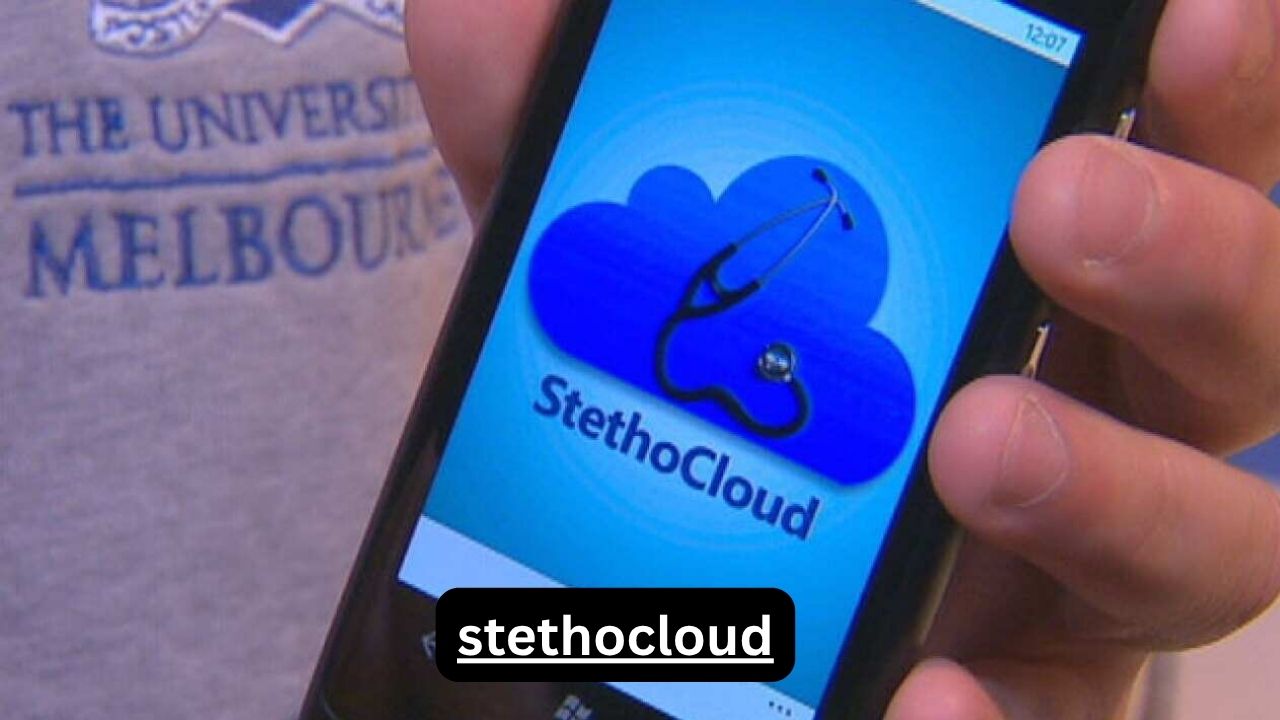
When a child arrives at a small clinic with a cough, fever, and rapid breathing, a health worker may have very little to work with. There may be no specialist nearby, limited diagnostic equipment, and little time to decide whether the child needs urgent treatment. This is the kind of real-world problem that gave rise to StethoCloud, a medical technology project built around a simple idea: combine a digital stethoscope, a mobile phone, and cloud-based analysis to make respiratory assessment more accessible.
StethoCloud was designed to help health workers record breath sounds and use software-based analysis as clinical decision support, particularly in settings where conventional diagnostic resources are limited. Its approach connects physical auscultation with smartphone processing and cloud computing rather than treating the stethoscope as an isolated instrument.
But what exactly is StethoCloud, how does it work, and how should you understand its role in modern medical technology? This guide explains the system, its practical strengths, limitations, regulatory history, and several less obvious lessons that remain relevant to today’s AI-assisted healthcare.
What Is StethoCloud?
StethoCloud is a healthcare technology platform focused on using digital respiratory sounds and computational analysis to support the diagnosis and monitoring of respiratory disease.
The original project was developed in Australia by a multidisciplinary team associated with the University of Melbourne. Its central concept was to connect a low-cost digital stethoscope called the StethoMic to a smartphone and use software and cloud infrastructure to process the recorded sounds.
The idea is important because a traditional stethoscope gives a clinician information through direct listening. A digital system can potentially do more:
- Record the sound.
- Store it for later review.
- Process the audio digitally.
- Calculate measurable characteristics such as respiratory rate.
- Send recordings to a cloud-based system.
- Apply machine-learning techniques to larger collections of clinical sounds.
- Provide decision-support information to a health worker.
In other words, StethoCloud was not simply trying to make a stethoscope app. Its broader ambition was to create a diagnostic research platform around cardiopulmonary sounds.
Why Was StethoCloud Created?
The original motivation was particularly relevant to childhood pneumonia.
Diagnosing respiratory disease in a well-equipped hospital is very different from assessing a sick child at a remote or under-resourced clinic. A health worker may need to make decisions without laboratory tests, imaging, or immediate access to a specialist.
StethoCloud’s developers focused on improving the information available at that point of care. Their system was designed around clinical workflows influenced by the Integrated Management of Childhood Illness guidelines rather than simply presenting an audio waveform and leaving the user to interpret it.
That distinction matters.
A technically impressive device can still be inconvenient in practice. A useful medical tool needs to fit into the workflow of the person actually treating the patient.
The problem with respiratory-rate counting
One of the interesting aspects of the original StethoCloud approach was its focus on respiratory rate.
Respiratory rate can provide valuable information when assessing a child with possible pneumonia. However, manually counting breaths can be difficult, especially when a child is distressed, moving, crying, or being examined in a busy environment.
StethoCloud’s BioSignals algorithms were intended to process breath sounds and calculate respiratory rate, including on relatively low-powered mobile devices.
But the developers also recognized an important limitation: a fast respiratory rate is not specific to pneumonia.
Anxiety, anemia, fever, and other illnesses can also increase respiratory rate. Therefore, a computer-generated respiratory-rate measurement should not automatically be interpreted as proof of pneumonia.
That is a valuable lesson for today’s AI healthcare systems: measuring something accurately is not the same as diagnosing the underlying disease accurately.
How Does StethoCloud Work?
The original architecture can be understood as several connected layers.
1. The digital stethoscope
The StethoMic was designed as a low-cost digital stethoscope attachment using commercially available components.
Instead of building a highly complex electronic system into the stethoscope itself, the project attempted to take advantage of processing capabilities already available in smartphones. This could reduce hardware complexity and potentially make the system cheaper to reproduce.
That approach was particularly relevant to developing-world healthcare.
If the phone already provides processing, storage, connectivity, and a user interface, the medical attachment does not necessarily need to perform every computational task independently.
2. Smartphone processing
The phone acts as more than a display.
According to StethoCloud’s documentation, the application could perform basic offline analysis of recorded breath sounds using its BioSignals algorithms. This included calculating respiratory rate.
Offline functionality is an easily overlooked feature.
In remote healthcare, an application that stops functioning whenever the internet disappears is considerably less useful than one capable of performing essential operations locally.
3. Cloud analysis
When connectivity was available, recorded sounds could be uploaded for more sophisticated processing.
The project’s cloud architecture was intended to support a large database of breath and heart sounds, allowing researchers to investigate patterns associated with different diseases. The original documentation described the use of Microsoft’s Azure infrastructure for this purpose.
The conceptual workflow was therefore:
Patient → StethoMic → Smartphone → Local processing → Cloud analysis → Clinical decision support
This is one of the most interesting aspects of the project because the intelligence was distributed between the physical device, mobile software, and cloud infrastructure.
What Makes StethoCloud Different From a Normal Stethoscope?
A traditional acoustic stethoscope is fundamentally a listening instrument.
A digital stethoscope can turn that listening experience into data.
That difference creates several possibilities.
| Traditional stethoscope | StethoCloud-style approach |
|---|---|
| Doctor listens directly | Sound can be digitally recorded |
| Information is mostly transient | Recordings can potentially be stored |
| Interpretation depends heavily on experience | Algorithms can provide additional analysis |
| Difficult to share remotely | Digital recordings can potentially be transmitted |
| No built-in database | Data can contribute to research datasets |
| No automatic computational analysis | Signal processing can calculate measurable features |
However, this does not mean the digital approach automatically replaces clinical judgment.
Digital sound can contain artifacts. Background noise, patient movement, poor sensor placement, clothing, room acoustics, and inconsistent recording technique can all affect the quality of the signal.
A computer cannot recover information that was never captured properly.
A Practical Example: A Child With Rapid Breathing
Imagine a community health worker examining a three-year-old child.
The child has:
- Fever
- Cough
- Rapid breathing
- Difficulty remaining still
The health worker records breath sounds with a digital stethoscope.
A useful system could potentially:
- Capture the respiratory sound.
- Estimate respiratory rate.
- Check the quality of the recording.
- Upload the recording when connectivity is available.
- Compare relevant acoustic characteristics with previously collected data.
- Return decision-support information.
- Leave the final clinical decision to the trained health professional.
The important word here is support.
The technology is most useful when it strengthens a clinical workflow rather than pretending that a single algorithm can understand the entire patient.
StethoCloud and Machine Learning
The project’s cloud concept was particularly forward-looking for its time.
Instead of analyzing one recording in isolation, the system aimed to build a large collection of respiratory and cardiac sounds. Machine-learning algorithms could then search for patterns that might be difficult for a person to identify consistently.
This approach resembles the direction medical AI has taken more broadly.
Modern researchers continue to investigate deep-learning and other computational methods for respiratory sound classification. One challenge is that recordings from different stethoscopes can behave like different data domains, creating variations that can reduce model robustness.
This reveals a deeper issue that is easy to miss when reading about AI-powered medical devices:
More data does not automatically mean better AI
Suppose one hospital records patients using Device A in quiet examination rooms, while another uses Device B in noisy community clinics.
Even if both datasets contain thousands of recordings, the machine-learning model may learn differences caused by the equipment or environment rather than differences caused by disease.
That means a clinically useful respiratory-AI system needs more than a large database. It needs carefully collected, diverse, well-labeled, and representative data.
Three Less-Obvious Lessons From StethoCloud
1. The smartphone was part of the medical device
It is tempting to think of the phone as merely an accessory.
In the StethoCloud architecture, that would miss the point.
The smartphone supplied processing power, software, connectivity, and an interface. This allowed the physical stethoscope attachment to remain comparatively simple.
That architecture offers an important engineering lesson: medical technology can sometimes become more affordable by moving complexity from specialized hardware into widely available computing platforms.
2. Offline capability can be as important as AI
Healthcare technology discussions often focus on cloud computing and artificial intelligence.
But in remote environments, connectivity is a practical constraint.
StethoCloud’s ability to perform basic analysis locally was therefore significant. The system did not need to depend entirely on continuous internet access for every calculation.
For future digital-health systems, an offline-first design can sometimes matter more to the end user than adding another sophisticated AI feature.
3. Diagnostic accuracy begins before the algorithm
A common misconception is that the most important part of an AI diagnostic system is the model.
In reality, the quality chain starts much earlier:
Sensor → placement → recording → signal quality → preprocessing → dataset → algorithm → interpretation
If the original recording is contaminated by noise or captured from the wrong location, even an advanced model may produce unreliable results.
This is particularly important with lung and heart sounds because they are affected by patient position, movement, environment, sensor contact, and recording technique.
What About Regulatory Validation?
There is an important distinction between the original StethoCloud research concept and later medical-device products associated with the StethoCloud/CliniCloud name.
The U.S. Food and Drug Administration’s records show that Stethocloud Pty. Ltd. (CliniCloud) received a 510(k) decision for the CliniCloud Stethoscope in January 2018, with the device determined to be substantially equivalent to a predicate electronic stethoscope.
The FDA record identifies the device as an electronic stethoscope intended for medical diagnostic purposes, including recording heart and lung sounds.
There was also an earlier FDA 510(k) clearance involving a CliniCloud non-contact thermometer from the same applicant.
This history is useful because it shows that the technology progressed beyond a student innovation concept into regulated medical-device territory.
At the same time, regulatory clearance should not be interpreted as proof that every claimed AI diagnostic capability is universally accurate in every clinical setting.
Is StethoCloud Still Available Today?
This is where readers should be careful.
The StethoCloud website remains accessible and still describes the platform as a respiratory-disease diagnostic research project.
However, the website’s material describes an older technology stack, including Windows Phone, Android, legacy J2ME-compatible phones, and an iOS version that was described as being in development.
That makes it inappropriate to assume that the original consumer-facing software is currently available in the same form.
There is also a separate modern use of the StethoCloud name in health technology. In 2024, dBio presented an AIoT wearable stethoscope called StethoCloud at the American Heart Association Scientific Sessions.
So when someone searches for “StethoCloud” today, they may encounter information from different periods and potentially different products.
That is one of the biggest reasons to check the manufacturer, product generation, regulatory record, and intended use before treating two similarly named technologies as identical.
StethoCloud vs Smartphone Stethoscope Apps
A basic smartphone stethoscope application and a StethoCloud-style system are not necessarily the same thing.
A basic app may simply use a phone microphone to capture or amplify sound.
StethoCloud’s original design instead involved an external digital stethoscope, signal processing, clinical workflow, and cloud-based analysis. Research literature has also highlighted a major weakness of smartphone-only approaches: microphone positioning and environmental noise can make recordings less reliable than those captured with dedicated external hardware.
For clinical applications, that distinction matters.
A medical device needs predictable acquisition quality, not simply the ability to record something that sounds like breathing.
Common Mistakes When Evaluating Digital Stethoscope Technology
Mistake 1: Assuming AI equals diagnosis
AI can identify patterns, classify sounds, or provide decision support.
It does not automatically understand the patient’s complete clinical condition.
Mistake 2: Ignoring recording quality
Poor placement or excessive background noise can undermine the entire analysis pipeline.
Mistake 3: Treating one measurement as definitive
Respiratory rate is useful, but it is not synonymous with pneumonia.
Mistake 4: Confusing historical and current product information
StethoCloud has a long development history. Older pages can describe technologies that are no longer representative of current smartphones or software.
Mistake 5: Assuming regulatory clearance covers every use case
A regulatory decision applies to the device and intended use described in the relevant submission. It should not be stretched into a blanket claim about every possible diagnostic application.
Who Could Benefit From This Technology?
The original concept was particularly relevant to:
- Community health workers
- Rural clinics
- Under-resourced healthcare facilities
- Pediatric respiratory assessment
- Telemedicine and remote consultation
- Clinical research
- Medical education
- Large-scale respiratory sound research
Its greatest potential was arguably not the stethoscope itself, but the connection between low-cost hardware and distributed clinical knowledge.
A health worker does not necessarily need to become an expert cardiologist or pulmonologist to benefit from better tools. The goal is to provide additional objective information while keeping trained clinical judgment in the loop.
What Does StethoCloud Tell Us About the Future of Medical AI?
The original project anticipated several ideas that are now becoming increasingly common.
Medical devices are becoming connected.
Smartphones are becoming clinical computing platforms.
Physiological signals are becoming machine-readable datasets.
And AI is increasingly being explored as a tool for interpreting those signals.
Recent research has pushed this idea even further, including multimodal or language-model-based systems designed to reason over cardiopulmonary auscultation data. For example, a 2026 research project called StethoLM explores instruction-following AI for tasks involving cardiopulmonary recordings, including classification, reporting, reasoning, and differential diagnosis.
The technology has therefore moved far beyond the original question of whether a smartphone can record a heartbeat.
The bigger question is now:
Can machines help clinicians interpret physiological sounds reliably, explain their reasoning, and remain robust across different patients, devices, environments, and healthcare systems?
That is much harder—and much more important.
FAQ
What is StethoCloud used for?
StethoCloud was developed as a digital-health platform for respiratory and cardiac sound analysis, with an early emphasis on improving pneumonia assessment in children. Its original system combined a digital stethoscope, smartphone software, signal processing, and cloud-based analysis.
Can StethoCloud diagnose pneumonia?
The original concept was designed to provide diagnostic and clinical decision support rather than simply replace a clinician. Respiratory-rate analysis could contribute useful information, but respiratory rate alone is not specific enough to establish pneumonia because several other conditions can cause rapid breathing.
Is StethoCloud a digital stethoscope?
StethoCloud is better understood as a broader technology platform rather than merely a piece of hardware. Its original approach used the StethoMic digital stethoscope together with smartphone applications and cloud-based computational analysis.
Did StethoCloud receive FDA clearance?
A CliniCloud Stethoscope associated with Stethocloud Pty. Ltd. received a U.S. FDA 510(k) decision in January 2018, with the device determined substantially equivalent to a predicate electronic stethoscope.
Is the original StethoCloud app still available?
The original website remains accessible, but its documentation references older mobile platforms such as Windows Phone and legacy J2ME. Therefore, readers should not assume that the original software or hardware is currently supported simply because the website remains online.
Why is cloud computing useful for a digital stethoscope?
Cloud infrastructure can provide storage and computational resources that are difficult to include in inexpensive hardware. More importantly, aggregated recordings can support research and machine-learning development, provided the data are collected, labeled, secured, and validated appropriately.
Conclusion
StethoCloud is interesting because its ambition went beyond making a conventional stethoscope digital. It attempted to connect medical hardware, smartphones, signal processing, cloud computing, and machine learning into one practical healthcare workflow.
The original project also demonstrates something that is still easy to forget in the AI era: good medical technology is not simply about having a sophisticated algorithm. It must work with real patients, imperfect recordings, limited connectivity, busy health workers, and clinical uncertainty.
Its approach to low-cost hardware, offline processing, cloud analysis, and respiratory-sound research was particularly forward-looking. Its history also shows why careful terminology matters: the StethoCloud name appears across different generations and healthcare products, so current readers should distinguish the original research platform from later CliniCloud-related devices and newer products using the same name.
Ultimately, the most valuable idea behind StethoCloud is simple: technology should make useful clinical information easier to capture and interpret without pretending that technology can replace clinical judgment.
That principle remains highly relevant as digital stethoscopes and AI-assisted auscultation continue to evolve.
