


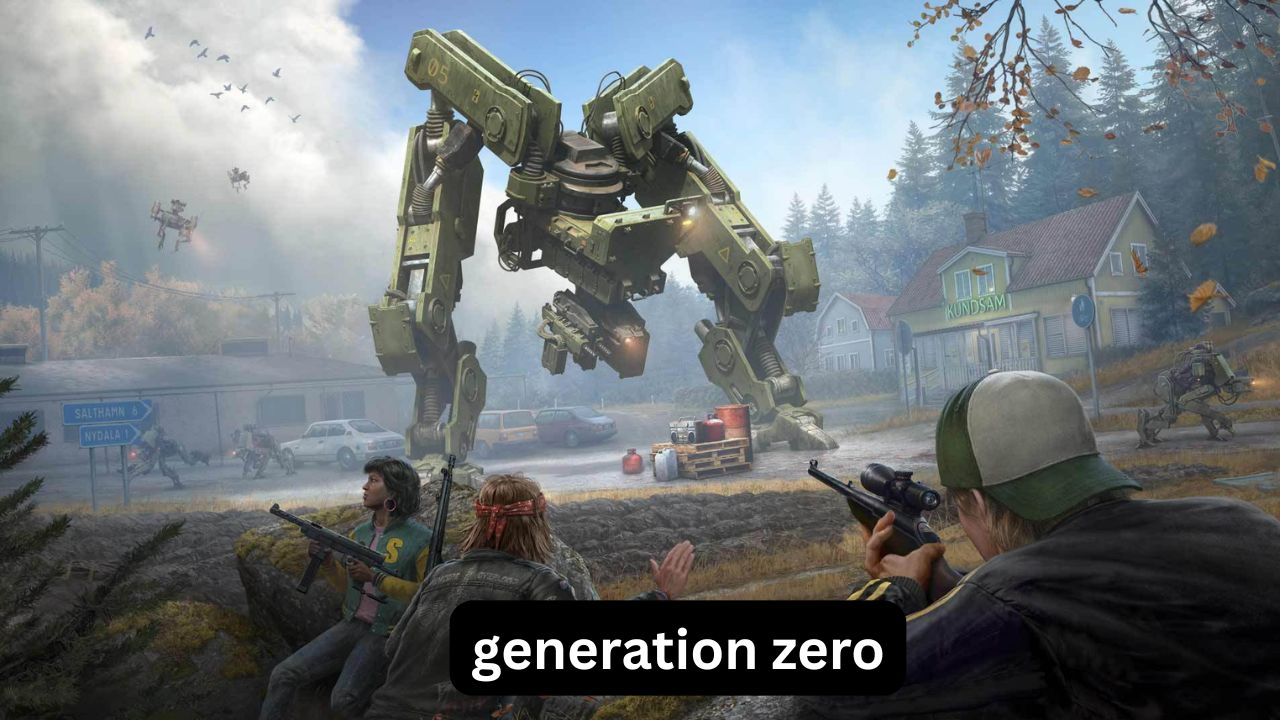
If you are considering Generation Zero today, there are a few questions worth answering before you spend time or money on it. Can you play with a friend on another platform? Is the PS5 version actually native? How large is the Generation Zero map? And, after years of updates and additional content, is the game still worth playing?
Generation Zero is an unusual open-world shooter. Instead of fighting zombies, monsters, or armies of human soldiers, you explore an alternate-history Sweden where enormous machines have taken over the countryside. The game combines stealth, looting, survival mechanics, RPG progression, exploration, and four-player co-op. It launched in 2019 and has changed considerably since then.
That evolution is important when reading older Generation Zero reviews. Some criticism from the original release no longer tells the whole story, while some fundamental weaknesses—especially repetitive missions and a deliberately lonely world—are still relevant.
Here is what you actually need to know about Generation Zero in 2026, including cross-platform multiplayer, PS5 support, the map, Steam, combat, progression, and whether it is worth playing solo or with friends.
What Is Generation Zero?
Generation Zero is an open-world stealth-action shooter set in the Swedish region of Östertörn during an alternate version of the Cold War era.
You return to the area and discover that something has gone seriously wrong. The population has largely disappeared, roads and houses are abandoned, and hostile machines patrol the countryside. Your job is not simply to shoot everything you see. You have to explore, collect weapons and supplies, understand enemy behavior, and gradually uncover what happened.
The core gameplay loop looks roughly like this:
- Explore a new area.
- Search houses, bunkers, vehicles and military locations.
- Find weapons, ammunition and equipment.
- Avoid or engage hostile machines.
- Complete missions and investigate clues.
- Improve your character and equipment.
- Push into more dangerous regions.
- Return later with better gear and knowledge.
The important distinction is that Generation Zero is not a traditional run-and-gun FPS. Charging directly at a large machine can turn a simple encounter into a long fight that attracts additional enemies.
The official Steam description emphasizes guerrilla warfare, exploration, crafting, base building and co-op for up to four players.
Is Generation Zero Crossplay?
This is probably the most important question for people buying the game with friends.
Generation Zero does not have full crossplay between PlayStation, Xbox and PC.
According to the game’s official multiplayer FAQ, crossplay is supported between Xbox and Xbox Game Pass PC, while other platforms do not support crossplay.
So the situation is:
| Platforms | Crossplay |
|---|---|
| Xbox ↔ Xbox | Yes |
| Xbox ↔ Xbox Game Pass PC | Yes |
| Xbox ↔ Steam PC | No |
| PlayStation ↔ Xbox | No |
| PlayStation ↔ PC | No |
| Steam ↔ PlayStation | No |
| Steam ↔ Xbox | No |
This is an easy detail to miss because the game itself supports multiplayer across a maximum of four players. Multiplayer support and cross-platform support are not the same thing.
What about Steam?
The Steam version of Generation Zero cannot crossplay with PlayStation or Xbox players.
If your friend owns the game on Steam and you own it on PlayStation, you cannot simply invite each other into the same world.
That makes platform choice particularly important if you are buying Generation Zero specifically as a co-op game.
Is Generation Zero on PS5?
Yes, you can play Generation Zero on PS5.
However, there is an important distinction: PlayStation currently lists Generation Zero as a PS4 version playable on PS5, with an enhanced 60fps experience.
In other words, don’t approach it as though it were necessarily designed from the ground up as a modern native PS5 release.
The PS5 experience is nevertheless attractive because the higher frame-rate presentation makes shooting and movement feel considerably better than an older console experience.
For someone already owning a PS5, there is little reason to avoid the game because it originated as a PS4 title.
Generation Zero Map Explained
One of Generation Zero’s biggest strengths is its open world.
The game takes place in Östertörn, a large Swedish-inspired landscape filled with forests, farms, towns, military installations, bunkers, roads and abandoned buildings.
The map is designed around exploration rather than simply moving from one mission marker to another.
Major regions include:
- Archipelago
- South Coast
- Farmlands
- Forest
- Mountains
- Marshlands
- North Coast
Additional content expands the world further, including Himfjäll Island through the Alpine Unrest expansion. A current community map guide organizes the world into these major areas and tracks locations such as safe houses, weapons, schematics, FNIX sites and collectibles.
Why the map feels bigger than it looks
The clever part of the Generation Zero map is not simply its physical size.
Traveling through it can feel dangerous because the game rarely lets you completely relax. A quiet road can suddenly become a combat zone. A house that looks like a convenient place to search can sit inside the patrol route of several machines.
This creates one of the game’s best experiences: you start reading the landscape tactically.
A forest becomes cover.
A hill becomes an observation point.
A destroyed vehicle becomes temporary protection.
A church or farmhouse becomes a potential loot location.
A safe house becomes a staging point for your next expedition.
That is why simply running from one objective to another can miss what makes Generation Zero interesting.
Generation Zero Combat: Why the Robots Matter
The machines are the heart of the game.
Instead of treating enemies as disposable targets, Generation Zero encourages you to identify their weaknesses and attack specific components.
A large machine can have weapons, armor and other vulnerable systems that can be damaged individually. This means combat can become a process of dismantling an enemy rather than simply reducing one giant health bar.
A practical approach is:
Observe → identify → disable → reposition → finish.
For example, rather than standing in an open field and emptying magazines into a powerful machine, you might first destroy a weapon system, retreat behind cover, relocate, and then attack another vulnerable component.
This makes ammunition management and positioning surprisingly important.
The best fights are often the ones you didn’t plan
One of Generation Zero’s strongest atmospheric qualities comes from unexpected encounters.
You might be searching an abandoned house when you hear heavy mechanical movement outside.
Then another machine joins the fight.
You run through the back door.
A third machine starts firing.
Suddenly a simple loot run has become a full survival encounter.
That unpredictability is a major reason the game can feel much more tense than its basic mission structure suggests.
Solo vs Co-op: Which Is Better?
Generation Zero supports one to four players, and players can join or leave multiplayer sessions while retaining their character, equipment and skill progression.
Solo
Solo play is best if you enjoy:
- atmospheric exploration
- stealth
- resource management
- slow tactical combat
- discovering locations yourself
- playing at your own pace
The loneliness is intentional. You spend long stretches with nothing but environmental sounds and distant machines.
That can be immersive—or boring—depending on what you expect.
Co-op
Co-op is where Generation Zero becomes considerably more chaotic.
With friends, one player can distract an enemy while another attacks from behind. You can divide exploration responsibilities, revive teammates, share ammunition and coordinate attacks against larger machines.
The game supports up to four players.
But there is an important practical warning: crossplay restrictions matter more in co-op than almost any other part of the game.
If your group owns different platforms, check compatibility before buying.
Generation Zero Review: Is It Actually Good?
A fair Generation Zero review has to separate the game’s atmosphere from its mission design.
What Generation Zero does extremely well
Atmosphere:
This is arguably the game’s biggest achievement. Empty Swedish roads, forests, abandoned homes and distant mechanical sounds create a distinctive sense of isolation.
Enemy design:
The machines are memorable and encourage tactical thinking rather than simple shooting.
Exploration:
The map rewards wandering. You can discover weapons, collectibles, schematics, supplies and unexpected encounters without following the main story constantly.
Co-op:
Four-player cooperative play can produce some excellent improvised moments.
Sound:
Weapon reports, explosions and machine noises travel convincingly through the environment, helping you understand that something dangerous may be nearby before you even see it. Current player discussions continue to highlight the sound design and atmosphere as major strengths.
Where Generation Zero struggles
The biggest weakness is repetition.
Some missions boil down to variations of:
- Go to this location.
- Find something.
- Kill machines.
- Search an area.
- Activate something.
- Travel somewhere else.
Older professional reviews made similar observations about the game’s sparse direction and repetitive mission structure.
The story can also feel less compelling than the setting deserves.
The premise is excellent. The world looks mysterious. The machines create immediate questions.
But the storytelling does not always deliver the same impact as the game’s atmosphere.
That is one reason modern players can have dramatically different opinions of Generation Zero. One player sees an atmospheric survival sandbox; another sees a repetitive open-world shooter.
Both reactions make sense.
A Useful Tip: Don’t Treat Every Machine as a Fight
This is one of the most important lessons for new players.
You don’t have to kill everything.
If a patrol is blocking the road, sometimes the smarter option is to crouch, move around it and continue your journey.
This saves:
- ammunition
- health
- healing items
- time
- durability
- unnecessary attention from nearby machines
Generation Zero works best when you think like a guerrilla fighter rather than an unstoppable action hero.
The game itself describes its combat around choosing battles carefully, which is exactly how the strongest encounters tend to play out.
Loot, Weapons and Progression
Looting is a major part of the progression system.
You will find different weapons, attachments, ammunition and crafting resources while exploring. Better equipment makes future encounters easier, but the game still rewards knowing how to use your surroundings.
You also have character progression, crafting and base-building systems.
There is depth here, but it can initially feel overwhelming because several progression systems appear at once.
A common mistake is trying to optimize everything immediately.
Don’t.
During the early game, concentrate on:
- Getting reliable weapons.
- Maintaining an ammunition supply.
- Unlocking useful movement and combat abilities.
- Learning machine weaknesses.
- Establishing useful safe houses.
- Exploring before obsessing over perfect equipment.
Once you understand the basic loop, the additional systems become easier to manage.
Generation Zero Map Tips for New Players
If you’re starting a new character, don’t immediately try to clear the entire map.
Instead:
Use safe houses strategically
Safe houses are more than fast-travel points. They give you places to regroup, store supplies and plan your next move.
Search military locations carefully
Military areas can contain valuable equipment but are also more likely to put you into serious fights.
Learn the sound of machines
This sounds minor, but it is extremely useful.
Before you see an enemy, you can often hear it.
Use that information.
Don’t waste rare ammunition
Normal enemies don’t always justify your best ammunition. Save powerful resources for machines that genuinely require them.
Explore sideways
If a mission sends you north, don’t always run directly north.
Check nearby buildings, roads and landmarks.
Some of the best moments come from finding something you weren’t specifically looking for.
Three Less-Obvious Things That Make Generation Zero Better
1. Retreating is part of combat
A retreat isn’t necessarily failure.
Breaking line of sight, moving into a forest, changing elevation and approaching again from another direction can completely change an encounter.
The game’s open world gives you room to do this.
2. Your knowledge becomes more valuable than your gear
A new weapon helps, but knowing where a dangerous patrol normally travels can be even more useful.
After spending enough time in an area, you naturally begin remembering routes, buildings and safe positions.
That creates a subtle sense of progression that isn’t represented by your character level.
3. The empty world is both a weakness and a strength
Many open-world games try to fill every minute with activities.
Generation Zero doesn’t.
There are long stretches where almost nothing happens.
That can make the map feel empty, and modern player reviews still criticize this aspect.
But that emptiness also makes the appearance of a giant machine feel more dramatic.
If every road were packed with enemies, the tension would disappear.
Common Generation Zero Mistakes
New players frequently make the same errors.
Running everywhere:
Sprinting into unknown territory can trigger encounters before you’re prepared.
Fighting every machine:
Sometimes avoiding combat is the best tactical decision.
Ignoring storage:
Keeping your inventory organized makes longer expeditions much easier.
Using valuable ammunition too freely:
Not every target deserves your strongest resources.
Rushing the story:
The world itself is a major part of the experience.
Buying without checking multiplayer compatibility:
This is particularly important if you’re purchasing Generation Zero for a friend-group.
Is Generation Zero Worth Playing in 2026?
Yes—if you like the type of game it is.
Generation Zero is not the best choice if you want a tightly scripted blockbuster campaign with constant cinematic missions.
It is much more appealing if you want:
- a large open world
- atmospheric exploration
- robot enemies
- tactical gunfights
- stealth
- looting and crafting
- four-player co-op
- an unusual 1980s Swedish setting
- a game where wandering can be as important as completing objectives
The Steam version currently has a Mostly Positive overall rating, with English-language reviews also rated Mostly Positive, showing that the game’s long-term reception has settled considerably more favorably than some of its early reviews suggested.
Still, the criticisms haven’t disappeared. Repetitive objectives, limited human interaction and an occasionally empty-feeling world remain legitimate complaints.
The real question isn’t whether Generation Zero is flawless.
It isn’t.
The better question is whether its particular combination of atmosphere, machines and open-ended co-op appeals to you.
For the right player, it absolutely does.
FAQ
Does Generation Zero have crossplay?
Generation Zero supports crossplay between Xbox platforms and Xbox Game Pass PC, but it does not offer full crossplay between PlayStation, Steam and Xbox. In particular, Steam players cannot join PlayStation or Xbox players through cross-platform multiplayer.
Can you play Generation Zero on PS5?
Yes. Generation Zero is playable on PS5 through its PS4 version, and PlayStation lists an enhanced 60fps experience. It supports up to four online players, with online multiplayer requiring PlayStation Plus.
How big is the Generation Zero map?
The main Östertörn world is divided into seven major regions: Archipelago, South Coast, Farmlands, Forest, Mountains, Marshlands and North Coast. Additional DLC content expands the playable world, including Himfjäll Island.
Is Generation Zero better solo or with friends?
Both work, but they offer different experiences. Solo play emphasizes isolation, stealth and careful planning, while co-op makes machine encounters more chaotic and gives you opportunities to coordinate attacks with up to three other players.
Is Generation Zero worth buying on Steam?
It can be, particularly if you enjoy atmospheric open-world shooters and don’t need crossplay with console friends. Steam’s current overall reception is Mostly Positive, although repetitive missions and the sparse world remain common criticisms.
Final Verdict
Generation Zero is a flawed but distinctive open-world shooter that has aged better than its early reputation suggests.
Its biggest strengths are the atmosphere, machine encounters, exploration and co-op. Its biggest weaknesses are repetitive mission structures, a relatively quiet human world and the lack of full cross-platform multiplayer.
If you’re playing on PS5, the 60fps experience makes it a solid way to experience the game. If you’re on Steam, the game remains a good choice for solo play or playing with other PC users, but you should not buy it expecting PlayStation or Xbox crossplay.
Most importantly, approach Generation Zero differently from a conventional FPS. Don’t rush from objective to objective. Listen for machines, use the terrain, conserve resources and sometimes walk away from a fight.
That is when the game starts to make sense: you’re not a superhero clearing an island. You’re an ordinary survivor trying to outthink machines that are much more powerful than you.
