


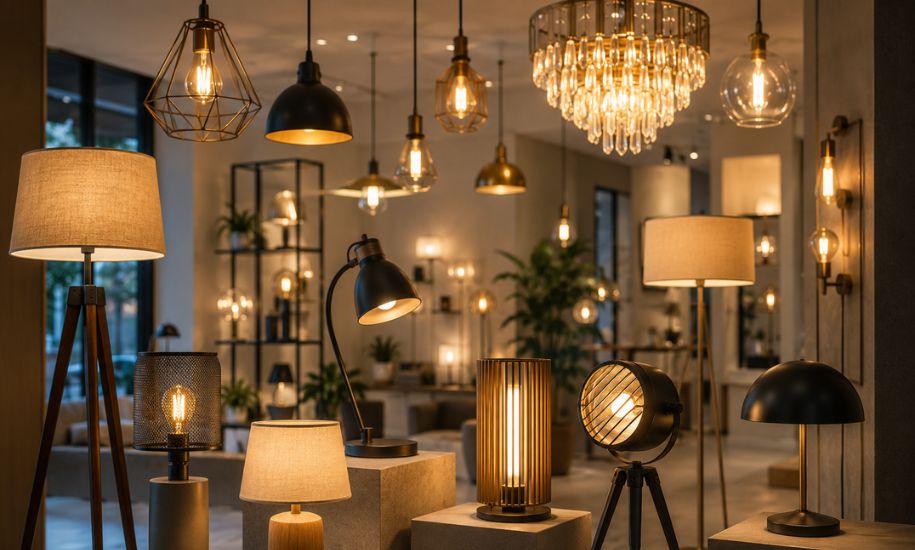
Lighting has moved far beyond the simple job of making a room brighter. Today, homeowners, architects, retailers, offices, and hospitality businesses use lighting to influence atmosphere, highlight architectural details, improve visibility, and manage energy consumption.
That broader approach helps explain the interest around Lamps4U. The name is associated online with a UAE-based lighting business as well as with websites using the Lamps4U name for consumer lighting content and products. The UAE-based Lamps4U FZCO is described as a manufacturer and distributor of lighting products, fixtures, and lamps serving residential and commercial applications.
The company-related information is particularly relevant because older online articles sometimes describe Lamps4U simply as a generic online lighting platform or make broad claims about its products without distinguishing between different websites using the same name.
This updated guide takes a more practical approach. It looks at what Lamps4U is associated with, the types of lighting involved, LED efficiency, commercial and residential applications, sustainability, smart lighting considerations, and what buyers should check before choosing a lighting solution.
What Is Lamps4U?
Lamps4U is associated with Lamps4U FZCO, a UAE-based manufacturer and distributor of lighting products, fixtures, and lamps. Information published by Genlux describes the business as providing interior, exterior, decorative, and amenity lighting solutions for residential and commercial buildings.
The company is associated with Dubai Silicon Oasis and serves the UAE and wider regional market, according to current online business information.
Its positioning is broader than simply selling individual lamps. Lighting projects can involve selecting fixtures, matching light output to a space, considering installation requirements, and balancing appearance with energy consumption.
This makes Lamps4U relevant to several groups, including:
- Homeowners
- Interior designers
- Architects
- Contractors
- Commercial property owners
- Hospitality businesses
- Retail businesses
- Office managers
It is also worth noting that “Lamps4U” is not necessarily one single online shopping identity. Multiple websites currently use similar Lamps4U branding, so consumers should verify the specific company, domain, location, and seller before assuming two websites are connected.
What Types of Lighting Does Lamps4U Cover?
The lighting sector includes far more than traditional table lamps.
Products and solutions associated with Lamps4U include categories such as:
- Decorative lighting
- Indoor lighting
- Outdoor lighting
- LED products
- Fixtures and fittings
- Commercial lighting
- Residential lighting
- Architectural applications
The precise catalogue depends on the supplier, project, and product line.
This distinction is useful because a homeowner buying a decorative pendant light has very different requirements from a contractor specifying hundreds of fixtures for a commercial building.
Lamps4U and Interior Lighting
Interior lighting affects both the appearance and usability of a room.
A beautifully designed room can still feel uncomfortable if the lighting is poorly positioned or too harsh. Conversely, a relatively simple room can feel considerably more polished when its lighting is layered correctly.
Ambient Lighting
Ambient lighting provides the general illumination of a room.
Examples include:
- Ceiling fixtures
- Recessed lights
- LED panels
- Large pendant fixtures
The goal is usually to provide consistent visibility rather than dramatic visual emphasis.
Task Lighting
Task lighting is designed around a particular activity.
Examples include:
- Desk lamps
- Reading lights
- Under-cabinet kitchen lighting
- Workbench lighting
The key is positioning. A powerful lamp in the wrong location can create glare rather than improve visibility.
Accent Lighting
Accent lighting highlights a particular feature.
It can be used to draw attention to:
- Artwork
- Architectural details
- Shelving
- Decorative objects
- Textured walls
This three-layer approach—ambient, task, and accent lighting—is often more useful than choosing fixtures based purely on appearance.
Decorative Lighting and Modern Interior Design
Lighting fixtures have increasingly become design features in their own right.
A pendant over a dining table can function as a visual centrepiece. A floor lamp can define a reading corner. Wall lighting can create depth in an otherwise flat-looking room.
Popular design directions include:
Minimalist Fixtures
Minimalist lighting generally uses simple shapes and restrained finishes.
It works particularly well in:
- Contemporary apartments
- Modern offices
- Scandinavian-inspired interiors
- Small rooms
Statement Lighting
Statement fixtures deliberately attract attention.
Examples include:
- Sculptural pendants
- Large chandeliers
- Geometric fixtures
- Decorative ceiling installations
The practical challenge is balancing visual impact with adequate illumination.
A beautiful fixture that leaves a room too dark is still poor lighting design.
LED Lighting and Energy Efficiency
LED technology is one of the biggest changes in modern lighting.
Compared with traditional incandescent lighting, LEDs generally use substantially less electricity for comparable illumination and have much longer operating lives.
For a buyer, however, wattage alone should not determine which LED to choose.
Three specifications deserve particular attention:
Lumens
Lumens indicate the amount of visible light produced.
A higher lumen rating generally means more light output.
Colour Temperature
Colour temperature is expressed in Kelvin.
Typical categories include:
- Warm white: roughly 2700–3000K
- Neutral white: roughly 3500–4000K
- Cool white: roughly 5000K and above
Warm light is often comfortable in bedrooms and living rooms, while cooler light may be useful in work-focused environments.
Colour Rendering
Colour rendering affects how accurately objects appear under the light.
For homes, retail environments, galleries, and hospitality spaces, colour quality can be just as important as brightness.
A Better Way to Think About Energy Savings
One useful but often overlooked point is that the most efficient lamp is not necessarily the best-performing lighting system.
Imagine an office that replaces every fixture with efficient LEDs but installs too few fixtures. Employees may compensate by adding desk lamps or increasing operating hours elsewhere.
The better approach is to consider the complete system:
light output + fixture efficiency + operating hours + controls + room design
This is particularly important for commercial projects.
Smart Lighting and Automation
Smart lighting has expanded the definition of what a lighting system can do.
Modern connected systems may offer:
- Smartphone control
- Dimming
- Scheduling
- Motion detection
- Occupancy sensors
- Voice control
- Scene creation
- Remote management
Smart lighting can be useful, but not every room needs an elaborate connected system.
For example, a motion sensor may provide real value in a corridor or storage area because the light does not need to remain on continuously. In a bedroom, simple dimming may be more useful than complicated automation.
The best smart-lighting investment is therefore the one that solves a real problem.
Residential Lighting Applications
For homes, lighting decisions should begin with how each space is used.
Living Room
Use a combination of ambient and accent lighting rather than relying on one bright ceiling fixture.
Floor lamps and wall lighting can help create softer evening illumination.
Bedroom
Warm, dimmable lighting generally works well for a relaxing environment.
Bedside lights should also be positioned so that one person can read without unnecessarily illuminating the entire room.
Kitchen
Kitchens need good task lighting.
Under-cabinet lighting can be particularly useful because overhead fixtures may leave work surfaces in shadow.
Home Office
A home office requires attention to glare and screen reflections.
A good desk-lighting arrangement should illuminate the work area without shining directly into the user’s eyes or computer display.
Commercial Lighting Solutions
Commercial environments require a more structured approach.
Lighting can influence:
- Workplace comfort
- Retail presentation
- Customer experience
- Product visibility
- Energy consumption
- Maintenance requirements
An office may prioritize visual comfort and consistent illumination, while a retail store may require carefully controlled accent lighting to highlight products.
Hotels and restaurants have different requirements again, with atmosphere playing a much larger role.
This is where a professional lighting supplier can offer more value than simply choosing individual fixtures from a catalogue.
Lamps4U and Sustainability
Sustainability is an important part of the lighting discussion, particularly when older fluorescent and high-intensity discharge lamps are involved.
Historical industry information identifies Lamps4U as being involved in lamp-recycling activity in the UAE. A reported partnership with Dulsco involved a “Lampswithbenefit” initiative intended to provide safer disposal and recycling of spent lamps.
This matters because some older lamp technologies contain mercury. Improper disposal can create environmental concerns.
Modern LED products do not contain mercury in the same way as fluorescent lamps, but responsible end-of-life management is still worthwhile because lighting products contain materials that can potentially be recovered or recycled.
Why Lamp Recycling Matters
It is easy to think about sustainability only at the moment of purchase.
A better lifecycle perspective considers:
- Manufacturing
- Transportation
- Installation
- Electricity consumption
- Maintenance
- Replacement
- Disposal or recycling
For large commercial installations, the final two stages can become particularly significant because hundreds or thousands of fixtures may eventually need replacement.
This is one area where responsible disposal programmes can complement energy-efficient product choices.
Choosing the Right Lamps4U Lighting Solution
Instead of starting with the fixture, start with the room.
Ask five questions:
1. What is the room used for?
A bedroom, warehouse, restaurant, and office require very different lighting.
2. How much light is actually needed?
Avoid choosing fixtures based solely on appearance.
3. What atmosphere should the space create?
Warm, neutral, and cool lighting can produce noticeably different impressions.
4. Does the lighting need controls?
Dimming, timers, occupancy sensors, and smart controls can reduce unnecessary operation.
5. What happens when the product fails?
Check replacement availability, warranty terms, driver compatibility, and maintenance requirements before committing to a large installation.
Common Lighting Mistakes
Choosing Wattage Instead of Lumens
Wattage tells you about energy consumption, not directly how much useful light you receive.
Using One Fixture for Everything
A single ceiling light rarely provides the best combination of ambient, task, and accent lighting.
Ignoring Colour Temperature
A beautifully designed room can look completely different under warm and cool light.
Overlooking Glare
Brighter is not always better. Direct glare can make offices, kitchens, and workspaces uncomfortable.
Buying Fixtures Without Checking Compatibility
Voltage, bulb type, dimming compatibility, mounting requirements, IP ratings, and control systems should all be checked before installation.
Outdoor Lighting
Outdoor lighting has both aesthetic and practical roles.
Common applications include:
- Garden pathways
- Entrances
- Balconies
- Terraces
- Parking areas
- Building façades
- Outdoor hospitality spaces
For outdoor installations, buyers should pay particular attention to IP ratings and environmental exposure.
A fixture designed for an indoor room should not automatically be installed outdoors simply because it looks suitable.
Commercial Projects Need More Than Attractive Fixtures
For larger projects, lighting design becomes an engineering and operational issue.
A professional specification may need to consider:
- Mounting height
- Light distribution
- Maintenance access
- Energy consumption
- Controls
- Emergency lighting requirements
- Heat management
- Local electrical regulations
- Product availability
The fixture itself is only one part of the system.
This is why commercial buyers should avoid selecting products solely from photographs.
Lamps4U in the UAE Lighting Market
The UAE presents a particularly interesting lighting environment because residential development, hospitality, retail, offices, and large commercial projects create demand for different types of illumination.
The UAE-based Lamps4U business is positioned around supplying lighting products and solutions for both residential and commercial applications.
For buyers in the region, local availability can be valuable because replacement parts, product support, delivery times, and compliance requirements matter just as much as the initial purchase price.
How to Compare Lighting Suppliers
If you’re comparing Lamps4U with another lighting supplier, don’t focus only on the catalogue.
Compare:
- Product specifications
- Warranty
- Energy performance
- Availability
- Replacement components
- Installation support
- Project support
- Safety certifications
- Delivery time
- After-sales service
For a single decorative lamp, price may dominate the decision.
For a commercial project, total cost of ownership is often much more important.
A Practical Total-Cost Calculation
Suppose two fixtures have similar purchase prices.
Fixture A uses more electricity but costs less initially.
Fixture B costs slightly more but uses less electricity and lasts longer.
For a home, the difference may be relatively small.
For an office operating hundreds of fixtures for thousands of hours per year, the electricity and maintenance difference can become significant.
That is why commercial lighting should be evaluated over its expected operating life rather than only at checkout.
What Makes a Good Lighting Solution?
The best lighting solution is rarely the brightest or most expensive.
A good system should provide the right combination of:
- Adequate illumination
- Visual comfort
- Appropriate colour quality
- Efficient energy use
- Suitable design
- Reliable operation
- Easy maintenance
- Appropriate controls
The right balance depends on the space.
A luxury restaurant may deliberately use lower ambient illumination with carefully positioned accent lighting. A warehouse needs a completely different approach.
FAQ
What is Lamps4U?
Lamps4U is associated with a UAE-based lighting manufacturer and distributor, Lamps4U FZCO, which provides lighting products, fixtures, and solutions for residential and commercial applications. Online information also shows other websites using the Lamps4U name, so consumers should verify the specific business or domain they are dealing with.
Does Lamps4U offer LED lighting?
Lamps4U-related information and current online coverage associate the business with energy-efficient lighting, including LED-related solutions. However, the exact products and specifications depend on the particular catalogue or supplier being considered. Buyers should check lumen output, colour temperature, colour rendering, warranty, and compatibility rather than relying on the word “LED” alone.
Is Lamps4U only for home lighting?
No. The UAE-based Lamps4U business is described as serving both residential and commercial lighting requirements. Its broader applications include interior, exterior, decorative, and amenity lighting.
Is LED lighting more energy efficient?
Generally, yes. LED technology typically produces useful illumination with substantially lower energy consumption than traditional incandescent lighting and can have a much longer operating life. Actual savings depend on the fixture, operating hours, electricity price, and lighting design.
What should I check before buying a lamp?
Check the light output, colour temperature, colour rendering, dimensions, electrical compatibility, dimming capability, warranty, and intended environment. For outdoor products, also check the appropriate ingress-protection rating. For commercial projects, maintenance and replacement availability should also be considered.
Does Lamps4U have sustainability initiatives?
Historical industry reporting associates Lamps4U with a lamp-recycling initiative conducted with Dulsco, designed to provide safer disposal and recycling of spent lamps. Sustainability claims should nevertheless be checked against current company information and the specific programme or product being discussed.
Final Thoughts
Lamps4U is best understood in the context of the wider evolution of modern lighting: consumers and businesses increasingly want products that combine design, performance, efficiency, reliability, and responsible lifecycle management.
The UAE-based Lamps4U business is associated with residential and commercial lighting products and solutions, while the Lamps4U name also appears across multiple online properties.
For buyers, the most useful lesson is not simply to search for the most attractive lamp. Start with the purpose of the space, determine the required light level, consider colour and glare, evaluate energy consumption, and check maintenance and compatibility.
For larger installations, think beyond the purchase price. A lighting system that is efficient, comfortable, maintainable, and properly designed can deliver value for years.
