


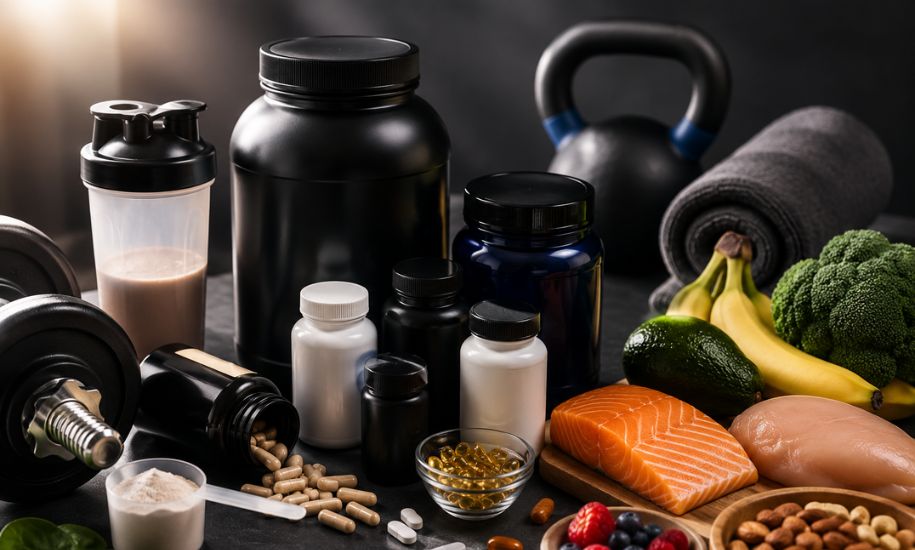
Supplements can be useful, but taking more of them does not automatically produce better fitness results. A protein powder cannot compensate for inadequate food, creatine cannot replace consistent training, and a multivitamin cannot fix poor sleep or an unbalanced diet.
That is why supplement management TheSpoonAthletic is best understood as a structured approach rather than a list of products. Current TheSpoonAthletic content places supplementation alongside training, nutrition, recovery and sustainable lifestyle habits. Its supplement guidance emphasizes using products for a clear purpose instead of building unnecessarily complicated stacks.
The practical question is therefore not simply, “Which supplement should I take?” A better question is, “What problem am I trying to solve, and is a supplement actually the best solution?”
This guide explains how to approach supplement management, which commonly used supplements have stronger evidence, how timing really works, what mistakes to avoid, and how to build a simpler routine that is easier to evaluate and maintain.
What Is Supplement Management TheSpoonAthletic?
Supplement management TheSpoonAthletic refers to organizing supplement use around a specific health, nutrition or performance goal.
The central idea is straightforward: supplements should have a reason for being in your routine.
A sensible management system considers:
- Your diet
- Training volume
- Fitness goals
- Recovery needs
- Existing nutrient deficiencies
- Medications and health conditions
- Product ingredients
- Dosage
- Potential interactions
- Whether the supplement is actually producing a useful benefit
Current TheSpoonAthletic material similarly describes supplementation as something that should support a healthy diet rather than replace it.
This is a more useful way to think about supplements than simply copying a professional athlete’s daily stack.
Why Supplement Management Matters
The supplement market is crowded with powders, capsules, drinks and combination formulas. Some have strong evidence behind them, while others have limited evidence or make claims that go far beyond what research supports.
Without a plan, people commonly make three mistakes:
- They buy products before identifying a need.
- They take several products simultaneously and cannot tell what works.
- They assume expensive products are automatically better.
A management system creates a simple decision-making process.
Before adding something, ask:
- What is the purpose?
- Is there evidence that it helps with that purpose?
- Can the need be met through food?
- What dose is appropriate?
- Could it interact with medication or another supplement?
- How will I know whether it is helping?
Those questions can prevent unnecessary spending and reduce avoidable risks.
TheSpoonAthletic Approach: Food First
One of the most important principles in supplement management is that supplements should complement nutrition, not replace it.
A strong foundation includes:
- Adequate calories
- Sufficient protein
- Fruits and vegetables
- Whole grains or other carbohydrate sources
- Healthy fats
- Adequate fluids
- Consistent sleep
- A suitable training program
For example, someone struggling to consume enough protein may benefit from protein powder because it is convenient. But someone already eating enough protein may gain little from simply adding more.
The same principle applies to vitamins and minerals.
A supplement is most useful when it addresses a genuine nutritional requirement rather than being added simply because it is popular.
Which Supplements Have the Strongest Practical Evidence?
Not every supplement deserves the same level of attention.
Whey Protein
Protein powder is primarily a convenience tool.
It can make it easier to reach daily protein requirements, particularly for people who struggle to get enough protein from normal meals.
Potential advantages include:
- Convenient protein intake
- Easy post-training nutrition
- Support for muscle maintenance and growth
- Useful option when appetite or schedule makes meals difficult
The key point is that whey protein is not inherently superior to protein-rich foods. Its main advantage is convenience and its high-quality protein profile.
Creatine Monohydrate
Creatine monohydrate is one of the best-studied sports supplements.
Regular creatine supplementation can support high-intensity exercise performance and contribute to improvements in strength and lean mass when combined with resistance training.
A commonly used maintenance approach for healthy adults is around 3–5 grams per day, although individual circumstances can differ.
Importantly, creatine does not need to be taken immediately after a workout to work.
Consistency over time is more important than finding a supposedly perfect minute on the clock.
Omega-3 Fatty Acids
Omega-3 supplements can be useful in situations where dietary intake of EPA and DHA is low.
However, taking fish oil simply because someone exercises does not automatically mean it is necessary.
The first question should be:
How much omega-3-rich food is already in the diet?
For people who regularly consume fatty fish, supplementation may be less important than it is for someone whose diet contains very little of these foods.
Vitamin D
Vitamin D is important for bone health and normal physiological function.
But it is not a general-purpose performance enhancer that everyone needs in high doses.
Supplementation makes more sense when dietary intake, sun exposure, individual circumstances or testing indicate a need.
Taking excessive amounts without a reason can be harmful.
Magnesium
Magnesium is involved in numerous processes, including normal muscle and nerve function.
A person with inadequate magnesium intake may benefit from improving dietary intake or, where appropriate, supplementation.
However, magnesium should not automatically be marketed as a cure for poor sleep, muscle cramps or every form of fatigue.
The cause of those symptoms matters.
Multivitamins
A multivitamin can help fill certain nutritional gaps, but it is not a replacement for a varied diet.
People should also be careful about combining multiple fortified products.
For example, taking a multivitamin together with separate high-dose vitamin products can unintentionally increase total intake.
What About BCAAs and Glutamine?
This is an area where supplement articles often become misleading.
BCAAs are popular in sports nutrition, but if someone already consumes enough high-quality protein, adding BCAAs may provide little additional benefit for muscle growth.
Similarly, glutamine has important roles in human physiology, but routine supplementation is not automatically necessary for healthy people who eat adequately.
The lesson is simple:
A supplement being popular does not mean it is essential.
TheSpoonAthletic-style approach is more useful when it focuses on purpose, evidence and individual circumstances rather than encouraging a large stack of products.
Does Supplement Timing Really Matter?
Timing depends heavily on the supplement.
There is no universal rule saying every supplement must be taken before or after exercise.
Protein
Daily protein intake and distribution across meals are generally more important than obsessing over a tiny post-workout window.
A protein shake after training can be convenient, especially if a meal is not available, but it is not mandatory for everyone.
Creatine
Creatine works through regular supplementation and muscle saturation.
Taking it consistently each day is generally more important than whether it is consumed before or after training.
Caffeine
Timing is more relevant for caffeine because its stimulant effect can influence workout performance.
However, late-day caffeine can interfere with sleep, which creates an obvious problem for recovery.
Electrolytes
Electrolytes can become particularly relevant during prolonged or heavy sweating, especially in hot environments.
For a short, ordinary workout, they may not be necessary for everyone.
Vitamins and Minerals
Some nutrients are better absorbed with food, while others have specific considerations.
Instead of following a generic “morning versus night” chart, follow the product directions and consider the nutrient’s characteristics.
A Better Way to Build a Supplement Routine
A practical supplement plan does not need to contain ten different products.
Step 1: Define the goal
Be specific.
For example:
- Increase strength
- Reach daily protein targets
- Correct a documented deficiency
- Support endurance training
- Improve dietary convenience
“Get healthier” is too broad to determine whether a particular supplement is useful.
Step 2: Review your diet
Look at what you already eat before purchasing anything.
Ask:
- Am I eating enough protein?
- Am I consuming a variety of foods?
- Do I regularly eat fruits and vegetables?
- Do I consume adequate fluids?
- Am I getting enough calories for my training?
- Is there an obvious nutritional gap?
Step 3: Start with the simplest effective option
If your goal is simply to increase protein intake, you may not need a pre-workout, amino-acid formula, recovery blend and several additional products.
One useful product can be better than a complicated stack.
Step 4: Introduce products one at a time
Starting five supplements on the same day creates a tracking problem.
If you experience:
- Bloating
- Headaches
- Digestive changes
- Sleep problems
- Skin reactions
- Unusual symptoms
you may not know which product caused them.
Introducing products separately makes evaluation easier.
Step 5: Review the routine
Every supplement should eventually answer the question:
Is this still necessary?
If the answer is unclear, reconsider it.
Supplement Tracking: A Simple System
A basic supplement log can make management much easier.
| Item | What to record |
|---|---|
| Product | Exact product name |
| Purpose | Why you are taking it |
| Dose | Amount per serving |
| Frequency | How often you use it |
| Start date | When you began |
| Results | What changed |
| Side effects | Any unwanted response |
| Other products | Potential overlap |
| Review date | When you will reassess |
This approach is more useful than relying on memory.
It also helps identify duplicate ingredients.
For example, a pre-workout, multivitamin and recovery formula may all contain the same vitamin or stimulant.
Product Quality Matters
The label is only one part of supplement evaluation.
Look for reputable manufacturers and, where appropriate, independent certification or testing.
This can be especially important for competitive athletes because contaminated supplements can create problems under anti-doping rules.
Useful certification programs may include:
- NSF Certified for Sport
- Informed Sport
- USP Verified
Certification does not mean a product is necessary or effective for your particular goal. It primarily provides additional information about quality and testing.
Supplements and Medication: An Important Safety Check
This is one of the most overlooked parts of supplement management.
Some supplements can interact with medications or affect medical conditions.
Extra caution is appropriate if you:
- Take prescription medication
- Are pregnant or breastfeeding
- Have kidney or liver disease
- Have a bleeding disorder
- Have a diagnosed nutrient deficiency
- Are preparing for surgery
- Are under medical treatment
In these situations, speak with a qualified healthcare professional before starting a new supplement.
Do not assume that a product is safe simply because it is labeled “natural.”
Natural substances can still have physiological effects and interactions.
Common Supplement Management Mistakes
Taking More Because You Want Faster Results
Higher doses do not automatically create better results.
Some nutrients can become harmful when consumed in excessive amounts.
Copying an Influencer’s Stack
An athlete’s supplement routine may reflect their training load, diet, body size, medical circumstances and professional support.
You do not have the same requirements simply because you follow the same workout.
Buying a Proprietary Blend
Proprietary blends can make it difficult to determine exactly how much of each ingredient you are consuming.
Transparent labeling is generally easier to evaluate.
Ignoring Sleep
A supplement cannot compensate for consistently poor sleep.
If recovery is your goal, improving sleep may provide a much bigger return than adding another product.
Treating Supplements as a Shortcut
Supplements can support a good program.
They cannot replace:
- Progressive training
- Adequate nutrition
- Recovery
- Hydration
- Consistency
A Simple Example of Supplement Management
Consider two recreational lifters.
Person A buys:
- Pre-workout
- BCAAs
- Fat burner
- Testosterone booster
- Recovery formula
- Multivitamin
- Protein powder
- Creatine
They take everything daily but do not track their diet or sleep.
Person B first checks their protein intake, improves meals and establishes a consistent training routine. They then use protein powder when convenient and creatine consistently.
Person B may actually have the more effective supplement strategy—not because they take more, but because every product has a clear purpose.
That is the practical lesson behind responsible supplement management.
What TheSpoonAthletic Gets Right—and What to Question
Current TheSpoonAthletic content emphasizes a broader framework involving fitness, nutrition, recovery, mindset and supplementation. Its supplement guidance recommends common products such as whey protein, creatine, fish oil, multivitamins and vitamin D while also advising readers to consult qualified professionals.
That broader context is important.
However, readers should still evaluate individual supplement claims independently. A website discussing a supplement does not automatically establish that the product is appropriate for every person.
The strongest approach is to combine:
evidence + individual need + appropriate dose + quality control + ongoing review.
Three Practical Insights That Are Easy to Miss
1. The best supplement may be the one you stop taking
If your diet changes or a deficiency is corrected, a supplement that was once useful may no longer be necessary.
Supplement management is therefore an ongoing process, not a permanent shopping list.
2. Timing is often less important than consistency
Fitness marketing frequently focuses on tiny timing windows.
For many supplements, getting the appropriate amount consistently matters more than whether you took it at 8:00 or 8:30.
3. The simplest stack is often the easiest to evaluate
The more products you add, the harder it becomes to identify what is helping.
A small, purpose-driven routine provides cleaner feedback.
Who Can Benefit From Supplement Management?
Supplement management can be useful for:
- Recreational gym users
- Competitive athletes
- Endurance athletes
- Strength trainees
- People with dietary restrictions
- People struggling to meet nutritional needs through food
- Individuals with medically identified deficiencies
But not everyone needs supplements.
For someone who already has a balanced diet and no identified nutritional gaps, the most important improvements may come from training consistency, food quality and recovery.
FAQ
What is supplement management TheSpoonAthletic?
Supplement management TheSpoonAthletic describes a structured approach to using supplements alongside training, nutrition and recovery. The emphasis is on selecting products for a specific purpose rather than taking a large number of supplements without a clear plan. Current TheSpoonAthletic material presents supplementation as part of a broader fitness and wellness framework.
Which supplements are most useful for athletes?
The answer depends on the athlete’s diet, sport and goals. Creatine monohydrate and protein supplements have strong practical applications in many strength-training situations, while other supplements may be useful only when a specific dietary or physiological need exists. A supplement should be evaluated based on evidence and individual circumstances rather than popularity.
Should I take supplements before or after a workout?
There is no universal timing rule for all supplements. Creatine, for example, depends more on regular daily use than an exact workout window, while caffeine timing can matter because of its stimulant effects. Protein timing can be convenient after exercise, but total daily protein intake remains an important consideration.
Can supplements replace a healthy diet?
No. Supplements are designed to supplement the diet, not replace a balanced eating pattern. Food provides protein, carbohydrates, fats, fiber, vitamins, minerals and other compounds that cannot always be replicated by a supplement.
How many supplements should I take?
There is no ideal number. A better approach is to use the smallest number of products that have a clear purpose for your individual needs. Starting with fewer products also makes it easier to identify benefits, side effects and unnecessary overlap.
Are supplements safe for everyone?
No supplement is automatically safe for everyone. Safety depends on the ingredient, dose, health status, medications and other products being used. People with medical conditions, those taking medication, pregnant or breastfeeding individuals, and competitive athletes should obtain appropriate professional advice before starting new supplements.
Final Thoughts
Supplement management TheSpoonAthletic is most useful when understood as a method rather than a shopping list.
The goal is not to fill a cabinet with powders and capsules. It is to identify genuine nutritional or performance needs, choose evidence-supported products, use sensible doses, monitor the response and remove products that no longer serve a purpose.
Start with the basics: good nutrition, structured training, adequate hydration, quality sleep and consistent recovery. Then use supplementation strategically where it adds genuine value.
The best supplement routine is rarely the most complicated one. It is the one you understand, can afford, can track and have a clear reason for using.
