


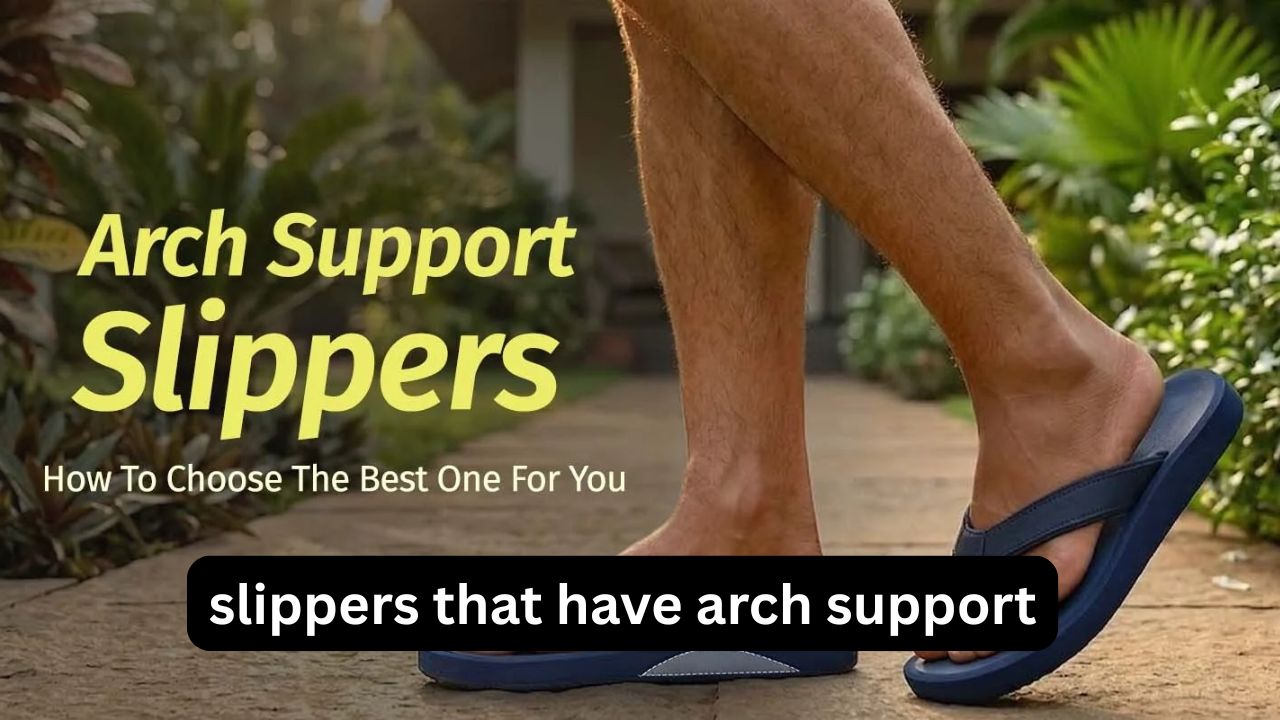
If your feet ache after walking around the house, your slippers may be part of the problem. Many soft, comfortable-looking slippers have little structure underneath, so your feet can end up working harder than you realize. This is especially noticeable when you spend hours standing in the kitchen, cleaning, working from home, or moving between rooms on hard floors.
Choosing slippers that have arch support can make everyday footwear feel noticeably more stable and comfortable. The goal isn’t simply to find the slipper with the thickest sole. Good arch support should work with the natural shape of your foot, while the footbed, heel area, and outsole provide enough cushioning and stability for the way you actually move.
This guide explains what meaningful arch support feels like, which features matter most, how to choose slippers for different foot types and routines, and which common mistakes can leave your feet uncomfortable despite buying an expensive pair.
What Does Arch Support in Slippers Actually Mean?
Arch support refers to the raised, structured part of a slipper’s footbed that supports the arch of your foot.
A supportive slipper typically combines several elements:
- Contoured footbed: Follows the general shape of the foot rather than being completely flat.
- Arch area: Provides some lift beneath the middle of the foot.
- Heel cup: Helps keep the heel centered instead of allowing excessive side-to-side movement.
- Cushioning: Reduces impact and pressure on hard surfaces.
- Stable outsole: Prevents the slipper from folding or twisting excessively.
- Roomy toe box: Allows the toes to spread naturally.
The important point is that arch support is not the same thing as softness.
A slipper can feel wonderfully plush when you first put it on and still provide very little structural support. Conversely, a supportive footbed may feel slightly unusual during the first few wears because your foot isn’t sinking into a completely flat cushion.
Why Arch Support Matters More at Home
People often think supportive footwear is only necessary for running, hiking, or long walks. That’s not always the case.
At home, you may take hundreds or thousands of steps without thinking about it. Hard flooring such as tile, concrete, laminate, or wood doesn’t provide much cushioning. If your slippers are thin and flat, your feet absorb much of that repetitive load.
This can become particularly noticeable if you:
- Stand for long periods while cooking.
- Work from home and walk around throughout the day.
- Spend a lot of time doing household chores.
- Have naturally high or low arches.
- Frequently walk barefoot on hard floors.
- Experience tired feet toward the end of the day.
A supportive slipper won’t automatically eliminate foot discomfort, but it can provide a more stable platform for ordinary daily movement.
What Makes a Slipper Truly Supportive?
Not every slipper marketed as “supportive” offers the same level of structure. Look beyond the label and examine the construction.
1. A Contoured Footbed
A completely flat insole gives your foot little guidance. A contoured footbed usually has some combination of an arch area, heel cup, and shaped forefoot.
When you stand in the slipper, your foot should feel supported rather than pushed aggressively into one particular position.
2. Moderate Arch Support
More arch support isn’t automatically better.
The raised section should make contact with your arch without feeling like a hard lump pressing into the middle of your foot. If the arch feels painfully prominent within a few minutes, the slipper may simply have the wrong shape for you.
A useful test is to stand naturally and walk around the house for several minutes. You should notice support, but it shouldn’t dominate your attention.
3. A Stable Heel
A deep or reasonably defined heel cup can help prevent your heel from sliding around.
This matters because excessive movement inside a slipper can make you grip with your toes to keep the footwear in place. Over time, that can make an otherwise comfortable slipper feel surprisingly tiring.
4. A Sole That Doesn’t Collapse Easily
Turn the slipper over and look at the outsole.
A sole that bends and twists dramatically in every direction may feel flexible, but it doesn’t necessarily provide good stability. For indoor footwear, you generally want enough flexibility to walk naturally while retaining enough structure to keep the foot stable.
5. Adequate Cushioning
Cushioning and support perform different jobs.
Cushioning helps manage impact and pressure. Support provides structure and stability. The best slippers combine both instead of relying entirely on a thick layer of soft foam.
Arch Support vs. Cushioning: Which Is More Important?
This is one of the most common points of confusion.
Imagine two slippers:
| Feature | Slipper A | Slipper B |
|---|---|---|
| Cushioning | Very soft | Moderate |
| Arch shape | Flat | Contoured |
| Heel stability | Low | Good |
| Sole stability | Flexible | Structured |
| Initial feel | Extremely plush | Supportive and stable |
| Long-term comfort | Depends on the foot | Often better for extended wear |
Slipper A may feel better for the first five minutes. Slipper B may feel better after several hours.
That doesn’t mean everyone needs a firm slipper. It means comfort should be judged by how your feet feel after actual use, not just by how soft the material feels when you first try it.
How to Choose Arch-Support Slippers for Your Foot Type
Your feet don’t have to fit neatly into one category, but understanding your general arch shape can help.
For Low Arches or Flat Feet
If your arches are relatively low, look for a slipper with:
- A supportive, shaped footbed.
- A stable heel area.
- Moderate cushioning.
- Good overall structure.
- Enough width for comfortable toe movement.
Avoid assuming that an extremely rigid arch is necessary. The right support should feel stable without creating pressure beneath the arch.
For High Arches
High arches can place more pressure on the heel and forefoot because less of the middle of the foot naturally contacts the ground.
A useful slipper may have:
- Generous cushioning.
- A well-shaped arch area.
- A supportive heel.
- A flexible but stable sole.
- Sufficient forefoot cushioning.
High-arched feet often benefit from cushioning that distributes pressure rather than simply adding a large, rigid arch bump.
For Wide Feet
Width deserves as much attention as arch support.
A supportive slipper that squeezes your toes is not a good fit. Look for a roomy toe box and check whether your foot spills over the sides of the footbed.
Don’t solve a width problem by simply buying a much longer slipper. Extra length can cause your foot to slide forward and change how the arch support lines up.
For Narrow Feet
Narrow feet may move excessively inside wide, loose slippers. Look for a footbed that holds the heel securely and doesn’t allow the foot to slide from side to side.
A secure fit is particularly important with open-back slippers.
Open-Back vs. Closed-Back Slippers
The design of the heel can substantially change how a slipper feels.
Open-Back Slippers
These are convenient because they’re easy to put on and take off. They’re popular for quick trips around the house.
However, if the slipper doesn’t stay securely on your foot, you may unconsciously curl or grip your toes while walking.
Closed-Back Slippers
Closed-back designs generally provide better heel security.
They’re often a better choice if you:
- Walk frequently around the house.
- Use stairs.
- Spend long periods standing.
- Want maximum stability.
- Find open-back slippers constantly slipping off.
For many people, heel security is an overlooked part of overall foot comfort.
A Simple At-Home Test for Slipper Support
You don’t need special equipment to evaluate a new pair.
Try this five-step test:
- Stand naturally for about one minute.
- Walk normally across different parts of your home.
- Stand in one place for several minutes.
- Go up and down stairs carefully, if appropriate for the slipper design.
- Notice your feet later, rather than judging only the first few minutes.
Pay attention to whether:
- Your heel stays centered.
- Your toes remain relaxed.
- Your arch feels supported rather than pressured.
- Your feet feel stable when turning.
- Your feet become tired unusually quickly.
One useful insight is that support should reduce the amount of work your feet have to do, not give you something new to fight against.
Don’t Ignore the Toe Box
Arch support gets most of the attention, but toe space can make or break a slipper.
Your toes should have enough room to move without hitting the front. A narrow toe box can compress the forefoot and make the slipper uncomfortable even when its arch support is excellent.
When trying slippers on, stand up rather than judging the fit while sitting. Your feet can spread and lengthen slightly when you put weight on them.
If you’re between sizes, don’t automatically size up. Compare the actual footbed length and width and consider how securely the slipper holds your heel.
What About Memory Foam Slippers?
Memory foam can be extremely comfortable, but memory foam alone doesn’t equal arch support.
A thick foam layer may compress under your heel and forefoot while providing little structural guidance to the arch. Some well-designed slippers combine memory foam or other cushioning with a shaped supportive footbed.
The better question isn’t:
“Does it have memory foam?”
Ask:
“What is underneath the cushioning?”
Look for a supportive base, shaped footbed, stable heel area, and durable outsole in addition to cushioning.
Unique Insight: Your Floor Matters More Than You Think
The same slipper can feel completely different depending on where you use it.
Someone walking mostly on carpet may tolerate a softer, less structured slipper than someone spending all day on ceramic tile.
If your home has hard flooring throughout, prioritize:
- Stable cushioning.
- Shock absorption.
- A supportive footbed.
- A durable outsole.
If you mostly walk on thick carpet, excessive softness may actually make your feet feel less stable.
In other words, choose slippers based not only on your feet but also on the surfaces beneath them.
Unique Insight: Test Them at the End of the Day
Feet can change in size and shape during the day, particularly after prolonged standing or walking.
Trying slippers only in the morning can give you a misleading impression of fit.
If possible, test a new pair later in the day when your feet are closer to their largest typical size. Walk around for several minutes and make sure your toes aren’t being pushed together and your heel isn’t slipping.
This simple timing change can prevent an otherwise unnecessary return.
Common Mistakes When Buying Supportive Slippers
Mistake 1: Choosing the Softest Pair
Softness is appealing, but extremely plush slippers can compress quickly and provide little stability.
Mistake 2: Assuming a Higher Arch Is Better
A pronounced arch isn’t automatically more supportive. If the shape doesn’t match your foot, it can create uncomfortable pressure.
Mistake 3: Ignoring Heel Security
A slipper that constantly slips off can encourage toe gripping and awkward walking.
Mistake 4: Buying Based Only on Size
Two slippers labeled the same size can have very different internal shapes and widths.
Mistake 5: Wearing Worn-Out Slippers Too Long
Supportive materials can compress and lose their original shape. If the footbed becomes visibly flattened, the heel becomes uneven, or the sole loses traction, it’s worth reassessing the pair.
Are Supportive Slippers Worth It for Standing All Day?
For people who spend significant time standing at home, supportive slippers can be a worthwhile upgrade.
Consider someone who cooks for two hours each evening. A thin, flat slipper may provide minimal structure against a hard kitchen floor. A properly fitted slipper with cushioning, arch support, and a stable outsole can create a more supportive base.
The same principle applies to people working from home. Even if you’re sitting at a desk most of the day, you may walk around the house repeatedly between meetings, meals, chores, and other tasks.
The right slipper is less about luxury and more about matching footwear to your daily routine.
When Slippers Aren’t Enough
Persistent or significant foot pain shouldn’t simply be blamed on poor slippers.
If you have ongoing pain, swelling, numbness, tingling, weakness, or pain that interferes with normal activities, consider speaking with a qualified healthcare professional or podiatrist.
Similarly, if a particular slipper consistently causes pain despite a reasonable adjustment period, don’t assume you need to “break it in.” Footwear should not require you to tolerate significant discomfort.
People with specific foot conditions may also need footwear or orthotic recommendations tailored to their individual needs.
How Long Should You Wear New Supportive Slippers?
If the footbed feels substantially different from what you’re accustomed to, ease into them.
Try wearing the slippers for shorter periods initially and increase use as they become familiar. This is particularly sensible if you’ve been wearing very flat footwear and are moving to a more structured design.
However, gradual adjustment shouldn’t mean pushing through sharp or persistent pain.
A little unfamiliarity is one thing. Significant discomfort is another.
What Should You Look for in Everyday Slippers?
For most people seeking a practical pair for daily indoor use, prioritize these features:
- Contoured arch support
- Comfortable cushioning
- Secure heel fit
- Roomy toe box
- Stable outsole
- Good traction
- Breathable materials
- Durable construction
- A shape that matches your foot
- Comfort during extended wear
You don’t necessarily need the most expensive slipper available. A well-designed, properly fitted moderate-priced slipper can be more comfortable than a premium pair with the wrong shape.
FAQ
Are slippers with arch support better for your feet?
They can be, particularly for people who spend substantial time standing or walking on hard floors. Arch support provides structure while cushioning helps manage pressure and impact. However, the best slipper depends on your foot shape, fit, activity level, and personal comfort.
What are the best slippers that have arch support for standing all day?
Look for a pair with a contoured footbed, moderate cushioning, stable heel, supportive midsole, and good traction. If you stand on hard flooring for long periods, cushioning becomes especially useful. The slipper should feel secure without creating pressure beneath the arch.
Can arch-support slippers help with tired feet?
Supportive slippers may help reduce the feeling of fatigue for some people by providing a more stable and cushioned platform. Results vary because foot structure, activity, flooring, and fit all influence comfort. If tiredness is accompanied by persistent pain, it’s worth getting professional advice rather than relying solely on footwear.
Should slippers have hard or soft arch support?
Neither extreme is ideal for everyone. The arch should provide noticeable support without feeling like a hard object pushing into your foot. A combination of structured support and comfortable cushioning is usually more practical for everyday wear.
Are memory foam slippers good if you need arch support?
They can be, but memory foam by itself doesn’t guarantee meaningful arch support. Look for memory foam combined with a contoured footbed and stable underlying structure. If the foam quickly compresses into a flat surface, it may provide comfort without much support.
How do I know if my slippers have too much arch support?
If you feel concentrated pressure, soreness, burning, or discomfort directly under the arch, the shape may not suit your foot. Support should feel like a stable platform rather than a prominent bump. Try walking for several minutes and reassess the fit rather than assuming more support is always better.
Final Thoughts
The best slippers that have arch support aren’t necessarily the softest, thickest, or most expensive. What matters is how the entire slipper works together: the arch, heel, cushioning, outsole, toe box, and overall fit.
For everyday use, start with a contoured footbed, comfortable cushioning, secure heel, roomy toe area, and stable sole. Then consider your own routine—especially how long you stand, what type of flooring you have, and whether your feet tend to run narrow, wide, flat, or highly arched.
Most importantly, judge slippers by how your feet feel after real use, not just during the first few minutes in the store. A good pair should make ordinary movement around your home feel easier and more stable, without demanding your attention every time you take a step.
