


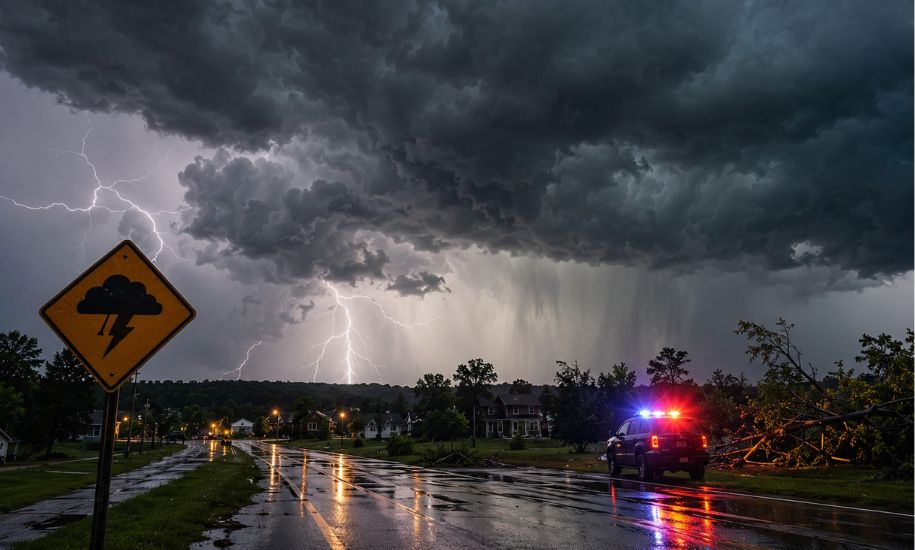
Severe weather once again captured national attention as multiple severe thunderstorm alerts were issued for South Carolina counties during a powerful storm system that swept across the southeastern United States. Residents throughout the state faced dangerous weather conditions that included damaging winds, intense lightning, torrential rainfall, hail, flash flooding, and the threat of tornadoes. Emergency officials and meteorologists worked around the clock to monitor rapidly changing conditions and warn communities about the approaching storms.
The weather outbreak affected numerous counties across South Carolina, leading schools, businesses, and public services to closely monitor the evolving situation. Many residents received emergency notifications on their phones while local television stations interrupted programming to provide continuous storm coverage. The widespread alerts highlighted the importance of severe weather preparedness in a region frequently impacted by strong thunderstorms during seasonal transitions.
Powerful Storm System Sweeps Across South Carolina
The severe thunderstorm alerts were triggered by a strong weather system moving through the southeastern portion of the United States. Meteorologists explained that a combination of warm, humid air and an advancing cold front created ideal conditions for dangerous thunderstorms to develop rapidly.
As the system strengthened, weather forecasters warned that parts of South Carolina could experience:
- Wind gusts exceeding 60 miles per hour
- Large hail capable of damaging vehicles and roofs
- Heavy rainfall causing localized flooding
- Frequent lightning strikes
- Possible tornado formation
- Falling trees and widespread power outages
The storms intensified throughout the day, moving quickly across several counties and creating dangerous travel conditions. Emergency management agencies urged residents to remain indoors and avoid unnecessary travel until the storms passed.
Counties Impacted by Severe Thunderstorm Alerts
The severe weather alerts covered a large portion of South Carolina. The National Weather Service issued watches and warnings for multiple counties as forecasters tracked the movement of the storm system.
Some of the counties included in the alerts were:
- Aiken County
- Richland County
- Lexington County
- Orangeburg County
- Sumter County
- York County
- Lancaster County
- Fairfield County
- Chester County
- Beaufort County
- Dorchester County
- Kershaw County
- Greenwood County
- Laurens County
- Newberry County
Residents in these areas were advised to closely monitor weather updates as conditions could change rapidly within minutes. Several counties experienced repeated warnings as individual storm cells strengthened and moved through communities.
Tornado Watches Added to the Threat
While severe thunderstorms alone posed significant risks, meteorologists also issued tornado watches for parts of South Carolina. Atmospheric instability and wind shear increased the possibility that some thunderstorms could begin rotating and potentially produce tornadoes.
A tornado watch means conditions are favorable for tornado development, while a tornado warning indicates a tornado has either been spotted or detected by radar. Emergency officials emphasized the importance of understanding the difference between the two alerts.
Many residents prepared safe shelter areas inside their homes, including:
- Interior rooms without windows
- Basements
- Hallways
- Bathrooms on lower floors
Communities were reminded to have emergency kits ready in case storms caused prolonged power outages or structural damage.
Damaging Winds Cause Widespread Problems
One of the most significant threats during the severe weather outbreak was damaging straight-line winds. Some areas experienced wind gusts powerful enough to uproot trees, damage rooftops, and knock down power lines.
Reports from across South Carolina described:
- Trees falling onto roads and vehicles
- Utility crews responding to outages
- Debris scattered across highways
- Structural damage to homes and businesses
- Traffic delays caused by blocked roads
Power companies worked to restore electricity to thousands of affected residents as emergency crews cleared debris and responded to storm-related incidents.
The strong winds also made driving extremely hazardous, especially for large trucks and vehicles traveling on highways during the storms.
Heavy Rainfall and Flash Flooding Concerns
The severe thunderstorms brought intense rainfall that overwhelmed drainage systems in some communities. Flash flooding became a major concern, especially in low-lying areas and neighborhoods prone to water accumulation.
Emergency management officials repeatedly warned drivers not to attempt crossing flooded roads. Even shallow floodwaters can quickly sweep vehicles away or hide dangerous road damage underneath.
Flood-prone regions saw:
- Streets covered in water
- Temporary road closures
- Overflowing drainage ditches
- Water entering homes and businesses
- Delays for emergency responders
Weather experts noted that flash flooding can become life-threatening within minutes, particularly during nighttime storms when visibility is poor.
Lightning Creates Additional Dangers
Frequent lightning strikes added another layer of danger during the severe weather event. Thunderstorms moving through South Carolina produced constant cloud-to-ground lightning that posed risks to people outdoors.
Meteorologists advised residents to:
- Stay indoors during storms
- Avoid using electrical appliances
- Keep away from windows
- Refrain from outdoor sports and activities
- Wait at least 30 minutes after thunder before returning outside
Lightning strikes can cause fires, power surges, injuries, and fatalities. Officials stressed that no outdoor location is safe once thunder can be heard.
Emergency Services and Local Officials Respond
As severe thunderstorm alerts continued across South Carolina counties, local emergency management teams coordinated response efforts throughout the state. Public safety officials monitored weather radar, dispatched crews to damaged areas, and provided updates through television, radio, and social media platforms.
Several counties opened emergency operations centers to coordinate:
- Storm monitoring
- Public safety communications
- Utility restoration efforts
- Road clearance operations
- Emergency shelter preparation
Local governments encouraged residents to sign up for emergency alert systems to receive real-time notifications directly on their mobile devices.
Schools and Businesses Adjust Operations
The severe weather outbreak forced many schools, businesses, and public institutions to adjust schedules and operations. Some school districts delayed classes, canceled after-school activities, or shifted to remote learning due to safety concerns.
Businesses also took precautions by:
- Closing early
- Asking employees to work remotely
- Suspending deliveries
- Monitoring weather alerts throughout the day
Public officials emphasized that safety remained the top priority as storms moved through the region.
Meteorologists Track Rapidly Changing Conditions
Weather experts explained that severe thunderstorms can intensify quickly, making accurate forecasting both challenging and essential. Meteorologists used advanced radar systems, satellite imagery, and storm-tracking technology to monitor the development of dangerous weather cells.
Forecasters continuously updated:
- Severe thunderstorm warnings
- Tornado watches
- Flash flood alerts
- Wind advisories
- Emergency weather statements
Residents were encouraged to rely on trusted weather sources, including:
- National Weather Service alerts
- NOAA Weather Radio
- Local television stations
- Official emergency management accounts
The rapid spread of weather information through mobile alerts and digital platforms helped many communities prepare before the strongest storms arrived.
Importance of Severe Weather Preparedness
The severe thunderstorm alerts issued across South Carolina served as another reminder of how important weather preparedness has become. Experts recommend that every household maintain an emergency plan for dangerous weather situations.
Preparedness tips include:
- Keeping flashlights and batteries available
- Charging phones before storms arrive
- Preparing emergency food and water supplies
- Identifying safe shelter locations
- Monitoring weather forecasts regularly
- Having backup power sources if possible
Families are also encouraged to discuss emergency communication plans in case family members become separated during storms or power outages.
Climate Patterns and Increasing Severe Weather
Meteorologists and climate researchers continue studying whether changing climate patterns may contribute to more frequent or intense severe weather events in parts of the United States. Warmer temperatures can increase atmospheric moisture and instability, potentially fueling stronger thunderstorms.
Although individual storm systems cannot always be directly linked to climate change, experts note that severe weather preparedness is becoming increasingly important as weather extremes continue affecting communities nationwide.
South Carolina’s geographic location makes the state vulnerable to a variety of weather threats throughout the year, including:
- Severe thunderstorms
- Hurricanes
- Tornadoes
- Flash floods
- Extreme heat
As a result, emergency agencies continue investing in forecasting technology and public awareness campaigns to improve storm readiness.
Community Response During Severe Weather
Despite the dangerous conditions, many communities across South Carolina demonstrated resilience and cooperation during the storm outbreak. Neighbors helped one another clear debris, shared emergency supplies, and checked on elderly residents after the storms passed.
Social media also played an important role in sharing:
- Real-time storm updates
- Road closure information
- Power outage reports
- Safety reminders
- Emergency response efforts
Community support often becomes critical during widespread severe weather events, especially when infrastructure disruptions impact large populations.
Recovery Efforts After the Storms
After the severe thunderstorms moved out of the region, recovery operations began across affected counties. Utility companies worked to restore electricity while road crews removed fallen trees and debris.
Insurance companies also prepared for an increase in storm-related claims involving:
- Roof damage
- Flooding
- Vehicle damage
- Broken windows
- Fallen trees
Residents were advised to document storm damage carefully and avoid downed power lines or unstable structures during cleanup efforts.
Officials reminded homeowners that post-storm hazards can remain dangerous even after skies clear.
Looking Ahead to Future Weather Threats
Meteorologists warned that severe weather season is far from over, and additional storms could develop throughout the coming months. South Carolina residents are encouraged to stay weather-aware and maintain updated emergency plans during spring and summer months when thunderstorms are most common.
Technology continues improving weather forecasting accuracy, but officials stress that public awareness and preparedness remain essential for minimizing injuries and property damage during severe weather outbreaks.
The widespread attention surrounding multiple severe thunderstorm alerts issued for South Carolina counties reflects how rapidly dangerous weather can impact millions of people across the region. As communities continue recovering from recent storms, experts emphasize that preparation, fast communication, and public cooperation remain the strongest defenses against severe weather emergencies.
For more weather news, trending updates, and informative articles, readers can also visit Getty Meta for detailed coverage on major national events and breaking stories.
