


Meta Description: Discover Plum Island Southold NY 11957, including its military history, animal-disease research, ecology, restricted access, famous myths, and possible future.
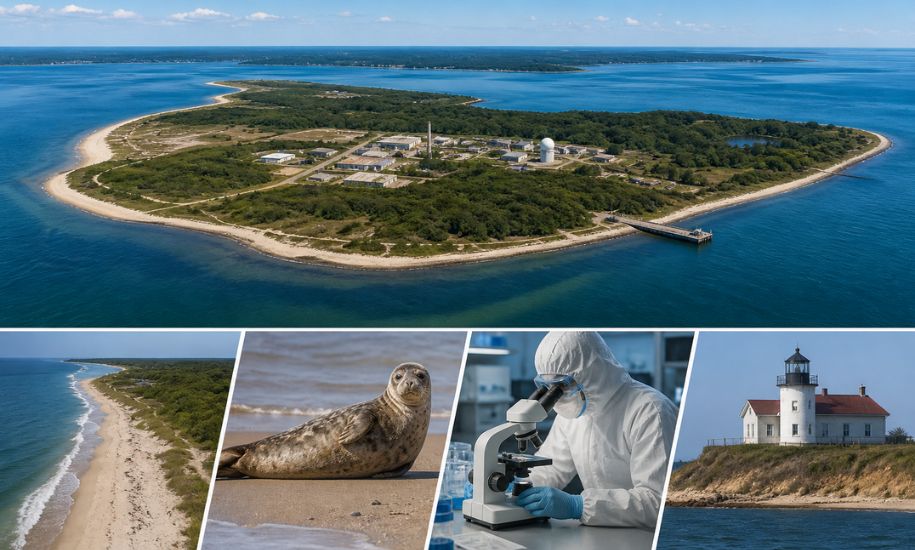
Plum Island Southold NY 11957 is one of the most unusual places associated with Long Island. Located in the waters between the North Fork of Long Island and Connecticut, the island has a history that combines coastal defense, animal-disease research, environmental conservation, and decades of public speculation.
Its reputation comes partly from what is known and partly from what remains inaccessible. Plum Island has hosted federal research operations, while much of the island itself has remained closed to ordinary visitors. That combination of scientific work, government security, and an isolated location has made Plum Island a frequent subject of books, documentaries, news stories, and internet discussions.
But separating documented history from rumor is important. Claims about secret experiments or unexplained diseases have often circulated without reliable evidence, while the island’s real history is already unusual enough.
This guide explains Plum Island Southold NY 11957 in a straightforward way, covering its location, Fort Terry, the Plum Island Animal Disease Center, ecological significance, conspiracy theories, access restrictions, and what the island’s future could look like.
Where Is Plum Island Southold NY 11957?
Plum Island is located in Long Island Sound, just east of Orient Point on Long Island’s North Fork. It is part of the Town of Southold in Suffolk County, New York.
The island covers roughly 800 acres and stretches for several miles. Its position near the eastern end of Long Island gives it strategic importance as well as ecological value.
Because it sits between Long Island and the Connecticut coast, Plum Island is geographically close to populated communities while still feeling remarkably isolated.
Its landscape includes coastal habitats, wooded areas, wetlands, beaches, and shoreline environments. The limited level of public access has also helped reduce the amount of ordinary recreational development found on many other Long Island coastal properties.
Plum Island History: From Coastal Defense to Research
Plum Island’s modern history can be divided into two major chapters: its military role and its federal scientific-research role.
Fort Terry and Coastal Defense
In the late 19th century, the United States developed coastal defenses around important waterways. Plum Island became home to Fort Terry, a military installation established during the period surrounding the Spanish-American War.
The fort was designed as part of the coastal-defense network protecting the eastern approaches to Long Island Sound.
Over the following decades, the military presence on Plum Island changed as America’s defense requirements evolved. Buildings, gun batteries, roads, and other military infrastructure became part of the island’s landscape.
By the middle of the 20th century, traditional coastal artillery had become increasingly outdated because of changes in military technology.
Fort Terry’s military importance consequently declined, although the island itself was about to enter another significant chapter.
The Plum Island Animal Disease Center
One of the most important developments in Plum Island’s history came in the 1950s with the establishment of the Plum Island Animal Disease Center, commonly abbreviated as PIADC.
The facility was created to conduct research into foreign animal diseases—diseases that could threaten U.S. livestock and agriculture.
Rather than being a conventional hospital or veterinary clinic, the center was designed around highly controlled research and diagnostic work involving serious animal diseases.
Why Animal-Disease Research Matters
An outbreak of a highly contagious livestock disease can have consequences far beyond individual farms.
Depending on the disease, an outbreak could affect:
- Cattle and dairy operations
- Pig and poultry industries
- Meat and agricultural supply chains
- International agricultural exports
- Food-production systems
- Government emergency-response programs
Research facilities such as PIADC therefore play an important role in understanding pathogens, improving diagnostic capabilities, and preparing for potential outbreaks.
What Diseases Were Studied at Plum Island?
Plum Island became particularly associated with research into foreign animal diseases, including foot-and-mouth disease (FMD).
Foot-and-mouth disease is highly contagious among susceptible cloven-hoofed animals. It can spread rapidly and cause major economic disruption even though it is not generally considered a human disease.
Other foreign animal diseases have also been relevant to the broader research mission.
The significance of this work is primarily agricultural and biosecurity-related: scientists need to understand how diseases behave so authorities can detect, contain, and respond to outbreaks.
Was Plum Island the Only U.S. Facility Handling Foot-and-Mouth Disease?
Historically, Plum Island held a special position in the United States because it was the country’s designated high-containment site for research involving live foot-and-mouth disease virus.
However, statements about Plum Island being the permanent or current sole U.S. facility for such work need to be treated carefully because federal research capabilities have changed as operations transitioned to the National Bio and Agro-Defense Facility in Manhattan, Kansas.
For an article intended to remain accurate over time, it is better to describe Plum Island’s historical role rather than present an old operational description as a permanent current fact.
Plum Island and the Move to Kansas
A major change in Plum Island’s story has been the federal government’s development of the National Bio and Agro-Defense Facility (NBAF) in Manhattan, Kansas.
NBAF was designed to provide modern high-containment capabilities for research involving animal and zoonotic diseases.
The transition is important because it changed the long-term role of Plum Island. Instead of assuming that Plum Island will indefinitely remain America’s primary federal animal-disease research site, it is more accurate to view the island as a property undergoing a major transition after decades of research activity.
This transition also explains why discussions about Plum Island’s future have become increasingly important.
Plum Island’s Ecological Importance
The scientific buildings are only part of the story.
Plum Island contains coastal and terrestrial habitats that support wildlife, including birds and other species associated with Long Island’s maritime environment.
Its relative isolation has limited the kind of everyday human activity seen on heavily developed coastal properties.
Wildlife Habitat
The island’s location makes it potentially valuable for:
- Migratory birds
- Shorebirds
- Waterfowl
- Coastal wildlife
- Marine species using surrounding waters
- Native plants and coastal vegetation
Seals and other marine wildlife may also be observed in the wider region, although sightings and seasonal use can vary.
The island’s environmental value is one reason conservation groups and government agencies have considered preservation as part of its long-term future.
Why Limited Access Matters
Restricted access does not automatically make an ecosystem “untouched” or completely pristine. Plum Island has a long history of military construction, human activity, and federal research.
Nevertheless, its limited public development means some habitats have experienced less recreational pressure than comparable coastal locations.
That distinction is important when describing Plum Island accurately.
Plum Island Conspiracy Theories
Few aspects of Plum Island attract more online attention than its conspiracy theories.
The island’s restricted nature, military history, biological research, and limited public visibility have created an ideal environment for speculation.
Did Plum Island Create Lyme Disease?
One of the most persistent claims is that scientists at Plum Island created or deliberately released Lyme disease.
There is no credible evidence establishing Plum Island as the origin of Lyme disease.
Lyme disease is caused by bacteria transmitted primarily through infected blacklegged ticks. The disease was recognized as a distinct public-health problem in the Lyme, Connecticut, area during the 1970s, but the organism responsible for Lyme disease has a much older natural history.
The geographic proximity between Plum Island and Connecticut has helped fuel speculation, but proximity alone does not establish a scientific connection.
Were Biological Weapons Developed on Plum Island?
This subject requires more nuance.
Plum Island’s history intersects with Cold War-era government biological research, and the United States did have historical biological-defense and biological-weapons programs during the 20th century.
However, internet claims often combine documented historical facts with unsupported allegations.
It is therefore important to distinguish between:
Documented: Plum Island was associated with government research involving animal diseases and national biosecurity.
Not established by credible evidence: sensational claims that the island secretly engineered specific diseases or deliberately released pathogens into surrounding communities.
The distinction is essential for responsible reporting.
Why Does Plum Island Feel So Mysterious?
The island’s reputation can be explained without assuming that every rumor is true.
Several factors contribute to its mysterious image:
- Restricted public access
- Its isolated geographic position
- Military history
- High-containment biological research
- Government involvement
- Limited visibility into day-to-day operations
- Cold War-era secrecy
- Popular books, films, documentaries, and online discussions
When legitimate secrecy surrounding sensitive research is combined with an isolated location, speculation can easily grow.
Can You Visit Plum Island?
For ordinary tourists, Plum Island is not a conventional tourist destination.
The island is federally controlled, and public access has historically been restricted. Visitors cannot simply arrive by boat, walk onto the island, or explore the former military and research facilities.
This is different from visiting a typical Long Island park or nature preserve.
Can You See Plum Island From Long Island?
Yes. The island can be viewed from parts of the North Fork and surrounding waters, depending on weather, visibility, and location.
Seeing Plum Island from a distance is very different from legally entering the island itself.
People interested in its history can explore publicly accessible viewpoints around the North Fork rather than attempting to approach restricted areas.
Is Plum Island Dangerous?
It is misleading to describe the entire island as inherently dangerous.
The reason for controlled access is more practical: Plum Island has historically contained specialized research infrastructure and areas where unauthorized access would be inappropriate.
Potential concerns can include:
- Restricted research areas
- Former military structures
- Controlled biological materials
- Aging infrastructure
- Environmental hazards
- Maritime and shoreline conditions
For that reason, members of the public should not attempt unauthorized entry.
Plum Island and Agriculture
The island’s scientific significance extends beyond its physical boundaries.
Foreign animal diseases can create enormous economic consequences because modern agriculture depends on interconnected systems.
A serious outbreak could affect:
- Farm income
- Animal populations
- Food supply chains
- International trade
- Agricultural exports
- Government response costs
Research into animal diseases therefore has a preventative purpose. Scientists can investigate pathogens under controlled conditions rather than waiting for an uncontrolled outbreak to occur.
Plum Island’s Military Legacy
Even after its research role became dominant, Fort Terry remained an important part of the island’s historical identity.
Remnants of the military period help illustrate how U.S. coastal defenses evolved from the late 19th century through the World Wars and into the Cold War.
For historians, Plum Island is therefore interesting for two separate reasons:
Military history: It represents an earlier era of coastal defense.
Scientific history: It became associated with federal research into foreign animal diseases and agricultural biosecurity.
That combination makes the island unusual among American government properties.
What Is Plum Island’s Future?
The future of Plum Island is one of the most important unanswered questions surrounding the property.
As federal animal-disease research capabilities shifted toward NBAF in Kansas, attention increasingly turned toward what should happen to Plum Island afterward.
Several broad possibilities have been discussed over the years.
Conservation and Wildlife Protection
One possibility is long-term conservation.
Supporters of this approach argue that Plum Island’s coastal habitats and relative isolation make it valuable for wildlife and environmental preservation.
Historic Preservation
Another possibility involves protecting parts of the island’s military heritage.
Fort Terry and other historic structures could potentially provide an important record of America’s coastal-defense history, although preservation decisions depend on ownership, condition, funding, and environmental requirements.
Limited Future Development
Other approaches could involve carefully controlled redevelopment or reuse.
Because Plum Island has environmental, historic, security, and infrastructure considerations, any future development would likely require extensive evaluation rather than simple conversion into a conventional tourist destination.
Plum Island Southold NY 11957: What Is Fact and What Is Fiction?
A useful way to understand Plum Island is to separate documented information from speculation.
| Topic | What can reasonably be established |
|---|---|
| Location | Plum Island is in Long Island Sound near Long Island’s North Fork |
| Municipality | It is associated with the Town of Southold, Suffolk County, New York |
| Fort Terry | The island hosted a U.S. coastal-defense installation |
| Animal research | Federal animal-disease research took place on the island |
| Foot-and-mouth disease | Research involving FMD was an important part of Plum Island’s history |
| Public access | The island has been highly restricted |
| Wildlife | Plum Island contains significant coastal and terrestrial habitat |
| Lyme disease claims | No credible evidence establishes Plum Island as the origin of Lyme disease |
| Future | The island’s long-term use has been subject to federal and conservation discussions |
This distinction makes the story more interesting—not less. Plum Island does not need unsupported theories to be historically significant.
Common Mistakes When Searching for Plum Island
People researching Plum Island Southold NY 11957 often encounter outdated or exaggerated information.
Mistake 1: Treating Every Online Claim as Historical Fact
A claim repeated across blogs or social media does not automatically become evidence.
Look for government records, reputable historical sources, scientific publications, and established reporting.
Mistake 2: Assuming Restricted Means Secret
Some information about government research facilities is legitimately restricted for security or biosecurity reasons. That does not automatically prove the existence of a hidden conspiracy.
Mistake 3: Using Old Information as Current Information
Plum Island’s research role has changed over time, particularly because of the development of NBAF in Kansas.
Articles should therefore distinguish historical Plum Island operations from present-day federal research capabilities.
Mistake 4: Calling Plum Island a Tourist Attraction
The island is fascinating to research, but it should not be presented like a normal tourist attraction. Public access restrictions are a fundamental part of its current identity.
FAQ
What is Plum Island Southold NY 11957?
Plum Island is a federally controlled island in Long Island Sound near Orient Point, within the Town of Southold, New York. It is historically associated with Fort Terry and federal animal-disease research.
Why is Plum Island famous?
It is famous because of its military history, decades of animal-disease research, restricted access, ecological value, and numerous conspiracy theories.
Can the public visit Plum Island?
Plum Island is not generally open for ordinary public tourism. Access is controlled, and unauthorized visitors should not attempt to enter the island.
Did Plum Island cause Lyme disease?
There is no credible scientific evidence demonstrating that Plum Island caused or deliberately introduced Lyme disease.
What happened to the Plum Island research facility?
The federal government developed the National Bio and Agro-Defense Facility in Kansas as a modern replacement for Plum Island’s animal-disease research capabilities, leading to a major transition in the island’s role.
Is Plum Island being turned into a national park?
Conservation and other future uses have been discussed, but Plum Island’s long-term disposition should be described carefully because proposals and government decisions can change over time.
Final Thoughts
Plum Island Southold NY 11957 is fascinating precisely because several very different histories overlap in one small location.
It was once part of America’s coastal-defense system. Later, it became internationally associated with research into serious animal diseases and agricultural biosecurity. At the same time, its isolated setting and restricted access helped create a powerful mythology around the island.
The most responsible way to understand Plum Island is to separate documented history from speculation.
Its military remains, scientific legacy, ecological resources, and uncertain future are all legitimate subjects of interest without relying on sensational claims. As federal research operations have shifted toward newer facilities, Plum Island has entered a different chapter—one in which conservation, historic preservation, environmental management, and future land use may become increasingly important.
