


Introduction
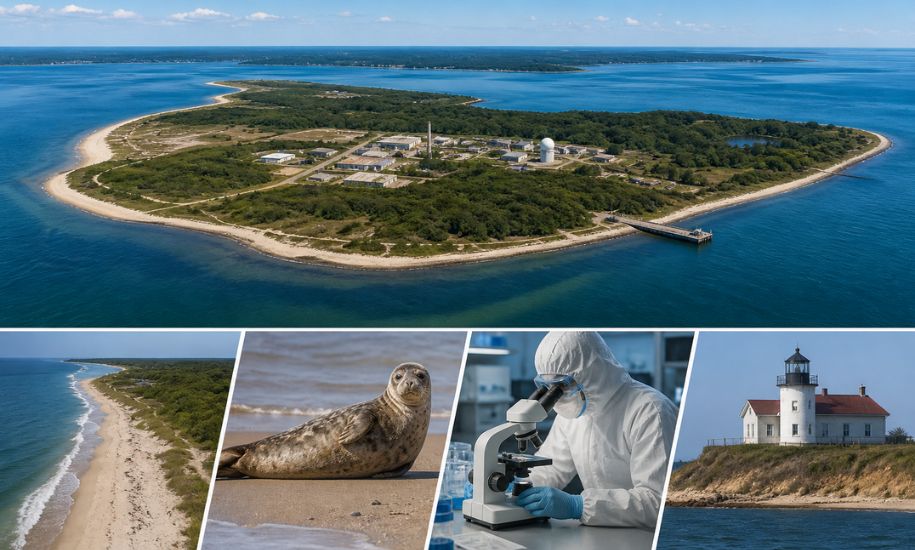
Located off the northeastern tip of Long Island, Plum Island Southold NY 11957 is one of the most intriguing and restricted places in the United States. Known for its scientific importance, rich military past, ecological value, and long-standing conspiracy theories, this small island has captured public curiosity for decades.
Though physically close to popular tourist destinations in Long Island, Plum Island remains inaccessible to the general public. Owned by the U.S. government, it serves as a symbol of both scientific advancement and secrecy. This article explores everything you need to know about Plum Island—from its geography and history to its research facilities and future prospects.
Geographic Location and Natural Landscape
8
Plum Island is situated in Long Island Sound, just about 1.5 miles from Orient Point. It falls under the jurisdiction of Southold in Suffolk County.
The island spans approximately three miles in length and one mile in width, covering around 840 acres. Despite its limited size, Plum Island hosts a diverse range of natural habitats, including:
- Sandy beaches and coastal dunes
- Freshwater wetlands
- Forested areas
- Rocky shorelines
Its location in the Long Island Sound makes it a critical ecological zone, supporting marine biodiversity and migratory bird populations.
A Brief History of Plum Island
Military Beginnings: Fort Terry Era
The history of Plum Island dates back to the late 19th century when it was used as a coastal defense site. In 1897, the U.S. government established Fort Terry to protect the eastern entrance to Long Island Sound during the Spanish-American War.
The fort remained active through World War I and World War II, serving as a strategic military installation. However, by 1946, advances in military technology made coastal artillery obsolete, leading to the fort’s decommissioning.
Transition to Research: Cold War Period
During the early Cold War years, Plum Island gained new importance. The U.S. Army Chemical Corps used the island for research related to biological threats, particularly those affecting livestock.
This period contributed to the island’s secretive reputation. Although the U.S. officially ended offensive biological weapons programs in 1969, Plum Island continued to operate as a research facility—this time with a focus on defense and prevention.
Plum Island Animal Disease Center (PIADC)
7
The most significant feature of Plum Island is the Plum Island Animal Disease Center (PIADC). Established in 1954, it is one of the most important animal disease research facilities in the United States.
Purpose and Mission
The center is jointly operated by:
- U.S. Department of Agriculture
- Department of Homeland Security
Its primary mission is to protect U.S. agriculture and food supply by studying foreign animal diseases.
Research Focus
Scientists at PIADC work on highly contagious diseases such as:
- Foot-and-mouth disease
- African swine fever
- Classical swine fever
Notably, Plum Island is the only facility in the U.S. permitted to handle live foot-and-mouth disease virus, making it critical for national biosecurity.
Key Activities
- Vaccine development
- Diagnostic testing
- Emergency outbreak response
- Disease containment strategies
The research conducted here helps prevent potential outbreaks that could cause billions of dollars in agricultural damage.
Ecological Importance of Plum Island
7
While much attention is given to its research facilities, Plum Island is also a vital ecological sanctuary.
Wildlife and Biodiversity
The island supports a wide variety of species, including:
- Over 200 bird species
- Migratory waterfowl
- Seals that use the beaches as haul-out sites
- Rare and endangered plants
Because public access is restricted, the natural environment has remained largely undisturbed, making it one of the most pristine ecosystems in the region.
Conservation Value
Environmental groups have long advocated for preserving Plum Island as a national wildlife refuge. Its unique combination of marine, coastal, and forest ecosystems makes it an invaluable natural resource.
Myths, Conspiracies, and Public Curiosity
Plum Island’s secretive nature has led to numerous conspiracy theories over the years.
Common Claims
- The island was involved in creating Lyme disease
- It hosted secret biological weapons experiments
- Genetic experiments escaped from the facility
Reality Check
There is no credible scientific evidence supporting these claims. Lyme disease, for example, was first identified in nearby Connecticut, but research has shown it developed naturally in tick populations.
The persistence of these theories can largely be attributed to:
- Restricted public access
- Cold War-era secrecy
- Limited public information
Despite the myths, Plum Island remains a legitimate and vital research center focused on protecting animal and human health.
Restricted Access and Security
Unlike most islands in New York, Plum Island is not open to tourists. Access is strictly controlled by federal authorities.
Reasons for Restriction
- Biosecurity concerns
- Hazardous materials handling
- Protection of sensitive research
Only authorized personnel, scientists, and government officials are allowed on the island. Even boats are restricted from approaching too closely.
This level of security contributes to the island’s mysterious reputation but is necessary for maintaining safety and preventing disease outbreaks.
Economic and Scientific Impact
The work conducted on Plum Island has far-reaching implications.
Agricultural Protection
The U.S. livestock industry is worth billions of dollars. An outbreak of diseases like foot-and-mouth disease could devastate:
- Dairy farms
- Meat production
- Export markets
By studying these diseases, Plum Island helps prevent economic catastrophe.
Global Collaboration
Researchers collaborate with international organizations and governments to monitor and control disease outbreaks worldwide.
National Security
In addition to agriculture, the research contributes to broader national security by preparing for biological threats.
The Future of Plum Island
The future of Plum Island has been a topic of debate for years.
Transition of Research Facilities
The U.S. government is relocating research operations to a new facility in Kansas, known as the National Bio and Agro-Defense Facility (NBAF).
What Happens Next?
Several possibilities have been discussed:
- Turning the island into a national park or wildlife refuge
- Preserving it for environmental conservation
- Limited development under strict regulations
In recent years, plans to sell the island to private developers were halted, reflecting growing interest in conservation.
Why Plum Island Still Matters Today
Plum Island Southold NY 11957 is more than just a restricted government facility. It represents a unique intersection of:
- Scientific innovation
- Military history
- Environmental preservation
- Public intrigue
Its contributions to disease prevention and agricultural protection are invaluable, while its untouched landscapes offer a rare glimpse into a preserved natural world.
As discussions about its future continue, Plum Island remains a symbol of both mystery and importance in American history and science.
Conclusion
Plum Island Southold NY 11957 stands as one of the most fascinating locations in the United States. From its origins as a military fort to its role as a leading research facility, the island has continuously evolved while maintaining an air of secrecy.
Its importance in protecting agriculture, supporting scientific advancement, and preserving ecological diversity cannot be overstated. At the same time, its myths and restricted nature continue to capture public imagination.
As we look toward the future, Plum Island may transform from a guarded research hub into a protected natural sanctuary—ensuring its legacy endures for generations.
For more insightful and in-depth articles like this, visit our English blog Getty Meta, where we explore unique topics, hidden places, and trending subjects from around the world.
