


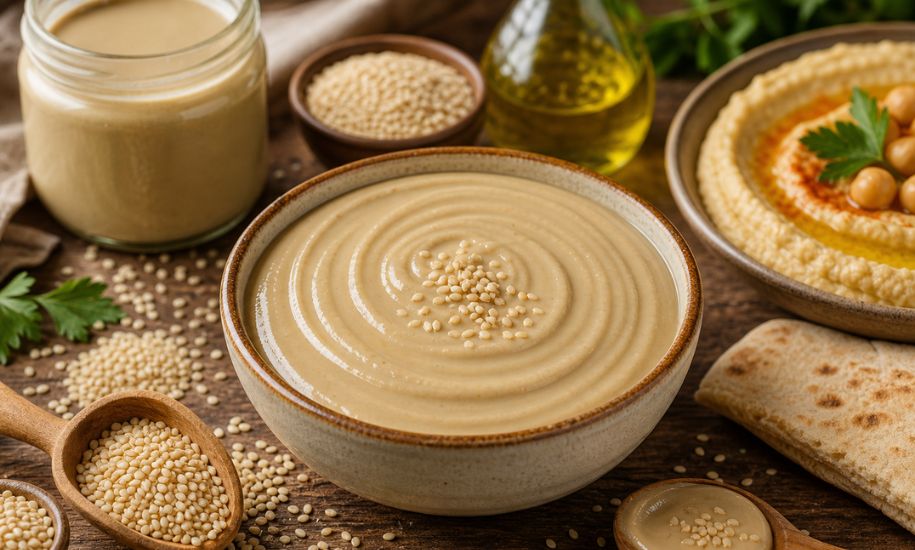
Tahini is a smooth sesame-seed paste with a rich, nutty flavor that has been a staple in Middle Eastern and Mediterranean cooking for generations. Today, it has become increasingly popular around the world, appearing in everything from hummus and salad dressings to cookies, sauces, smoothies, and desserts.
While tahini is sometimes marketed as a “superfood,” its real appeal is simpler: it is a versatile, nutrient-dense ingredient that can add healthy fats, plant-based protein, minerals, and distinctive flavor to everyday meals.
You may know tahini as an essential ingredient in hummus, but there is much more to discover. The type of sesame seeds used, whether they are hulled or unhulled, and whether they are roasted can all influence its flavor, color, texture, and nutritional characteristics.
This guide explains what tahini is, how it is made, its nutritional benefits, how to use it in cooking, how to store it, and what to consider before adding it to your diet.
What Is Tahini?
Tahini is a paste made by grinding sesame seeds until they release their natural oils and form a creamy, pourable mixture. It is sometimes spelled tahina or tehina, but tahini is the most commonly used English spelling.
Unlike peanut butter, tahini is made from seeds rather than nuts. It has a distinctive earthy, nutty flavor and can range from mild and creamy to noticeably bitter, depending on the sesame seeds and production method.
Tahini is naturally:
- Plant-based
- Dairy-free
- Gluten-free when produced without cross-contact
- Rich in unsaturated fats
- A source of plant-based protein
- Naturally mineral-rich
Because of these characteristics, tahini can work well in vegetarian and vegan meals while also being useful in many conventional diets.
A Brief History of Tahini
Sesame has been cultivated and consumed for thousands of years, particularly across parts of Asia, Africa, and the Middle East. Sesame seeds were valued for their high oil content and ability to be stored and processed into different foods.
The exact history of tahini as a prepared sesame paste is difficult to trace to one specific civilization or date. Rather than being attributed to a single ancient invention, it is better understood as part of a long culinary tradition involving sesame cultivation, grinding, and oil production.
Tahini eventually became deeply established in cuisines throughout the Middle East and surrounding regions. It remains an important ingredient in dishes such as hummus, baba ghanoush, sauces, dips, and sweets.
Today, its use extends far beyond traditional cuisine.
How Is Tahini Made?
The basic process is surprisingly straightforward.
1. Sesame Seeds Are Cleaned
Manufacturers first clean the sesame seeds to remove dirt, stones, and other unwanted material.
2. The Seeds May Be Hulled
Some tahini is produced from hulled sesame seeds, while other varieties use the whole seed.
Hulled sesame seeds generally produce a smoother and milder paste. Unhulled tahini tends to have a stronger flavor and darker appearance.
3. Roasting May Take Place
Some producers lightly roast the seeds before grinding them. Roasting can create a deeper, more pronounced sesame flavor.
Other varieties are made from unroasted seeds for a lighter and more delicate taste.
4. The Seeds Are Ground
The sesame seeds are finely ground until their natural oils create a smooth paste.
Additional oil is not necessarily required because sesame seeds naturally contain a substantial amount of oil. However, production methods vary between brands.
Hulled vs. Unhulled Tahini
One of the most useful distinctions when buying tahini is whether the sesame seeds are hulled or unhulled.
Hulled Tahini
Hulled tahini is made from sesame seeds with their outer coating removed.
It is typically:
- Lighter in color
- Smoother in texture
- Less bitter
- Mild enough for sauces and dressings
It is also commonly used in hummus.
Unhulled Tahini
Unhulled tahini is made using the entire sesame seed.
It usually has:
- A darker color
- A stronger sesame flavor
- More bitterness
- A slightly more robust texture
Because the outer layer remains, its nutritional composition can differ from that of hulled tahini.
Neither variety is automatically “better.” The best choice depends on your taste and how you plan to use it.
What Does Tahini Taste Like?
Tahini has an earthy, savory, nutty flavor, but it is not exactly like peanut or almond butter.
Its taste can vary considerably.
Fresh, lightly roasted tahini may taste rich and aromatic, while some unhulled varieties can have a noticeably bitter or slightly astringent character.
This bitterness is not necessarily a sign that tahini has gone bad. However, a rancid smell, unpleasant chemical-like taste, mold, or other obvious signs of spoilage should not be ignored.
Tahini also has a naturally oily consistency. Separation is normal, so you may need to stir it thoroughly before using it.
Tahini Nutrition
Tahini is energy-dense because sesame seeds contain a significant amount of fat. At the same time, it provides several useful nutrients.
Depending on the product and serving size, tahini can provide:
- Unsaturated fats
- Plant-based protein
- Fiber
- Calcium
- Magnesium
- Iron
- Phosphorus
- Copper
- Zinc
- Various B vitamins
- Antioxidant compounds
The exact nutritional values differ between brands and between hulled and unhulled products.
Because tahini is calorie-dense, portion size matters. A spoonful can add substantial calories to a meal even though it is nutritionally valuable.
Potential Health Benefits of Tahini
Tahini can contribute to a balanced diet, but it is important not to treat it as a cure or guaranteed treatment for specific health conditions.
1. Provides Unsaturated Fats
Sesame seeds contain predominantly unsaturated fats. Replacing some sources of saturated fat with unsaturated-fat-rich foods can be part of an overall heart-healthy eating pattern.
Tahini therefore fits well into diets that emphasize nuts, seeds, legumes, vegetables, whole grains, and other minimally processed foods.
2. Supports Mineral Intake
Tahini contains minerals such as magnesium, phosphorus, copper, zinc, and calcium, although the amounts depend on the variety and serving size.
These minerals are involved in numerous normal bodily functions, including bone health, energy metabolism, and immune function.
3. Adds Plant-Based Protein
Sesame seeds provide plant protein, making tahini a useful ingredient for people who eat vegetarian or vegan diets.
However, tahini should be considered one part of a varied protein intake rather than a complete protein solution by itself.
4. Contains Antioxidant Compounds
Sesame seeds contain naturally occurring compounds such as sesamin and sesamolin.
These compounds have antioxidant properties and have been studied for their potential biological effects. However, laboratory findings should not be interpreted as proof that eating tahini prevents or treats disease.
5. Can Help Make Healthy Foods More Appealing
One underrated benefit of tahini is culinary rather than medicinal.
A creamy tahini dressing can make vegetables, grains, salads, and legumes more enjoyable. This can make it easier to build varied meals around nutrient-rich foods.
How to Use Tahini in Cooking
Tahini is one of those ingredients that becomes more useful once you learn a few basic combinations.
Tahini in Hummus
Hummus is perhaps the best-known use for tahini.
A basic hummus combines:
- Chickpeas
- Tahini
- Lemon juice
- Garlic
- Salt
- Water or olive oil, depending on the recipe
Tahini contributes creaminess and a characteristic sesame flavor.
Tahini Dressing
A simple dressing can be made by combining tahini with lemon juice, water, garlic, and salt.
The mixture may initially become thick after adding lemon juice. Gradually whisking in water usually creates a smoother, creamy dressing.
This works particularly well with:
- Salads
- Roasted vegetables
- Grain bowls
- Falafel
- Chickpeas
Tahini Sauce
Tahini can also form the base of a versatile sauce for grilled vegetables, meat, fish, or plant-based dishes.
Adding herbs, spices, lemon, garlic, or yogurt can completely change its character.
Tahini in Desserts
Tahini is not limited to savory recipes.
It can be used in:
- Halva
- Cookies
- Brownies
- Cakes
- Energy bites
- Smoothies
- Chocolate-based desserts
Its slightly bitter sesame flavor can balance very sweet ingredients.
Tahini and Halva
Tahini is a major ingredient in many styles of halva, a traditional sweet found across parts of the Middle East, Mediterranean, Balkans, and other regions.
Although recipes differ, sesame-based halva commonly combines tahini with sugar or other sweetening ingredients.
This illustrates the versatility of sesame paste: the same ingredient used in savory hummus can also become the foundation of a rich dessert.
Tahini Around the World
Tahini has different culinary roles across regions.
In Middle Eastern cuisine, it is commonly used in hummus, sauces, dips, and dressings.
In Turkey, sesame paste may be combined with grape molasses to create a traditional sweet breakfast combination known as tahin pekmez.
In Iran, sesame paste is commonly known as ardeh and can appear in sweet preparations.
North African and Mediterranean cuisines also use sesame and sesame-based preparations in various traditional foods.
These traditions are not identical, and recipes can vary significantly from one country, region, and household to another.
Is Tahini a Superfood?
The word “superfood” is mainly a marketing term rather than a scientific category.
Tahini certainly has a strong nutritional profile, but calling it a superfood can create unrealistic expectations.
It is better to think of tahini as a nutrient-dense ingredient that can complement a balanced diet.
Eating a spoonful of tahini does not automatically make a meal healthy. What matters more is the overall dietary pattern, portion size, food quality, and individual nutritional needs.
How Much Tahini Should You Eat?
There is no universal daily amount that everyone needs.
A typical serving is often around one to two tablespoons, depending on the recipe and individual dietary requirements.
Because tahini is calorie-dense, larger portions can increase the calorie content of a meal quickly.
A practical approach is to use enough to provide flavor and nutrition without allowing it to overwhelm the rest of the meal.
For example, a tahini-lemon dressing can turn a simple bowl of vegetables and chickpeas into a satisfying meal without requiring a large amount of paste.
How to Store Tahini
Natural tahini often separates during storage. Oil rising to the surface is normal and does not necessarily mean the product is spoiled.
Before using it, stir the contents thoroughly to redistribute the sesame oil.
For storage:
- Keep the container tightly sealed.
- Follow the manufacturer’s storage instructions.
- Store it away from excessive heat and direct sunlight.
- Refrigeration may help maintain quality after opening, depending on the product.
- Always check the package for its recommended shelf life.
If tahini develops mold, an unusual smell, or a clearly rancid flavor, it should be discarded.
Can Tahini Cause Allergic Reactions?
Yes. Sesame is a recognized food allergen and can cause allergic reactions in some people.
Symptoms can range from mild reactions such as itching or hives to potentially serious allergic responses.
Anyone with a known sesame allergy should avoid tahini unless specifically advised otherwise by a qualified healthcare professional.
It is also worth checking labels when buying packaged tahini or foods containing it, particularly when cross-contact with other allergens is a concern.
Common Mistakes When Using Tahini
Even a simple ingredient can be frustrating if used incorrectly.
Not Stirring It Properly
Natural oil separation is common. Using only the thick paste at the bottom can result in inconsistent texture and flavor.
Adding Too Much Liquid at Once
When making tahini sauce, adding water gradually usually gives you better control over the final consistency.
Assuming Bitter Means Bad
Some tahini naturally tastes bitter, especially varieties made with unhulled sesame seeds.
However, an unpleasant rancid smell or flavor is different from normal sesame bitterness.
Treating Tahini as a Low-Calorie Food
Tahini is nutritious, but it is also energy-dense. Large quantities can add significant calories to a meal.
How to Choose Good Tahini
When shopping for tahini, look beyond attractive packaging.
Check:
- Ingredient list: A simple sesame-based ingredient list is often preferable.
- Seed type: Decide whether you prefer hulled or unhulled tahini.
- Flavor: Roasted varieties generally have a stronger sesame taste.
- Texture: Look for a smooth consistency if you plan to make sauces or hummus.
- Added ingredients: Compare products if you want to avoid unnecessary additives.
- Storage instructions: Follow the manufacturer’s guidance after opening.
Taste preferences vary, so a tahini that works beautifully in hummus may not be your favorite for desserts.
Tahini vs. Peanut Butter
Although both are creamy spreads, tahini and peanut butter are quite different.
| Feature | Tahini | Peanut Butter |
|---|---|---|
| Main ingredient | Sesame seeds | Peanuts |
| Flavor | Earthy and nutty | Rich and distinctly peanut-like |
| Food category | Seed paste | Legume-based spread |
| Common savory uses | Hummus, sauces, dressings | Sauces, sandwiches |
| Common sweet uses | Halva, cookies, desserts | Sandwiches, desserts |
| Sesame allergen | Yes | No |
| Naturally plant-based | Yes | Yes |
The choice between them largely depends on the recipe and dietary requirements.
Why Tahini Deserves a Place in Your Kitchen
Tahini’s biggest strength is versatility.
It can turn into a dressing with lemon and water, a dip with chickpeas, a sauce with garlic and herbs, or a dessert ingredient with chocolate and sweeteners.
It also provides useful nutrients, including unsaturated fats, protein, and several minerals.
Rather than thinking of tahini as a miracle food, consider it a flavorful, nutrient-dense ingredient that can make everyday meals more interesting.
FAQ
Is tahini healthy?
Tahini can be a nutritious addition to a balanced diet because it provides unsaturated fats, plant-based protein, minerals, and other naturally occurring compounds. However, it is also relatively high in calories, so portion size matters. Its health value depends on how it fits into your overall diet.
Is tahini the same as sesame paste?
Yes. Tahini is essentially a paste made from ground sesame seeds. The terms can sometimes be used differently depending on the region or product, but tahini is the standard English name for this ingredient.
Does tahini need to be refrigerated?
Not always. Storage instructions vary by manufacturer, so the product label should be your first reference. After opening, refrigeration can help maintain quality for some products, while others are designed to be stored in a cool pantry.
Why does tahini taste bitter?
Bitterness can be a natural characteristic of sesame paste, particularly when unhulled sesame seeds are used. Roasting level, sesame variety, and freshness can also affect the flavor. A mild bitterness is not automatically a sign that the tahini has spoiled.
Can you eat tahini every day?
For most people who tolerate sesame, tahini can be included regularly as part of a varied diet. Because it is calorie-dense, moderate portions are generally more practical than consuming large quantities. People with specific dietary or medical needs should consider their individual requirements.
Is tahini suitable for vegans?
Plain tahini made entirely from sesame seeds is naturally vegan. However, processed foods containing tahini may include other ingredients, so checking the label is sensible if strict dietary requirements apply.
Final Thoughts
Tahini is far more than an ingredient for hummus. Made from ground sesame seeds, it combines a distinctive earthy flavor with useful nutrients and remarkable culinary flexibility.
Its long-standing role in Middle Eastern and Mediterranean cuisines has helped it become a global pantry staple. From savory sauces and salad dressings to halva, cookies, and smoothies, there are countless ways to use it.
The healthiest way to approach tahini is not as a miracle “superfood,” but as one nutritious ingredient within a varied and balanced diet. Choose a variety that suits your taste, use sensible portions, store it properly, and experiment with different sweet and savory combinations.
If you enjoy practical food guides and easy-to-understand lifestyle content, Getty Meta offers more articles exploring useful ingredients, everyday trends, and interesting topics.
