


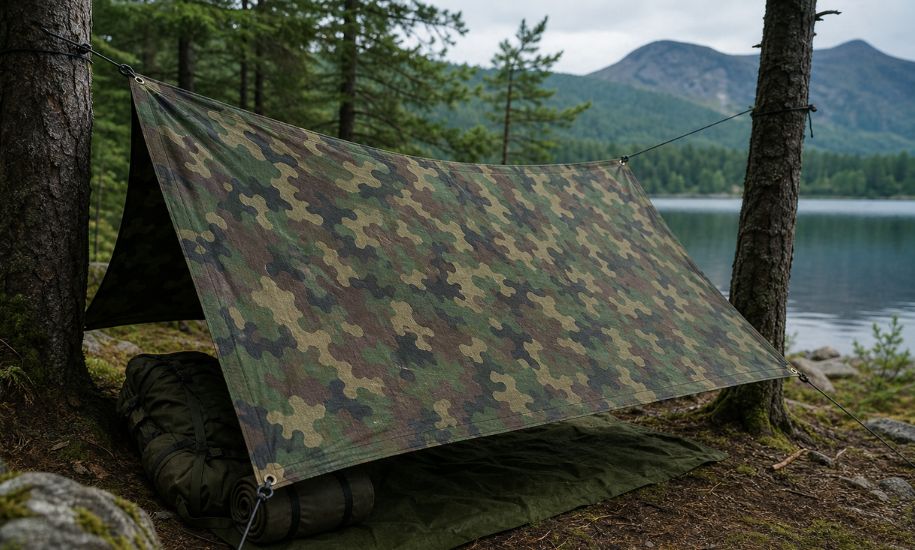
A Tarnplane is a camouflage-patterned tarpaulin used for covering, weather protection, privacy, outdoor shelter, and visual blending with the surrounding environment. The plural form is Tarnplanen, and the term is commonly encountered in German-speaking outdoor, camping, forestry, hunting, and military-surplus contexts.
Unlike a standard blue, green, or transparent tarp, a Tarnplane combines the practical function of a protective sheet with a camouflage appearance. Depending on its construction, it may be made from woven polyethylene, polyester, nylon, PVC-coated fabric, or other materials. Some versions are lightweight enough for camping, while heavier models are designed primarily as durable covers.
This guide explains what Tarnplanen are, what the German term means, how they differ from ordinary tarps, where they can be used, what materials and features matter, and how to choose and maintain one.
What Is a Tarnplane?
The singular form is Tarnplane, while Tarnplanen is the plural.
In German, the word combines the idea of Tarnung or camouflage with Plane, meaning a tarpaulin or protective sheet. In practical use, a Tarnplane is therefore a camouflage-colored or camouflage-patterned tarp.
The exact construction is not standardized. Some Tarnplanen are simple woven covers with eyelets, while others are designed as camping tarps or military-style shelter systems.
For example, commercially available camouflage tarps can be made from PE woven fabric and feature reinforced edges and metal eyelets. Other outdoor models are lighter and designed specifically for shelter building.
The key point is that camouflage describes the appearance and intended visual blending of the tarp; it does not automatically tell you how strong, waterproof, lightweight, or tactical the product is.
Tarnplane vs. Tarnplanen: What’s the Difference?
This is one of the easiest points to clarify:
- Tarnplane = singular
- Tarnplanen = plural
- Tarnung = camouflage or concealment
- Plane = tarp, tarpaulin, or covering sheet
So, if you are talking about one camouflage tarp, Tarnplane is appropriate. If you are referring to several camouflage tarps, Tarnplanen is the correct plural form.
What Are Tarnplanen Used For?
Tarnplanen are versatile because the same basic construction can perform several different jobs. Their usefulness depends heavily on their size, material, eyelet arrangement, weight, and waterproofing.
Camping and Outdoor Shelters
One of the most practical applications is camping.
A suitable Tarnplane can function as:
- A rain shelter
- A sunshade
- A windbreak
- A groundsheet
- A simple tarp shelter
- A protective cover for outdoor equipment
Some camping-oriented camouflage tarps are sold specifically as multifunctional outdoor tarps and can be combined with poles, ropes, or other shelter accessories.
However, a tarp is not automatically equivalent to a tent. A tent normally provides enclosed sleeping space, insect protection, and a more controlled interior environment. A tarp is better understood as a flexible overhead or protective covering.
Hunting and Wildlife Observation
Camouflage tarps can also be useful in outdoor observation settings.
A suitable camouflage pattern can help a stationary shelter or equipment blend visually with its surroundings. This is particularly relevant to hunters, wildlife observers, photographers, and forestry workers.
However, camouflage does not make a person or object invisible. Movement, sound, shape, lighting, and the surrounding environment can all affect visibility.
Garden and Home Applications
Tarnplanen are not limited to wilderness activities.
Depending on the material, they can be used for:
- Covering garden equipment
- Protecting furniture from weather
- Temporary shade
- Privacy screening
- Covering firewood
- Protecting stored materials
- Temporary outdoor work areas
Commercial camouflage tarps are also marketed for agriculture, forestry, construction, gardening, and general outdoor protection.
Equipment and Material Protection
A camouflage tarp can also serve exactly the same basic function as an ordinary protective tarp: keeping equipment covered.
For example, a heavy PE tarp with reinforced edges and eyelets may be suitable for covering stored materials, tools, wood, machinery, or outdoor equipment. The camouflage pattern is then an additional visual feature rather than the primary functional advantage.
Common Materials Used in Tarnplanen
There is no single material that defines every Tarnplane. Instead, manufacturers use different fabrics and constructions depending on the intended application.
Polyethylene
Woven polyethylene, often abbreviated as PE, is common in heavy-duty covering tarps.
Advantages can include:
- Good weather resistance
- Relatively low cost
- Easy cleaning
- Strong woven construction
- Suitable for general outdoor covering
Some commercial camouflage PE tarps are sold at around 200 g/m² and include reinforced edges and eyelets.
Polyester
Polyester can be used for lighter outdoor tarps and shelter systems. It can provide a useful balance between weight, durability, and packability.
Its actual performance depends on fabric thickness, weave, coating, stitching, and manufacturer specifications.
Nylon and Ripstop Fabrics
Nylon is popular in lightweight camping and outdoor equipment. Ripstop construction can help limit the spread of small tears because the fabric incorporates stronger reinforcement threads.
This makes lightweight nylon attractive when pack size and carrying weight matter more than heavy-duty covering performance.
PVC-Coated Fabrics
PVC-coated materials can provide strong weather resistance and are often used where durability and waterproofing are important.
The trade-off is usually increased weight compared with lightweight camping fabrics.
Important Features to Check
The camouflage pattern is only one part of a Tarnplane. Before buying one, pay attention to the construction.
1. Size
Think about what you actually want to cover.
A small tarp may work well as a ground cover or equipment cover, while a larger tarp can provide enough material for a shelter or shade structure.
Remember that the usable area becomes smaller when you pitch a tarp at an angle.
2. Weight
A heavy tarp may be more durable but less convenient for hiking.
For backpacking, a lightweight fabric can make more sense. For garden, agricultural, or stationary use, weight may be less important than strength.
3. Eyelets and Attachment Points
Eyelets, loops, and reinforced attachment points determine how easily you can secure the tarp.
Look for:
- Reinforced corners
- Strong grommets
- Adequate spacing
- Secure stitching
- Additional tie-out points where appropriate
A large tarp with weak attachment points may perform poorly in strong wind even if the fabric itself is durable.
4. Waterproofing
Do not assume every camouflage tarp is fully waterproof.
Check whether the manufacturer describes it as:
- Water-resistant
- Waterproof
- Coated
- Seam-sealed
The fabric may resist water while stitched seams or eyelet areas remain potential leakage points.
5. UV Resistance
If the tarp will remain outdoors for extended periods, UV resistance matters.
Continuous exposure to sunlight can gradually degrade fabrics, coatings, stitching, and colors.
6. Camouflage Pattern
Choose a pattern based on where you will actually use the tarp.
Common visual styles include:
- Woodland
- Flecktarn
- Desert
- Snow
- Olive or military-inspired patterns
- Digital camouflage
- Custom printed camouflage
The pattern should complement the environment rather than simply looking “tactical.”
Tarnplanen vs. Regular Tarps
The biggest difference is visual design and intended use—not necessarily material quality.
| Feature | Tarnplane | Regular Tarp |
|---|---|---|
| Appearance | Camouflage | Often plain or bright |
| Main purpose | Covering + visual blending | Covering and protection |
| Weather protection | Depends on material | Depends on material |
| Shelter use | Possible | Possible |
| Outdoor use | Common | Very common |
| Concealment | May reduce visual contrast | Usually not designed for it |
| Weight | Varies | Varies |
| Durability | Depends on construction | Depends on construction |
A Tarnplane is not automatically stronger or more waterproof than a normal tarp. Material and construction should always be checked separately.
Are Tarnplanen Only for Military Use?
No.
Although camouflage tarps and military-style shelter sheets have a strong association with military equipment, modern Tarnplanen are also sold for civilian purposes.
Outdoor retailers list camouflage tarps for camping and garden use, while other products are marketed for forestry, hunting, agriculture, construction, and general covering applications.
This distinction is important because the word Tarnplane can describe a product based primarily on its camouflage appearance rather than a specific military specification.
How to Choose the Right Tarnplane
Instead of choosing based only on appearance, work through these questions.
Step 1: What Will You Use It For?
Decide whether the tarp is mainly for:
- Camping
- Shelter building
- Equipment protection
- Garden use
- Wildlife observation
- Hunting
- Vehicle or material covering
- Privacy screening
Step 2: How Much Weight Can You Carry?
For hiking and backpacking, prioritize low weight and compact packing.
For stationary use, a heavier and thicker tarp may be preferable.
Step 3: What Weather Will It Face?
For frequent rain, check waterproofing and seam construction.
For prolonged outdoor exposure, consider UV resistance.
For windy conditions, attachment points and correct anchoring become particularly important.
Step 4: Check the Fabric Specifications
Look for measurable information such as:
- Fabric weight
- Dimensions
- Coating
- Waterproof rating, if provided
- Tear resistance
- Eyelet material
- Reinforcement details
These specifications are generally more useful than marketing phrases such as “extreme,” “military grade,” or “all-weather.”
How to Set Up a Tarnplane Safely
A Tarnplane can be configured in several ways, but setup should always account for wind, rain, and the strength of the attachment points.
Basic A-Frame Setup
An A-frame tarp shelter can be created by running a ridgeline between two secure points and positioning the tarp over it.
The edges are then anchored to the ground.
This arrangement creates a sloping roof that can shed rain while leaving open sides.
Lean-To Setup
For a simple windbreak or sun shelter, one side can be elevated while the opposite side is secured lower to the ground.
This configuration is useful when you need protection primarily from one direction.
Flat Cover
For equipment protection, a Tarnplane can simply be placed over the object and secured appropriately.
Avoid creating pockets where rainwater can collect, especially when the tarp is not designed to support standing water.
Tarnplanen Maintenance and Care
Proper maintenance can significantly extend the useful life of an outdoor tarp.
Clean It After Use
Remove mud, leaves, dust, and other debris before storage.
Use methods appropriate to the fabric and coating. Harsh chemicals can damage some materials.
Dry It Completely
Never store a damp tarp for long periods.
Moisture trapped inside folded fabric can encourage mold, mildew, and unpleasant odors.
Inspect the Attachment Points
Check:
- Eyelets
- Corners
- Seams
- Reinforced areas
- Tie-out loops
- Coating
Small failures are easier to address before they become large tears.
Store It Properly
Keep the tarp dry and protected from unnecessary sunlight when it is not being used.
Avoid folding or packing it while wet.
Common Mistakes When Buying Tarnplanen
Choosing Appearance Over Construction
A convincing camouflage pattern does not guarantee durability.
Always inspect fabric weight, stitching, reinforcement, and attachment points.
Buying the Wrong Size
A tarp that is too small may not provide adequate shelter or coverage.
On the other hand, an unnecessarily large tarp can add weight and become harder to secure.
Assuming “Waterproof” Means Completely Leak-Proof
Water can enter through seams, damaged coatings, poorly fitted eyelets, or areas where the tarp is incorrectly pitched.
Ignoring Wind
Large tarps can catch considerable wind.
Always secure them properly and avoid creating dangerous setups in exposed locations or during severe weather.
Environmental and Responsible Use
A durable tarp can be reused many times, which may reduce the need for repeatedly purchasing disposable coverings. However, the environmental impact depends on the material, manufacturing process, lifespan, and eventual disposal.
Responsible use also matters outdoors.
When camping or working in natural areas:
- Follow local access and camping regulations
- Avoid damaging trees or vegetation
- Do not disturb wildlife habitats
- Pack out waste
- Leave the area as you found it
- Avoid unnecessary permanent installations
Camouflage should be treated as a practical visual design feature—not as a guarantee that wildlife, people, or surveillance systems cannot detect an object.
Are Tarnplanen Worth Buying?
For the right application, yes.
A Tarnplane can be particularly useful when you want one piece of equipment that combines covering, weather protection, portability, and a camouflage appearance.
It is less useful if camouflage has no practical purpose for you. In that case, a standard tarp may provide the same weather protection for less money or with more suitable color options.
The best choice therefore depends on the intended application rather than the camouflage pattern alone.
FAQ
What does Tarnplanen mean?
Tarnplanen is the plural form associated with Tarnplane, a German term used for camouflage-patterned tarpaulins or covering sheets. These products can be used for outdoor shelter, equipment protection, privacy, and other covering applications.
Is a Tarnplane waterproof?
Some Tarnplanen are waterproof, while others are only water-resistant. Waterproofing depends on the fabric, coating, seams, and construction. Always check the manufacturer’s specifications rather than assuming that every camouflage tarp offers the same level of water protection.
Can a Tarnplane replace a tent?
A Tarnplane can be used to create a basic tarp shelter, but it is not a complete replacement for every type of tent. A tarp normally provides less enclosure and may not protect against insects, cold, or severe weather as effectively as a dedicated tent.
What is the best material for a Tarnplane?
There is no universal best material. Lightweight nylon or polyester can be suitable for backpacking, while heavier PE or PVC-coated materials may be better for stationary or heavy-duty covering. The correct choice depends on weight, weather exposure, durability, and intended use.
Are Tarnplanen only used by the military?
No. Camouflage tarps are also used by campers, hunters, wildlife observers, gardeners, forestry workers, farmers, and other outdoor users. Commercial examples are available for general outdoor covering and protection.
Does camouflage make a Tarnplane invisible?
No. A camouflage pattern can reduce visual contrast in a suitable environment, but it does not make a tarp or person invisible. Shape, movement, lighting, color mismatch, sound, and the surrounding landscape can all affect visibility.
Conclusion
Tarnplanen are versatile camouflage tarps that combine the basic protective function of a tarpaulin with a camouflage-oriented appearance. Their actual performance varies considerably according to fabric, coating, size, reinforcement, attachment points, and intended use.
For camping, a lightweight model may be the most practical choice. For equipment protection or garden use, a heavier PE tarp may offer better durability. For wildlife observation or outdoor activities, the camouflage pattern may provide useful visual blending.
The most important lesson is simple: do not choose a Tarnplane based on camouflage alone. Look at the construction, weight, waterproofing, dimensions, attachment points, and expected weather conditions.
When properly selected, secured, cleaned, and stored, a Tarnplane can be a practical addition to outdoor equipment for shelter, covering, protection, and everyday outdoor tasks.
