


Have you ever bought an oil for your skin or hair, only to find that it feels greasy, smells strange, or does not seem to do much? With so many products labeled “almond oil,” “pure,” “organic,” and “cold pressed,” choosing the right one can be surprisingly confusing.
Sweet almond oil is a lightweight plant oil traditionally used for moisturizing skin, conditioning hair, and making cosmetic products feel smoother. But not every bottle is identical, and the way the oil is processed can affect what you get from it.
This guide explains what sweet almond oil actually is, how it differs from other almond oils, what its benefits are, and how to use it without overdoing it. You will also learn what to look for on a bottle, whether organic or cold-pressed oil is worth buying, and which common mistakes can make a good oil perform poorly.
Whether you want a simple facial moisturizer, a hair-conditioning oil, or a versatile ingredient for your personal-care routine, the goal is to help you make a sensible choice rather than simply buy the most expensive bottle.
What Is Sweet Almond Oil?
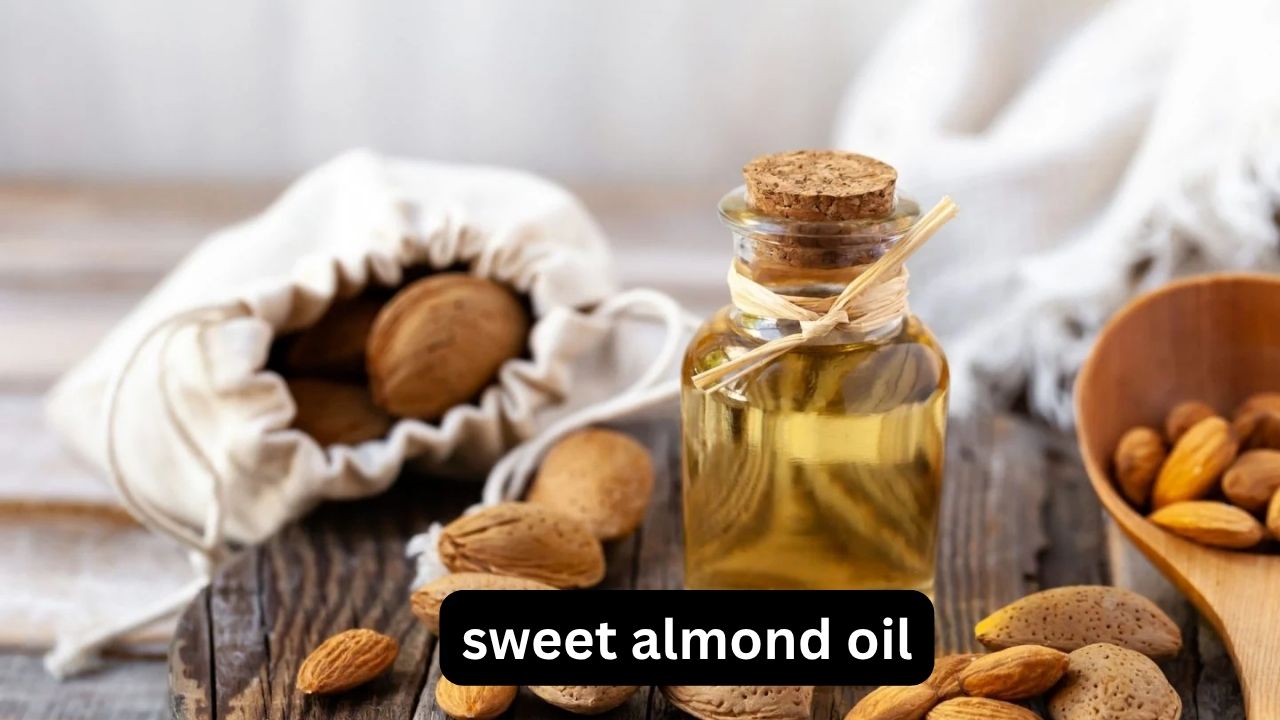
Sweet almond oil is a vegetable oil extracted from the kernels of sweet almonds, the variety commonly associated with food and cosmetics. It is rich in fatty acids, particularly oleic and linoleic acids, and contains naturally occurring vitamin E and other minor plant compounds.
Its texture is one reason it is popular in cosmetics. Compared with heavier oils, sweet almond oil generally spreads easily and leaves skin feeling soft without the extremely thick sensation associated with some butters or highly occlusive oils.
It is commonly used for:
- Dry or rough skin
- Body moisturization
- Massage
- Hair conditioning
- Scalp and hair-oil blends
- Cuticle care
- Homemade cosmetic formulations
- Commercial creams, lotions and cleansers
One important point: sweet almond oil is mainly a moisturizing and conditioning ingredient, not a miracle treatment. It can improve the feel and appearance of dry skin and hair, but it should not be treated as a cure for skin diseases or hair-loss conditions.
Sweet Almond Oil vs. Almond Oil: Are They the Same?
The terminology can be confusing because “almond oil” is often used as a general name for oil derived from almonds.
When a cosmetic product says sweet almond oil, it normally refers specifically to oil from Prunus amygdalus dulcis, the sweet almond.
The word “sweet” is important because bitter almonds are a different matter. Bitter almond products can contain compounds associated with amygdalin and cyanogenic substances, depending on how they are processed. Cosmetic sweet almond oil should not be confused with unprocessed bitter almond products.
For everyday skincare and haircare, look for sweet almond oil and check the ingredient list for its botanical identity when possible.
Sweet Almond Oil for Skin: What Does It Do?
The biggest practical advantage of sweet almond oil for skin is its ability to reduce the uncomfortable feeling associated with dryness.
Oil does not simply “add water” to the skin. Instead, it helps reduce water loss from the skin surface and improves lubrication, making rough skin feel smoother.
1. It Helps Soften Dry Skin
If your elbows, knees, hands or legs feel rough after showering, a small amount of oil can make a noticeable difference.
The best time to apply it is usually when the skin is still slightly damp. Water provides the hydration; the oil helps slow its evaporation.
A practical routine is:
- Take a normal shower.
- Pat the skin gently rather than completely drying it.
- Apply a small amount of sweet almond oil.
- Massage until evenly distributed.
- Add a fragrance-free moisturizer if your skin needs additional hydration.
This is often more effective than repeatedly applying oil to completely dry skin.
2. It Can Improve Skin Smoothness
Because sweet almond oil lubricates the skin surface, it can make rough areas feel softer almost immediately.
This does not mean the oil is “repairing” every underlying skin problem. The improvement may simply come from better surface lubrication and reduced moisture loss—and that can still be very useful.
3. It Works Well as a Massage Oil
Its relatively smooth texture makes sweet almond oil a popular carrier oil for massage.
It spreads easily and gives enough slip for massage without requiring a very large quantity. If using it on the body, you can apply a few drops first and add more only when necessary.
4. What About Facial Skin?
Sweet almond oil can work for some people as a facial emollient, particularly those dealing with dryness.
However, facial skin varies greatly. Someone with very dry skin may enjoy it, while another person may find facial oils feel heavy or contribute to clogged pores.
If you want to try it on your face, start with a small amount rather than covering your entire face with oil.
Sweet Almond Oil for Hair
Sweet almond oil is also used as a conditioning treatment for hair.
It does not permanently “repair” damaged hair because hair shafts are non-living structures. However, an oil can coat the hair surface, improve lubrication and reduce the rough feeling associated with dryness.
For Dry Hair Ends
Place a few drops between your palms and lightly smooth them over the mid-lengths and ends.
This is particularly useful when the ends feel:
- Rough
- Frizzy
- Dry
- Difficult to comb
- Lacking softness
You usually need much less oil than you think. Starting with one or two drops is better than applying a large amount and then trying to wash it out.
As a Pre-Shampoo Treatment
For particularly dry hair, you can massage a modest amount through the lengths before shampooing.
Leave it for a short period and then wash normally.
A useful real-world trick is to focus the oil on the lengths rather than aggressively coating the scalp. This reduces the chance of ending up with a greasy scalp while still conditioning the areas that need it most.
Does Sweet Almond Oil Make Hair Grow?
There is not enough good evidence to consider sweet almond oil a proven hair-growth treatment.
It may make hair look healthier by improving softness, shine and manageability, but that is different from stimulating new hair growth.
If someone is experiencing significant shedding, bald patches or progressive thinning, replacing a hair-care oil is not a substitute for identifying the underlying cause.
Sweet Almond Oil Benefits: What Is Realistic?
Sweet almond oil has several useful cosmetic properties, but realistic expectations matter.
Potential benefits include:
- Softening dry skin
- Reducing the feeling of roughness
- Improving skin lubrication
- Helping reduce moisture loss
- Conditioning dry hair
- Improving hair manageability
- Providing slip during massage
- Supporting smoother-looking skin and hair
One commonly overlooked benefit is formulation versatility. Sweet almond oil is not only useful by itself; it can also be incorporated into creams, body oils, hair treatments and cleansing products.
That versatility explains why you may see it listed in professional cosmetic formulas as well as simple single-ingredient oils.
Pure Sweet Almond Oil vs. Blended Products
A bottle labeled “almond oil” does not necessarily mean it contains 100% sweet almond oil.
Some products are blends containing several plant oils, fragrances, antioxidants or other cosmetic ingredients. A blend is not automatically inferior—it may actually be better suited to a specific purpose.
But if you specifically want pure sweet almond oil, check the ingredient list.
Ideally, a single-ingredient product should clearly identify sweet almond oil rather than relying only on marketing language on the front of the bottle.
Why the Ingredient List Matters
Words such as:
- “Natural”
- “Pure”
- “Premium”
- “Luxury”
- “Professional”
do not automatically tell you how the product was made.
The ingredient list, botanical name, processing information and packaging details are generally more useful when comparing products.
Cold-Pressed Sweet Almond Oil: Is It Better?
Cold-pressed sweet almond oil is produced using mechanical extraction without deliberately heating the oil to the same degree associated with some conventional processing methods.
People often choose cold-pressed oils because they want a minimally processed plant oil.
However, “cold pressed” does not automatically mean that a product is superior for every cosmetic purpose.
A refined sweet almond oil may have advantages such as a lighter odor, greater consistency or better suitability for certain formulations. A cold-pressed oil may retain more of the characteristics associated with the original plant material.
The best choice depends on what you are trying to do.
For a simple personal-care oil: cold pressed can be an appealing option.
For a cosmetic formulation: refined oil may sometimes be more practical.
Organic Sweet Almond Oil: Does Organic Matter?
Organic certification primarily relates to how the agricultural ingredients were produced and handled under the relevant certification standards.
If avoiding certain agricultural practices is important to you, certified organic sweet almond oil can be a reasonable preference.
But organic does not automatically mean:
- More moisturizing
- Safer for every skin type
- Better for acne-prone skin
- Better for hair growth
- More effective than every conventional oil
Think of organic and cold pressed as different characteristics. One describes agricultural/production standards; the other describes an extraction method.
How to Choose a Sweet Almond Oil Bottle
The bottle itself can tell you more than you might expect.
Look for:
1. A Clear Ingredient List
If you want pure oil, check whether sweet almond oil is the only ingredient.
2. Appropriate Packaging
Plant oils can gradually deteriorate when exposed to oxygen, heat and light.
A tightly closed, dark or opaque cosmetic bottle can help reduce unnecessary light exposure. Packaging does not make an oil invincible, but it is an important part of product stability.
3. A Fresh Product
Do not assume that an oil lasts forever because it is natural.
Over time, oils can oxidize and develop an unpleasant smell. Store sweet almond oil away from excessive heat and direct sunlight, and follow the manufacturer’s storage and expiration guidance.
4. Minimal Unnecessary Additives
If you specifically want pure sweet almond oil, avoid paying extra for a product whose primary appeal is a long list of fragrances or cosmetic extras.
A Less-Discussed Point: Smell Can Tell You Something
Fresh sweet almond oil usually has a mild, characteristic nutty or nearly neutral aroma depending on how it was processed.
If an oil develops a strong stale, paint-like, bitter or unpleasant odor, do not assume that this is simply “how natural oil smells.”
Oxidation can change an oil’s odor and quality.
This is one reason buying an enormous bottle may not always be economical. A smaller bottle that you finish while it is fresh can be a better choice than a large container that sits open for a year.
Another Overlooked Insight: More Oil Is Not More Moisture
This is one of the most common mistakes people make.
Applying a thick layer of oil does not necessarily provide proportionally greater hydration.
For dry skin, the combination of water + moisturizer + an appropriate amount of oil can be more useful than simply adding more oil.
Think of oil as part of the moisture-management system rather than a replacement for water.
Can Sweet Almond Oil Cause Problems?
Although many people tolerate it well, natural ingredients can still cause reactions.
People with an almond or tree-nut allergy should be especially cautious. The exact risk can depend on the product, degree of processing and individual sensitivity, so anyone with a known allergy should follow advice from their healthcare professional and check product labeling carefully.
For new skincare products, a small-area test can be sensible.
Stop using the product if you develop significant redness, swelling, itching, burning or another concerning reaction.
Avoid getting cosmetic oils into the eyes.
Common Mistakes to Avoid
Using Too Much
A few drops can be enough for the face or hair ends. More product often means more greasiness rather than better results.
Applying It to Dirty Hair and Expecting a Clean Result
Oil can bind with existing buildup. If your scalp or hair is already heavily coated with styling products, adding more oil may make washing difficult.
Assuming “Natural” Means Non-Comedogenic
Natural oils can still be unsuitable for certain skin types.
If you frequently develop facial breakouts, introduce facial oils cautiously.
Confusing Cosmetic Oil With Essential Oil
Sweet almond oil is a carrier/fixed oil. It is not the same type of product as concentrated essential oils.
Do not treat all “almond oils” as interchangeable.
Keeping the Bottle in a Hot Bathroom
Repeated exposure to heat and humidity is not ideal for oil storage. A cool, dark cupboard is generally a better location.
Simple Ways to Use Sweet Almond Oil
Here are practical starting points.
For Body Skin
Apply a small amount to slightly damp skin after bathing.
For Hands
Massage a few drops into dry hands and cuticles, particularly before bed.
For Hair Ends
Rub one or two drops between your palms and smooth over the ends.
For Pre-Shampoo Conditioning
Apply a modest amount to dry hair lengths, leave for a short treatment period, then shampoo thoroughly.
For Massage
Use enough to provide comfortable glide without soaking the skin.
The right amount is the smallest amount that gives the result you want.
Sweet Almond Oil at a Glance
| Question | Practical answer |
|---|---|
| Is it good for dry skin? | Yes, it can soften and lubricate dry skin. |
| Can it be used on hair? | Yes, especially for conditioning dry lengths and ends. |
| Is cold pressed better? | It can be desirable for minimally processed oil, but not automatically better for every purpose. |
| Is organic worth it? | It may be worthwhile if certified organic production matters to you. |
| Is pure oil always better? | Not necessarily; it depends on your intended use. |
| Does it grow hair? | It is not a proven hair-growth treatment. |
| Can it be used on the face? | Some people tolerate it well, but individual skin type matters. |
| Does it expire? | Yes. Oils can oxidize and should be stored properly. |
FAQ
Is sweet almond oil good for skin every day?
Sweet almond oil can be used regularly as a skin-conditioning oil if your skin tolerates it. It is particularly useful for dry areas because it helps lubricate the skin and reduce moisture loss. Apply a small amount rather than creating a heavy layer. If irritation or breakouts develop, discontinue use and reassess whether the oil suits your skin.
What is the difference between sweet almond oil and regular almond oil?
“Almond oil” is often used as a general term, while sweet almond oil specifically refers to oil derived from sweet almonds. For cosmetic use, checking the ingredient list and botanical name helps remove ambiguity. Do not assume that products made from bitter almonds are interchangeable with cosmetic sweet almond oil.
Is cold-pressed sweet almond oil better for hair?
Cold-pressed sweet almond oil can be an excellent conditioning option, particularly if you prefer minimally processed oils. It can make dry hair feel smoother and easier to manage, but it does not permanently repair damaged hair or guarantee hair growth. The quality of the product and how much you use are often more important than simply choosing the words “cold pressed.”
Can I use pure sweet almond oil on my face?
Some people use pure sweet almond oil as a facial emollient, especially when their skin is dry. However, facial skin is individual, and an oil that works beautifully for one person may feel too heavy for another. Start with a very small amount and stop if you experience irritation or worsening breakouts.
How should I store a sweet almond oil bottle?
Keep the bottle tightly closed and store it somewhere cool and away from direct sunlight and excessive heat. Avoid leaving it open unnecessarily because oxygen exposure contributes to oxidation. If the oil develops a distinctly stale or unpleasant smell, it is better not to continue using it.
Final Thoughts
Sweet almond oil is popular for a good reason: it is simple, versatile and useful for everyday skin and hair conditioning. Its greatest strengths are not dramatic overnight transformations but practical improvements—softer dry skin, smoother-feeling hair and easier application during massage or personal-care routines.
When choosing a product, look beyond attractive words such as “pure,” “organic” or “premium.” Check what is actually inside the bottle, how it was processed, how it is packaged and whether you can realistically finish it before the oil begins to deteriorate.
Most importantly, use the amount your skin or hair actually needs. A good sweet almond oil routine should leave you feeling moisturized and comfortable, not coated in grease.
For someone buying their first bottle, a fresh, clearly labeled sweet almond oil with appropriate packaging and a straightforward ingredient list is usually a sensible place to start.
