


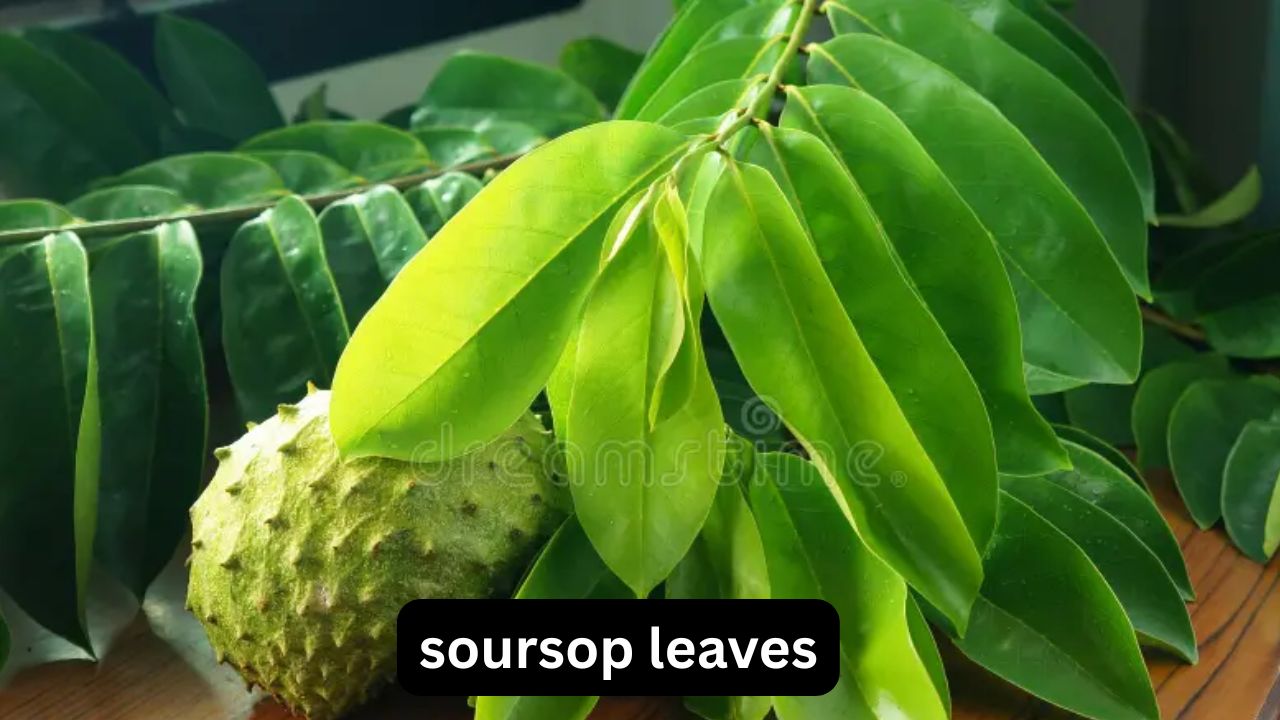
Have you ever seen soursop leaves sold as dried herbal tea and wondered whether they are actually good for you—or whether the impressive health claims online go too far? Soursop (Annona muricata), also called graviola or guanabana, has a long history of traditional use, particularly in tropical regions. Its leaves are commonly prepared as infusions or decoctions, while modern research has investigated their antioxidant, anti-inflammatory, blood-sugar, and anticancer potential.
The important distinction is that traditional use and laboratory findings are not the same as proven health benefits in humans. Some compounds in soursop leaves are biologically active, but others, including acetogenins such as annonacin, have raised legitimate safety concerns. Researchers have also found substantial variation in commercially sold soursop-leaf products.
This guide separates what is promising from what remains unproven, explains how dried soursop leaves are commonly used for tea, and covers the side effects and precautions that are easy to overlook.
What Are Soursop Leaves?
Soursop leaves come from Annona muricata, a tropical tree belonging to the custard-apple family. The plant is native to tropical regions of the Americas and is now cultivated in various warm climates.
The leaves contain several groups of naturally occurring compounds, including:
- Acetogenins
- Alkaloids
- Flavonoids and other phenolic compounds
- Tannins
- Various aromatic and plant-protective compounds
Researchers have identified more than 200 compounds across different parts of the soursop plant. Laboratory studies have investigated properties including antioxidant, antimicrobial and anti-inflammatory activity.
That sounds impressive, but there is an important practical point: a compound showing biological activity in a test tube does not automatically mean drinking the plant as tea will produce the same effect in people.
This distinction is especially important with soursop because research on dosage, long-term exposure and safety is still incomplete.
Soursop Leaves Benefits: What Does Research Suggest?
People search for “15 health benefits of soursop leaves” because the plant is associated with a remarkably long list of traditional uses. However, it would be misleading to present all of those uses as clinically proven benefits.
Here are the most relevant areas of research.
1. Antioxidant Potential
Soursop leaves contain plant compounds with antioxidant activity. Antioxidants help neutralize reactive molecules involved in oxidative stress.
Laboratory research suggests that extracts from Annona muricata can demonstrate antioxidant properties. However, the antioxidant activity of an extract should not be interpreted as proof that soursop-leaf tea prevents disease in humans.
2. Anti-Inflammatory Activity
Inflammation is another major area of soursop-leaf research.
Experimental studies have identified anti-inflammatory effects from compounds in the plant. This helps explain why leaves have traditionally been used in herbal preparations for various inflammatory complaints.
Still, there is not enough human evidence to recommend soursop leaves as a treatment for chronic inflammatory diseases.
3. Blood Sugar Research
Soursop has attracted interest for its possible effects on glucose metabolism.
Some experimental research has reported hypoglycemic activity, while limited human research has explored related effects. This is one reason people sometimes drink soursop leaf tea when trying to manage blood sugar.
But there is a potential downside: something capable of lowering blood sugar can interact with diabetes medication and potentially push glucose too low. Memorial Sloan Kettering specifically advises caution when graviola is used alongside blood-sugar-lowering medicines.
4. Possible Antimicrobial Activity
Laboratory studies have found antimicrobial activity associated with extracts of Annona muricata.
This has contributed to traditional uses of different plant parts for infections. But laboratory antimicrobial activity does not make soursop leaf tea an alternative to antibiotics or other evidence-based treatments.
5. Cellular Research on Cancer
This is probably the most misunderstood “benefit” of soursop leaves.
Various soursop compounds have demonstrated cytotoxic or antiproliferative activity against cancer cells in laboratory experiments. Researchers have therefore investigated the plant as a possible source of anticancer compounds.
There has also been limited human research. One small randomized trial involving 28 people with colorectal cancer investigated an A. muricata leaf extract over eight weeks and found differences in ex-vivo cytotoxicity, but the researchers emphasized that further research was needed.
This does not establish soursop leaves as a cancer treatment. Memorial Sloan Kettering notes that clinical evidence is lacking for using graviola to treat cancer.
6. Traditional Digestive Uses
Soursop leaves have traditionally been prepared as herbal remedies for a variety of complaints, including digestive problems.
However, traditional use is evidence of historical practice—not proof that the preparation works for a specific digestive disorder.
7. Traditional Use for Fever
In some regions, preparations made from soursop leaves have traditionally been used during fever.
Modern research has investigated multiple pharmacological effects of the plant, but that does not establish an appropriate dose or demonstrate that soursop tea is a reliable fever treatment.
8. Possible Pain-Relieving Activity
Experimental research has reported antinociceptive effects, meaning effects related to the perception of pain.
This is another area where laboratory or animal findings should not be confused with a proven human pain treatment.
9. Possible Liver-Protective Effects
Some preclinical studies have reported hepatoprotective effects from Annona muricata preparations. Interestingly, the same plant has also generated safety questions, demonstrating why isolated positive findings should not be interpreted as proof that a product is universally safe.
10. Potential Effects on Blood Pressure
Graviola may lower blood pressure, according to clinical guidance from Memorial Sloan Kettering.
For someone already taking antihypertensive medication, this isn’t necessarily a benefit. It may instead create an interaction that requires medical supervision.
11. Possible Immune-Modulating Activity
Laboratory and animal research has investigated immunomodulatory effects of A. muricata.
This is scientifically interesting, but there is insufficient evidence to say that drinking soursop-leaf tea reliably “boosts” the immune system.
12. Antiparasitic Research
Traditional medicine has used soursop preparations for parasitic conditions, and experimental research has investigated antiparasitic properties.
Again, these findings should not replace an established diagnosis and appropriate treatment.
13. Potential Antimicrobial Effects
Some extracts have shown activity against microorganisms under laboratory conditions.
The practical limitation is that the concentration used in laboratory experiments may differ substantially from what someone receives from a cup of homemade tea.
14. Possible Neuroprotective Questions—Not a Proven Benefit
This deserves careful wording because some online articles describe soursop as “neuroprotective.”
The evidence is not strong enough to make that claim for people. In fact, certain soursop acetogenins have demonstrated neurotoxic potential, making long-term consumption an area of concern rather than something that should automatically be promoted for brain health.
15. General Traditional Wellness Use
In communities where soursop grows naturally, leaf tea has traditionally been consumed as a general herbal preparation.
That cultural use is worth acknowledging, but it should not be converted into a list of guaranteed medical benefits. The strongest approach is to appreciate the traditional use while remaining honest about the limits of modern clinical evidence.
Soursop Leaf Tea: How Is It Traditionally Prepared?
Dried soursop leaves are commonly sold for herbal tea. Fresh leaves may also be used in traditional preparations.
A typical preparation involves:
- Washing the leaves thoroughly.
- Using a small amount of fresh or dried leaf.
- Steeping the leaves in hot water or gently simmering them.
- Straining the liquid before drinking.
However, there is no universally established evidence-based dose for soursop leaf tea.
That matters because homemade preparations can vary considerably. One person’s “cup of tea” may contain a very different amount of plant material from another person’s cup.
For that reason, it is not sensible to assume that stronger tea equals greater health benefits.
Dried Soursop Leaves vs Fresh Leaves
| Feature | Dried leaves | Fresh leaves |
|---|---|---|
| Storage | Easier to store | Spoil more quickly |
| Preparation | Convenient for tea | Requires washing/preparation |
| Strength | Can vary by product | Can vary by leaf |
| Quality concerns | Contamination and labeling | Correct plant identification |
| Dosage consistency | Often uncertain | Often uncertain |
One particularly useful insight from product research is that commercial soursop-leaf products are not necessarily standardized.
A 2023 analysis of seven commercially available A. muricata leaf products found substantial variation in annonacin concentration. One product contained less than half of the amount stated on its label, while another exceeded a microbiological quality limit.
So if you’re buying dried soursop leaves in the UK or elsewhere, “natural” does not automatically mean consistent or risk-free.
Soursop Leaves Benefits and Side Effects: The Important Balance
The biggest mistake in articles about soursop leaves is discussing benefits without discussing safety.
Soursop contains annonaceous acetogenins, including annonacin. Research has raised concerns about their potential effects on nerve cells.
Experimental work has shown that annonacin can interfere with mitochondrial energy production in neurons. Epidemiological research in Guadeloupe has also investigated an association between consumption of Annona muricata products and atypical parkinsonism.
This does not mean that one cup of soursop tea causes Parkinson’s disease. The evidence does not establish that conclusion.
The concern is more relevant to repeated or prolonged exposure, particularly because researchers still cannot define a reliable safe intake level for supplements. The European Food Safety Authority’s risk assessment highlighted substantial uncertainty around long-term safety.
Who Should Be Especially Careful?
Speak with a healthcare professional before using concentrated soursop products if you:
- Take medication for diabetes
- Take medication for high blood pressure
- Have a neurological disorder
- Are pregnant or breastfeeding
- Have significant liver or kidney problems
- Are receiving cancer treatment
- Take multiple prescription medicines
Graviola can potentially affect blood sugar and blood pressure, creating interaction concerns with medications.
Can You Drink Soursop Leaf Tea Every Day?
This is one of the most important questions—and the honest answer is that there isn’t enough evidence to establish a safe long-term daily dose.
A systematic review of soursop leaf extract safety found that available studies do not provide a definitive picture of long-term human safety. EFSA’s risk assessment similarly concluded that the available evidence does not allow a safe intake level to be established.
So I would not treat soursop leaf tea like ordinary beverages such as peppermint or green tea and assume that daily, indefinite consumption is harmless.
Common Mistakes People Make With Soursop Leaves
Mistake 1: Assuming “Natural” Means Safe
Natural plants can contain powerful pharmacologically active chemicals. Soursop is a good example.
Mistake 2: Using It Instead of Cancer Treatment
The laboratory evidence is interesting, but it does not demonstrate that soursop leaves cure cancer. Delaying proven cancer treatment because of herbal claims can be dangerous.
Mistake 3: Making Extremely Strong Tea
More leaves do not necessarily mean more benefits. They may instead increase exposure to active compounds.
Mistake 4: Ignoring Medication Interactions
Someone taking diabetes or blood-pressure medication should not assume a herbal tea is irrelevant simply because it is sold as a food or traditional remedy.
Mistake 5: Buying Based Only on “Organic” or “Pure” Claims
A product can be marketed as pure while still having variable concentrations of naturally occurring compounds. Product testing has demonstrated significant variation among commercially available soursop-leaf products.
A Practical Way to Think About Soursop Leaves
Imagine two people.
Person A occasionally drinks a mild herbal infusion because it is part of their family tradition.
Person B takes a concentrated soursop supplement every day because they believe it can prevent or cure cancer.
Those are very different situations.
The second person has greater reason to think about dosage, duration, interactions, product quality and medical supervision.
This is one of the less-discussed points about herbal medicine: risk depends not only on the plant but also on concentration, frequency, duration, preparation method and the person’s health status.
What Does the Evidence Actually Tell Us?
The evidence can be divided into three levels:
Strongest: Soursop leaves contain biologically active compounds, and laboratory studies demonstrate several interesting properties.
Moderate or limited: Some animal and small human studies suggest possible metabolic or pharmacological effects.
Not established: Soursop-leaf tea has not been proven to prevent or cure cancer, treat diabetes, reverse neurological disease, or replace conventional medical treatment.
That distinction is more useful than simply calling soursop leaves “good” or “bad.”
FAQ
What are the health benefits of soursop leaves?
Soursop leaves have been investigated for antioxidant, anti-inflammatory, antimicrobial, blood-sugar-related and anticancer effects. Much of the evidence comes from laboratory and animal research rather than large clinical trials. Therefore, these findings suggest potential rather than established medical benefits.
Is soursop leaf tea good for you?
Soursop leaf tea is a traditional herbal preparation, but its long-term safety and health benefits have not been firmly established. The leaves contain biologically active compounds, including acetogenins, that require safety consideration. If you take medication or plan to consume it regularly, discuss it with a healthcare professional first.
Can soursop leaves cure cancer?
No. Laboratory research has found that certain soursop compounds can affect cancer cells, but that does not prove that soursop leaves or tea can cure cancer in humans. Clinical evidence remains insufficient, and soursop should not replace established cancer treatment.
What are the side effects of soursop leaves?
The major concern is potential toxicity from acetogenins, particularly with repeated or prolonged exposure. Soursop may also lower blood sugar or blood pressure and therefore interact with medicines used for those conditions. Long-term safe intake has not been adequately established.
Can you drink dried soursop leaf tea every day?
There is currently no well-established safe daily dose for long-term consumption. Commercial products can also differ substantially in their concentrations of active compounds. Regular or concentrated use is therefore something to discuss with a healthcare professional rather than assuming it is harmless.
Are soursop leaves available in the UK?
Yes, dried soursop leaves and graviola products are sold through various herbal and specialty retailers in the UK. However, availability does not mean that a product has proven therapeutic benefits or a standardized dose. Check the ingredient and dosage information carefully and be particularly cautious with concentrated extracts.
Final Thoughts
Soursop leaves are more scientifically interesting—and more complicated—than the typical “15 benefits” list suggests. Research supports the presence of antioxidant, anti-inflammatory and other biologically active properties, but many claimed health benefits remain based on laboratory, animal or traditional evidence rather than robust human trials.
The safety question is equally important. Soursop contains acetogenins such as annonacin, and researchers have raised concerns about potential neurotoxicity and the uncertain effects of long-term exposure. Commercial products can also vary significantly in composition.
If you enjoy soursop leaf tea as a traditional drink, the sensible approach is moderation, awareness and realistic expectations. Don’t use it as a substitute for medical treatment, and don’t assume that a stronger or more frequent preparation will provide greater benefits.
