


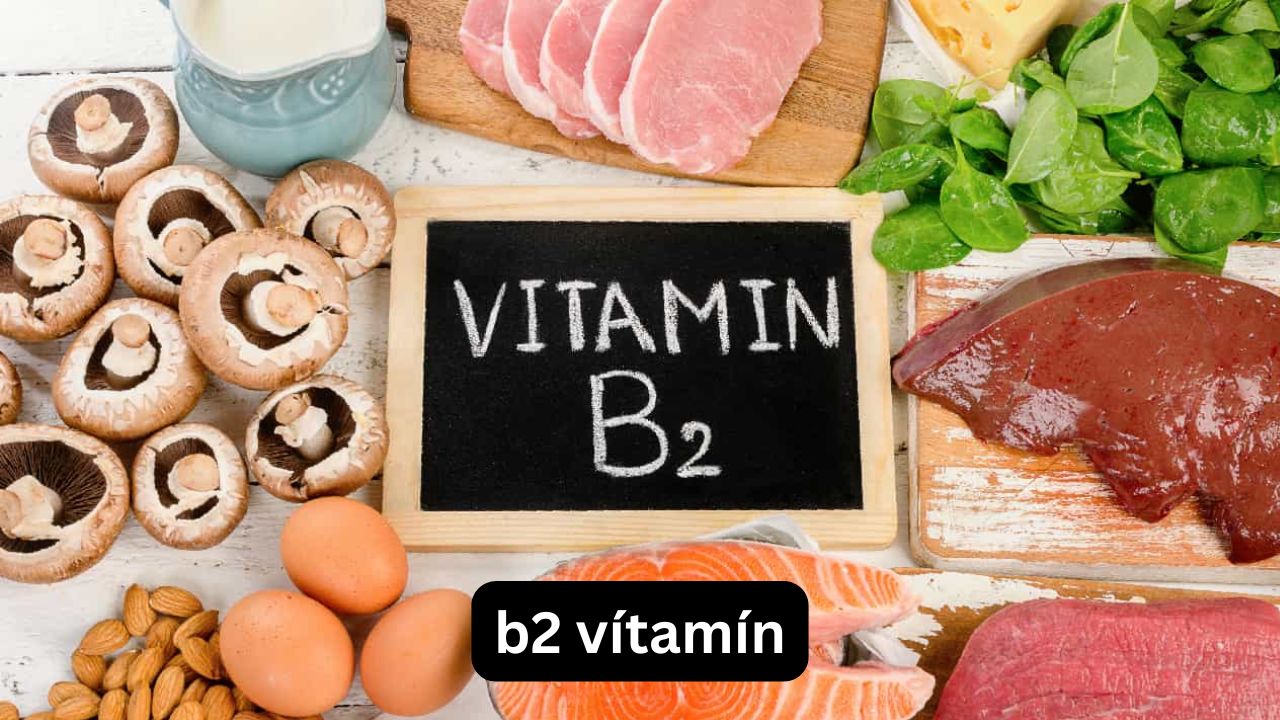
If you regularly feel tired, struggle with a restricted diet, or have been looking into vitamins for migraine prevention, you may have come across B2 vitamin, also known as riboflavin. It is a water-soluble B vitamin that your body needs for normal energy metabolism, cell function, growth, and development.
The interesting part is that vitamin B2 is needed in relatively small amounts, yet it participates in important processes throughout the body. Most people can get enough from an ordinary varied diet, so taking a high-dose supplement is not automatically better.
This guide explains what vitamin B2 does, which foods contain it, how much you actually need, what deficiency looks like, and why riboflavin has attracted attention for migraine prevention. It also separates everyday nutritional needs from the much higher doses sometimes studied for specific purposes, helping you understand when food is enough and when a supplement may deserve a conversation with a healthcare professional.
What Is B2 Vitamin?
Vitamin B2, or riboflavin, is a water-soluble B vitamin that helps the body convert nutrients from food into usable energy and supports normal cell growth and function.
Unlike fat-soluble vitamins, vitamin B2 is not stored in large amounts in the body. Regular dietary intake therefore matters.
Riboflavin also forms part of two important coenzymes, flavin adenine dinucleotide (FAD) and flavin mononucleotide (FMN). These compounds participate in numerous metabolic reactions, including those involved in energy production.
That does not mean taking extra B2 will automatically make you feel more energetic. If you already consume enough, additional riboflavin is not a shortcut for overcoming sleep deprivation, an inadequate diet, or another cause of fatigue.
What Does Vitamin B2 Do?
Vitamin B2 has several important jobs.
1. It helps release energy from food
Riboflavin contributes to metabolic reactions that allow the body to use carbohydrates, fats, and proteins. This is one reason B2 is commonly described as an “energy” vitamin.
However, there is an important distinction: B2 helps your cells process energy; it is not itself a stimulant.
Someone who is deficient may experience weakness or tiredness, but someone who already gets enough should not expect a high-dose supplement to act like caffeine.
2. It supports normal cell function
Riboflavin-dependent enzymes are involved in many cellular processes. Because cells constantly need to maintain and repair themselves, adequate B2 intake is part of normal nutrition.
3. It supports normal growth and development
The body needs riboflavin during periods of growth, which is why recommended intakes vary according to age and life stage. Requirements are also higher during pregnancy and breastfeeding.
4. It participates in antioxidant-related processes
Riboflavin-dependent enzymes contribute to systems that help maintain the body’s redox balance. This is a more technical benefit than simply saying that B2 is an “antioxidant,” because riboflavin itself is not best understood as a conventional antioxidant supplement.
How Much Vitamin B2 Do You Need?
For most adults, the recommended amount is fairly small:
| Group | Recommended daily amount |
|---|---|
| Adult men | 1.3 mg |
| Adult women | 1.1 mg |
| Pregnant women | 1.4 mg |
| Breastfeeding women | 1.6 mg |
| Teen boys 14–18 | 1.3 mg |
| Teen girls 14–18 | 1.0 mg |
These recommendations come from the U.S. National Institutes of Health Office of Dietary Supplements.
This is one of the most useful things to understand about B2: normal nutritional requirements are measured in milligrams, not hundreds of milligrams.
That becomes particularly important when reading about riboflavin for migraines, because research has investigated doses such as 400 mg per day. That is dramatically higher than the normal daily requirement and should not be confused with ordinary nutritional supplementation.
B2 Vitamin Foods: Where Can You Get It?
You do not need an exotic food to get riboflavin. Good dietary sources include:
- Milk and other dairy products
- Eggs
- Lean meat
- Liver and kidneys
- Mushrooms
- Spinach and some other vegetables
- Fortified breakfast cereals
- Enriched breads and grain products
Riboflavin occurs naturally in several animal foods and is also added to fortified foods.
A practical way to increase B2 through food
Instead of trying to find one “superfood,” build meals around several ordinary sources.
For example:
Breakfast: eggs + fortified cereal or enriched bread + milk
Lunch: lean meat + vegetables + enriched grain
Snack: yogurt or milk
Dinner: meat or another protein source + vegetables
This approach is generally more useful than relying on a single food.
One overlooked detail: cooking method matters
Riboflavin can be lost during cooking, particularly when food is boiled and the cooking water is discarded. NIH notes that riboflavin losses into cooking water can be greater with boiling than with methods such as steaming or microwaving.
That does not mean you should avoid cooked vegetables. It simply means that preparation method can affect the final nutrient content.
A practical trick is to use cooking methods that do not involve throwing away large amounts of cooking water, especially when preparing foods that contribute meaningful amounts of B2.
What Are the Benefits of Vitamin B2?
The strongest established benefit of riboflavin is correcting or preventing inadequate intake.
Adequate B2 supports:
- Normal energy metabolism
- Normal cellular function
- Growth and development
- Normal nervous-system function
- Healthy nutritional status
But it is important not to turn these roles into exaggerated supplement claims. There is a major difference between having enough of a vitamin for normal physiology and taking large amounts to produce a therapeutic effect.
For most healthy people eating a varied diet, more B2 is not necessarily better.
Vitamin B2 and Migraines: Can It Help?
This is one area where riboflavin has attracted genuine clinical research.
Some studies suggest that high-dose riboflavin may help reduce migraine frequency or headache days, although the evidence has not been perfectly consistent. The NIH notes that some studies show benefit while others do not.
A frequently cited randomized controlled trial compared 400 mg of riboflavin daily with placebo in 55 people with migraine over three months. The riboflavin group had greater reductions in attack frequency and headache days.
More recently, a systematic review and dose-response meta-analysis published in 2026 analyzed 12 trials involving 749 participants and found evidence of a relationship between riboflavin intake up to 400 mg/day and reductions in migraine frequency and duration.
However, this should not be interpreted as “everyone with migraines should take 400 mg.”
Why the migraine dose is confusing
The normal adult requirement is around 1.1–1.3 mg daily, while migraine studies commonly investigate 400 mg daily.
Those are completely different contexts.
A high dose used in a clinical study is a therapeutic research approach, not the amount a healthy person needs simply to meet nutritional requirements.
Professional guidance has considered riboflavin a possible migraine-prevention option, but NIH recommends discussing its use with a healthcare professional.
If migraines are frequent, severe, changing in pattern, or interfering with daily life, it is better to evaluate the underlying headache condition rather than treating B2 as a universal solution.
Who May Be More Likely to Have Low Riboflavin?
Riboflavin deficiency is uncommon among people eating a varied diet, but certain groups can have more difficulty meeting their needs.
These include people who:
- Follow a strict vegan diet
- Avoid dairy products and eggs
- Have very restricted diets
- Have certain conditions affecting nutrient absorption or use
- Have specific genetic disorders involving riboflavin transport
NIH specifically identifies some vegetarians, vegans, people avoiding dairy, and people with riboflavin transporter deficiency as groups who may be at greater risk of inadequate intake.
The important practical point is that dietary restriction does not automatically mean deficiency. A well-planned plant-based diet can provide many nutrients, but people with very limited food choices may need more careful nutritional planning.
What Happens If You Don’t Get Enough B2?
Riboflavin deficiency can affect several parts of the body.
Possible signs include:
- Cracked or swollen lips
- Sores at the corners of the mouth
- Skin problems
- Sore throat
- Hair loss
- Weakness and tiredness
- Certain problems involving the nervous or reproductive systems
Severe, prolonged deficiency can contribute to anemia and eye problems such as cataracts.
These symptoms are not unique to riboflavin deficiency. For example, fatigue can have dozens of possible causes. Taking B2 simply because you feel tired is therefore not a reliable way to identify the problem.
B2 Vitamin Side Effects: Is Riboflavin Safe?
Riboflavin has a strong safety record, and NIH reports that it has not been shown to cause harm at typical supplemental intakes.
Because riboflavin is water-soluble, excess amounts are generally handled and excreted rather than stored extensively.
Still, “water-soluble” does not mean every high-dose supplement is automatically appropriate for every person.
One practical issue is absorption. NIH notes that the body can absorb only about 27 mg of riboflavin at a time, which is one reason simply taking an enormous dose does not guarantee proportionally greater absorption.
If you are considering a high-dose B2 supplement for migraines or another specific reason, discuss the dose with a doctor or pharmacist, particularly if you take other supplements or medicines.
Food vs Supplement: Which Is Better?
For meeting ordinary nutritional requirements, food is usually the best starting point.
| Food approach | Supplement approach |
|---|---|
| Provides B2 alongside other nutrients | Can provide a precise dose |
| Useful for everyday nutrition | Useful when dietary intake is inadequate |
| Usually low risk when part of a balanced diet | High-dose use should have a specific reason |
| Fits naturally into meals | Convenient for people with dietary limitations |
A supplement can make sense in particular situations, but it should solve a defined problem rather than become a default response to every symptom.
A useful rule of thumb
If your goal is simply:
“I want to make sure I’m getting enough vitamin B2.”
Start with food.
If your goal is:
“I have frequent migraines and want to investigate riboflavin as prevention.”
That is a different question and worth discussing with a healthcare professional because the doses studied are much higher than normal dietary requirements.
Three Common Mistakes People Make With Vitamin B2
Mistake 1: Assuming more means better
The recommended daily requirement is around 1 mg, but migraine research may use hundreds of milligrams.
Those numbers should not be mixed together.
Mistake 2: Blaming every symptom on vitamin deficiency
Tiredness, headaches, mouth problems, and skin changes can have many causes. A symptom alone does not establish a riboflavin deficiency.
Mistake 3: Treating a migraine supplement as a cure
Riboflavin may help prevent migraines for some people, but prevention is different from stopping an acute attack. It should not replace appropriate medical evaluation or prescribed treatment when those are needed.
A Simple Real-Life Example
Imagine someone who rarely eats dairy, eggs, meat, or fortified foods and has a very limited diet. They are not necessarily deficient, but their dietary pattern provides fewer obvious riboflavin sources.
A sensible first step is not immediately reaching for a massive supplement dose. Instead, they could review their overall diet and introduce appropriate B2-containing foods or fortified foods.
Now consider someone with frequent migraines who already eats a balanced diet. Their question is different. They may have adequate nutritional B2 but still be interested in the evidence surrounding high-dose riboflavin for migraine prevention.
This distinction—nutritional adequacy versus therapeutic supplementation—is one of the most important concepts to understand when researching vitamin B2.
FAQ
What is B2 vitamin good for?
Vitamin B2, or riboflavin, is essential for normal energy metabolism, cell function, growth, and development. It helps the body use nutrients from food through its role in enzyme systems. Most people can obtain sufficient B2 through a varied diet.
What foods have the most vitamin B2?
Eggs, milk, lean meats, liver and kidneys are useful sources of riboflavin. Mushrooms, spinach, and fortified cereals and grain products can also contribute. The best dietary strategy is to eat a varied diet rather than depend on one food.
Can vitamin B2 help with migraines?
Research suggests that high-dose riboflavin may reduce migraine frequency or headache days in some people, although results across studies are not completely consistent. Clinical research has commonly investigated 400 mg per day, which is far above the normal nutritional requirement. Anyone considering this approach should discuss it with a healthcare professional.
What are the side effects of vitamin B2?
Riboflavin is generally considered well tolerated, and NIH reports that it has not been shown to cause harm. However, taking a high-dose supplement for a specific purpose is different from meeting normal dietary requirements, so high-dose use should be discussed with a healthcare professional.
How much vitamin B2 do adults need per day?
Adult men generally need 1.3 mg per day and adult women 1.1 mg. Requirements increase to 1.4 mg during pregnancy and 1.6 mg during breastfeeding. These amounts are nutritional recommendations and should not be confused with high doses studied for migraine prevention.
Conclusion
Vitamin B2 is a small but essential part of a healthy diet. Riboflavin helps the body process nutrients for energy, supports normal cellular function, and contributes to growth and development. Fortunately, it is found in familiar foods such as milk, eggs, lean meat, mushrooms, spinach, and fortified grains.
For most people, the priority is simply getting enough through a varied diet—not chasing increasingly high doses.
The migraine research is more specialized. High-dose riboflavin has shown promise in clinical studies, but the doses investigated are dramatically higher than ordinary daily requirements, and the evidence is not uniformly positive.
The most useful takeaway is therefore simple: eat a varied diet for everyday B2 needs, and treat high-dose supplementation as a specific health decision rather than a general wellness habit.
