


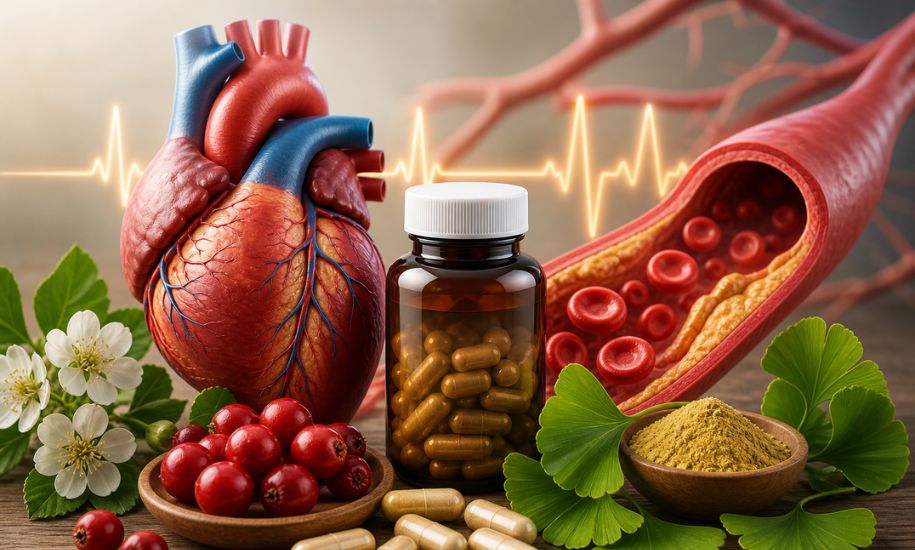
Provascin is a name associated with cardiovascular and circulatory health supplements, but information about the product can be confusing. Some online articles describe it as a heart-health formula, while others make claims that sound more like those associated with prescription medicines.
The best-documented product is PURICA Provascin, a multi-ingredient natural health supplement that was marketed for cardiovascular support, circulation, energy metabolism, antioxidant protection, and healthy cholesterol function. Historical product listings describe it as a capsule formula containing L-carnitine, alpha-ketoglutaric acid, Chaga mushroom, Coenzyme Q10, betaine hydrochloride, alpha-lipoic acid, grape-seed extract, and green-tea extract.
However, an important distinction is necessary: Provascin is a supplement, not an established prescription treatment for heart disease, high blood pressure, or high cholesterol. Research on individual ingredients does not automatically prove that the complete Provascin formula produces the same benefits.
This guide explains what Provascin is, what its historical formula contained, what its ingredients may do, what evidence actually supports, potential safety concerns, dosage information, and what consumers should check before using a product sold under the Provascin name.
What Is Provascin?
Provascin is best documented as a natural health or dietary supplement associated with cardiovascular and circulatory support.
The most consistently documented version is PURICA Provascin, which was sold in capsule form. Historical retailer information describes the product as a combination of nutrients, metabolic compounds, mushroom material, and botanical extracts.
The product was marketed around areas such as:
- Cardiovascular support
- Circulatory health
- Antioxidant support
- Energy metabolism
- Healthy cholesterol levels
- General metabolic wellness
These are supplement-support claims and should not be interpreted as proof that Provascin can treat or prevent cardiovascular disease.
Is Provascin a Medicine?
No. The documented PURICA product is a supplement rather than a prescription cardiovascular medicine.
This distinction is important. In the United States, the FDA does not approve dietary supplements for safety and effectiveness before they are marketed in the same way it approves prescription drugs. Companies are responsible for ensuring their supplements are safe and that their claims comply with applicable requirements.
Therefore, Provascin should not be presented as a replacement for medications prescribed for:
- High blood pressure
- High cholesterol
- Heart failure
- Angina
- Blood clots
- Coronary artery disease
Provascin Ingredients
Historical product information identifies eight principal active ingredients in the PURICA Provascin formula.
| Ingredient | Amount per capsule |
|---|---|
| L-Carnitine | 188 mg |
| Alpha-ketoglutaric acid | 125 mg |
| Certified organic micronized Chaga | 125 mg |
| Coenzyme Q10 | 38 mg |
| Betaine hydrochloride | 31 mg |
| DL-alpha-lipoic acid | 13 mg |
| Grape-seed extract | 9 mg |
| Green-tea extract | 9 mg |
Historical listings also identify hypromellose, microcrystalline cellulose, and plant-source magnesium stearate as non-medicinal ingredients.
It is important to verify the label of any product currently being sold under the Provascin name because online descriptions may not all refer to the same formulation.
What Do the Provascin Ingredients Do?
The ingredients in Provascin have different biological roles. That does not mean every ingredient has been proven to produce a cardiovascular benefit when combined in this particular product.
L-Carnitine
L-carnitine is involved in energy metabolism and helps transport fatty acids into mitochondria, where they can be used for energy production. The body can normally make the carnitine it needs, and carnitine is also obtained from food.
Because the heart and skeletal muscles have high energy requirements, carnitine has been studied in cardiovascular and exercise-related research.
However, the existence of this biological role does not prove that taking a Provascin capsule improves heart function in healthy adults.
Coenzyme Q10
Coenzyme Q10, commonly called CoQ10, is naturally present in the body and plays a role in cellular energy production.
It has been investigated extensively as a supplement for cardiovascular conditions. However, the evidence is mixed. NCCIH notes that research into CoQ10 for preventing heart disease and its use in heart failure has produced inconclusive results.
Therefore, it is more accurate to describe CoQ10 as a researched ingredient rather than claim that Provascin is clinically proven to strengthen the heart.
Alpha-Ketoglutaric Acid
Alpha-ketoglutaric acid participates in cellular energy metabolism.
It is included in some nutritional formulations because of its connection with metabolic pathways. However, there is insufficient evidence to conclude that the amount contained in Provascin provides a clinically meaningful cardiovascular benefit.
Chaga Mushroom
Chaga is a mushroom containing various biologically active compounds, including antioxidant-related substances.
Although laboratory research has generated interest in Chaga, evidence from laboratory studies should not be confused with clinical proof that Chaga-containing supplements prevent or treat heart disease.
Betaine Hydrochloride
Betaine is involved in several metabolic processes. The form used in the historical Provascin formula is betaine hydrochloride.
Evidence involving other forms of betaine should not automatically be applied to betaine hydrochloride in Provascin. The chemical form, dose, and study conditions all matter when interpreting supplement research.
Alpha-Lipoic Acid
Alpha-lipoic acid participates in energy metabolism and has antioxidant properties.
It has been studied for several health applications, but research on alpha-lipoic acid alone does not establish that the complete Provascin formula provides a specific cardiovascular treatment effect.
Grape-Seed Extract
Grape-seed extract contains polyphenols and other compounds with antioxidant activity.
It is frequently included in supplements marketed for vascular and antioxidant support. However, antioxidant activity in laboratory settings is not the same thing as demonstrating reduced cardiovascular events in humans.
Green-Tea Extract
Green-tea extract contains catechins and other compounds that have been investigated for metabolic and cardiovascular effects.
NCCIH reports that green-tea extracts may produce a small reduction in total and LDL cholesterol in some studies, but they have not consistently improved HDL cholesterol or triglycerides. Concentrated green-tea extracts can also cause adverse effects and, rarely, liver injury.
This makes the ingredient worth considering from a safety perspective, particularly when someone is taking medication.
How Is Provascin Supposed to Work?
Provascin does not work through one clearly established drug-like mechanism.
Instead, its formula combines ingredients associated with:
- Cellular energy production
- Fatty-acid metabolism
- Antioxidant activity
- Plant polyphenols
- General metabolic processes
L-carnitine and CoQ10 are particularly associated with cellular energy pathways, while ingredients such as grape-seed extract, green-tea extract, Chaga, and alpha-lipoic acid are commonly discussed in relation to antioxidant activity.
However, biological plausibility is not the same as clinical proof.
For example, a study showing that CoQ10 has a particular biological effect does not demonstrate that Provascin produces that same effect. Clinical results depend on the exact dose, formulation, duration, population, and health condition being studied.
What Are the Potential Benefits of Provascin?
Provascin was marketed around several potential areas of cardiovascular and metabolic support.
Cardiovascular Support
The formula contains several ingredients associated with energy metabolism and antioxidant processes.
This provides a rationale for its marketing as a cardiovascular-support supplement, but there is insufficient direct evidence to describe Provascin itself as a proven treatment for cardiovascular disease.
Antioxidant Support
Several ingredients have antioxidant-related properties.
These include:
- CoQ10
- Alpha-lipoic acid
- Grape-seed extract
- Green-tea compounds
- Chaga
However, taking an antioxidant supplement does not automatically prevent artery disease or heart attacks.
Energy Metabolism
L-carnitine, CoQ10, and alpha-ketoglutaric acid are connected with cellular energy metabolism.
People may therefore associate the product with energy or stamina, but there is not enough product-specific clinical evidence to guarantee noticeable improvements.
Cholesterol Support
Historical product listings marketed Provascin for support of healthy cholesterol levels.
However, Provascin should not be considered a replacement for evidence-based cholesterol treatment.
If someone has high LDL cholesterol, they should discuss appropriate treatment with a healthcare professional rather than relying on an unproven supplement.
Is Provascin Scientifically Proven?
This is where the original article needs the most clarification.
The ingredients have varying levels of scientific research, but the complete Provascin formula is not strongly established through large, high-quality clinical trials as a treatment for cardiovascular disease.
This distinction is crucial.
There is research on CoQ10, L-carnitine, green-tea compounds, alpha-lipoic acid, and other ingredients. But a study involving one ingredient does not prove that a combination of eight ingredients works in the same way.
For example, NCCIH states that evidence concerning CoQ10 for preventing heart disease is inconclusive.
Similarly, NCCIH reports that green-tea extract may modestly affect LDL and total cholesterol, but results do not establish green tea extract as a treatment for cardiovascular disease.
The most accurate conclusion is therefore:
Provascin contains ingredients with plausible biological functions and varying amounts of research behind them, but the complete product should not be described as a clinically proven treatment for heart disease.
Provascin Dosage
Historical retailer information lists:
- 3–4 capsules daily for prevention
- 6–8 capsules daily for existing cardiovascular conditions
These are historical product directions and should not be treated as personalized medical advice.
A higher number of capsules also increases exposure to every ingredient in the formula.
If you encounter a current product sold under the Provascin name, follow the current package label rather than an old website or archived article.
If you take prescription medication or have a medical condition, consult a doctor or pharmacist before using it.
Provascin Side Effects
There is not enough high-quality product-specific evidence to provide a reliable rate of side effects for Provascin as a complete formula.
Potential problems can come from individual ingredients or from interactions with medicines.
Possible symptoms may include:
- Nausea
- Digestive discomfort
- Headache
- Dizziness
- Changes in blood pressure
- Changes in blood sugar
- Allergic reactions
Green-tea extract deserves particular attention. NCCIH reports that concentrated green-tea extracts can cause nausea, abdominal discomfort, constipation, and increased blood pressure, and that rare cases of liver injury have been reported.
Therefore, “natural” does not automatically mean “risk-free.”
Provascin Drug Interactions
Anyone taking medication should check the complete ingredient list with a healthcare professional before using Provascin.
Particular caution may be appropriate for people taking:
- Blood thinners
- Blood-pressure medicines
- Cholesterol-lowering medicines
- Diabetes medicines
- Other cardiovascular medications
- Immunosuppressants
Green-tea products, for example, can interact with certain medicines. NCCIH specifically notes interactions involving nadolol, atorvastatin, and raloxifene, while also advising people who take medicines to consult a healthcare provider before using green-tea supplements.
Historical Provascin product information also advised caution for people with liver or kidney disease, diabetes, seizure disorders, autoimmune conditions, or those taking blood-pressure medication, blood thinners, or immunosuppressants.
Who Should Avoid Provascin or Seek Medical Advice First?
Talk with a healthcare professional before taking Provascin if you:
- Have diagnosed heart disease
- Have high blood pressure
- Have high cholesterol
- Have diabetes
- Have liver disease
- Have kidney disease
- Have an autoimmune condition
- Have a seizure disorder
- Take blood thinners
- Take blood-pressure medication
- Take multiple prescription drugs
- Are pregnant or breastfeeding
Most importantly, do not use a supplement to delay evaluation of symptoms such as chest pain, severe shortness of breath, fainting, or sudden weakness.
Is Provascin FDA Approved?
No, Provascin should not be described as an FDA-approved cardiovascular treatment.
The FDA explains that it does not approve dietary supplements for safety and effectiveness before they are marketed in the same way it approves prescription drugs. Supplement manufacturers are responsible for complying with applicable safety, manufacturing, and labeling requirements.
This does not mean that every dietary supplement is unsafe. It means consumers should understand the difference between:
FDA-approved medication → evaluated through the drug-approval system for specific medical uses.
Dietary supplement → regulated under a different framework and not pre-approved by FDA for effectiveness.
Therefore, claims such as “FDA-approved heart treatment” should be treated with skepticism unless they refer to a specific FDA-approved drug and indication.
Is Provascin Still Available?
Availability appears to be limited.
Historical retailer pages still document PURICA Provascin in 120- and 240-capsule versions, but current online information suggests that the established product may be discontinued or difficult to obtain.
This creates an important consumer-safety issue.
If you find a product currently sold under the name Provascin, check:
- The manufacturer name
- The exact ingredient list
- The dosage per serving
- The expiration date
- The seller’s identity
- The packaging and seal
- Any applicable regulatory information
Do not assume that a newly advertised product has the same formula as the historical PURICA product.
Provascin vs Prescription Heart Medicines
| Feature | Provascin | Prescription cardiovascular medicine |
|---|---|---|
| Category | Supplement | Medicine |
| Main purpose | Nutritional/supportive use | Treatment of defined conditions |
| FDA premarket approval | No | Required for approved prescription drugs |
| Product-specific evidence | Limited | Generally extensive for approved indications |
| Treats diagnosed heart disease | Not established | Depends on the medicine |
| Replaces prescribed medication | No | Used under medical guidance |
The distinction is especially important for people with hypertension, high cholesterol, heart disease, or a history of cardiovascular events.
Provascin vs CoQ10 Supplements
Because CoQ10 is one of the better-known ingredients in Provascin, some consumers may wonder whether simply taking CoQ10 is equivalent to taking Provascin.
It is not.
Provascin contains multiple ingredients, while a standalone CoQ10 supplement contains CoQ10 as its primary active ingredient.
The evidence for CoQ10 also cannot automatically be transferred to Provascin. NCCIH describes the evidence for CoQ10 in several cardiovascular applications as mixed or inconclusive.
If your goal is specifically to take CoQ10, discussing a standalone product with a healthcare professional may make it easier to assess the dose, potential interactions, and reason for use.
What About Provascin Reviews?
Online reviews can provide information about how individual users describe their experiences, but they are not clinical evidence.
A customer may report:
- More energy
- Better general well-being
- No noticeable change
- Digestive symptoms
- Different results after several weeks
Such experiences cannot establish whether Provascin caused the outcome.
When evaluating supplement reviews, be cautious of:
- “Miracle cure” claims
- Guaranteed results
- Claims that a supplement replaces medication
- Before-and-after stories without medical documentation
- Missing ingredient labels
- Unclear manufacturers
- Pressure to purchase immediately
The more important question is whether there is reliable evidence for the exact product and exact claim.
How to Support Heart Health Without Relying on Supplements
A cardiovascular supplement should never distract from the lifestyle factors that have much stronger evidence behind them.
Important habits include:
Eat a Balanced Diet
Prioritize vegetables, fruits, whole grains, legumes, nuts, and other nutrient-dense foods while limiting excessive saturated fat, added sugar, and highly processed foods.
Stay Physically Active
Regular physical activity supports cardiovascular fitness, blood pressure, weight management, and overall health.
Avoid Smoking
Smoking is a major cardiovascular risk factor. Quitting can substantially improve health.
Manage Blood Pressure and Cholesterol
Regular monitoring can identify problems before they become more serious.
Get Adequate Sleep
Consistent, good-quality sleep is part of overall cardiovascular health.
Follow Prescribed Treatment
If a doctor has prescribed medication for blood pressure, cholesterol, heart disease, or another condition, do not stop it because of a supplement.
Pros and Cons of Provascin
Potential Advantages
- Contains multiple nutritional and botanical ingredients
- Includes CoQ10 and L-carnitine, which have established biological roles
- Provides several antioxidant-related compounds
- Was specifically formulated around cardiovascular and metabolic support
Limitations
- Limited direct clinical evidence for the complete formula
- Historical product availability appears limited
- Ingredient research does not prove product effectiveness
- Potential interactions with medications
- Green-tea extract has specific safety considerations
- Not a substitute for cardiovascular treatment
Final Verdict
Provascin is best viewed as a multi-ingredient cardiovascular-support supplement, not as a proven heart medication.
The historical PURICA formula contains L-carnitine, alpha-ketoglutaric acid, Chaga, CoQ10, betaine hydrochloride, alpha-lipoic acid, grape-seed extract, and green-tea extract.
Some of these ingredients have legitimate biological functions and have been studied individually. However, that does not establish that Provascin as a complete product can lower blood pressure, reverse cardiovascular disease, prevent heart attacks, or replace prescription treatment.
CoQ10 research remains mixed for several cardiovascular applications, while concentrated green-tea extracts have both potential benefits and important safety considerations.
The most responsible approach is to treat Provascin as a supplement with limited product-specific evidence. Anyone considering it—especially someone with heart disease or taking medication—should review the exact label with a doctor or pharmacist first.
FAQ
What is Provascin?
Provascin is best documented as a natural health supplement associated with cardiovascular, circulatory, antioxidant, and metabolic support.
Is Provascin a prescription drug?
No. The documented PURICA Provascin is a supplement, not an established prescription cardiovascular medicine.
What ingredients does Provascin contain?
The historical PURICA formula contains L-carnitine, alpha-ketoglutaric acid, Chaga, CoQ10, betaine hydrochloride, DL-alpha-lipoic acid, grape-seed extract, and green-tea extract.
Does Provascin lower blood pressure?
There is not sufficient direct evidence to conclude that the complete Provascin formula reliably lowers blood pressure. It should not replace prescribed hypertension treatment.
Does Provascin lower cholesterol?
It was historically marketed for healthy cholesterol support, but it has not been established as a replacement for evidence-based cholesterol-lowering treatment.
Is Provascin safe?
Safety depends on the exact formula, dose, health status, and medications being taken. Green-tea extract, for example, can cause side effects and has been associated with rare cases of liver injury.
Can I take Provascin with blood-pressure medicine?
Do not assume that the combination is safe. Some ingredients may interact with medications. Discuss the complete ingredient list with a doctor or pharmacist before use.
Is Provascin FDA approved?
No. Dietary supplements are not FDA-approved for safety and effectiveness before marketing in the same way as prescription drugs.
Is Provascin still available?
Historical PURICA Provascin listings remain online, but availability appears limited and the established product may be discontinued. Verify the manufacturer and current label before purchasing.
